Moving is stressful enough without worrying about how your favorite houseplants, patio plants, and garden specimens will make the trip. Plants can travel surprisingly well when they are packed carefully, protected from temperature extremes, and given a little preparation before moving day.
Whether you're moving across town or across the country, the goal is to minimize sudden changes in temperature, light, moisture, and physical movement. You'll also need to check plant and soil regulations before crossing state lines.
Moving plants long-distance: quick checklist
- Check plant and soil restrictions for your destination.
- Inspect plants for insects and signs of disease.
- Water appropriately before the trip, but avoid saturated soil.
- Secure pots so they cannot slide or tip over.
- Protect leaves and stems from crushing and direct sun.
- Keep plants away from extreme heat or cold.
- Unpack plants promptly after arrival.
- Keep moved plants separate from existing plants temporarily and watch for pests.
How To Prepare Plants Before Moving
Give yourself a little time before moving day to get plants ready. Packing them at the last minute makes broken stems, spilled soil, and moisture problems much more likely.
Inspect Your Plants
Check leaves, stems, pots, and soil for insects, egg masses, discoloration, or signs of disease before packing.
Clean Them Up
Remove dead or damaged leaves and branches that could break off during transportation.
Water Carefully
Water as needed before the move, but avoid sending plants on the road with heavily saturated soil.
Lighten Heavy Pots
If practical, move plants from fragile or extremely heavy decorative containers into lightweight nursery pots before moving day.
For smaller plants, an open-top cardboard box or plastic crate can help prevent pots from sliding around. Place packing paper, towels, or other soft material between the pots so they do not knock into one another.
You can also cover the top of a pot with cardboard, paper, or breathable packing material to help contain loose soil. Avoid tightly wrapping wet soil for long periods, and remove packing materials once you reach your destination.
How To Transport Plants Safely
Secure The Pots
The biggest immediate danger during transportation is often physical damage. Pots can tip during braking and stems can break when plants slide into one another.
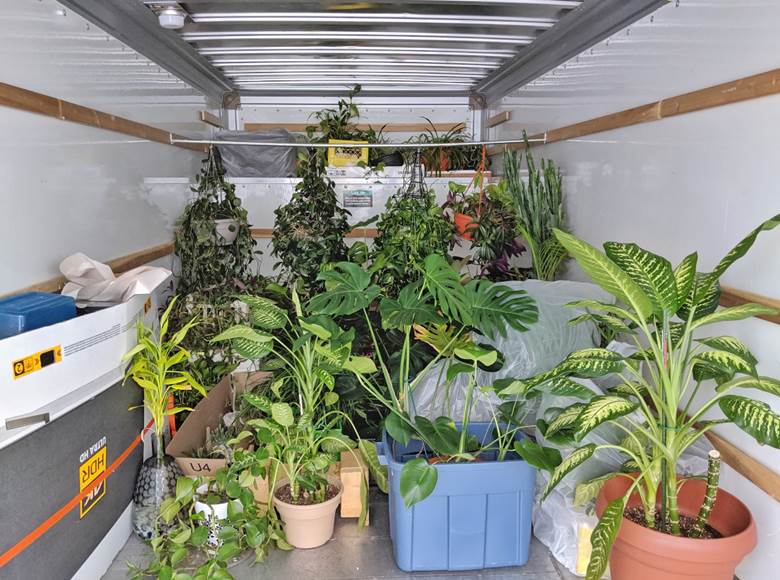
Keep smaller plants grouped tightly in sturdy boxes or crates and secure larger containers so they cannot roll or shift. Seat belts, cargo straps, boxes, blankets, and other padding can all help stabilize plants, depending on the vehicle.
Protect Plants From Temperature Extremes
Most houseplants are far more sensitive to temperature extremes than household furniture or other belongings. Avoid leaving them for extended periods in a vehicle that becomes extremely hot or cold.
Whenever possible, transport sensitive houseplants in the climate-controlled portion of your vehicle. During hot weather, also protect leaves from intense direct sunlight through vehicle windows, which can cause foliage to overheat or scorch.
Don't Overwater During The Trip
Most plants will not need frequent watering during a normal road trip. Check the soil rather than watering on a schedule. Saturated soil combined with low light, cool temperatures, and limited airflow can create additional stress.
Very long trips may require some watering, particularly for small containers that dry quickly, but slightly dry soil is often easier and cleaner to transport than excessively wet soil.
Can You Move Plants Across State Lines?
Usually, but you should check before you move. Federal and state plant-health regulations are designed to prevent insects, diseases, invasive plants, and contaminated soil from spreading into new areas.
The USDA Animal and Plant Health Inspection Service (APHIS) recommends checking plants carefully before moving them and avoiding the long-distance movement of plants when they show signs of insects or disease. Certain plants, soil, pests, and materials from quarantine areas may be restricted from interstate movement.
Before crossing state lines
Check the Department of Agriculture or plant-health agency for your destination state as well as current USDA APHIS requirements. Rules can vary based on the plant, soil, origin, destination, and any active agricultural quarantines.
California is one example of a state with additional plant-entry requirements. Privately owned houseplants entering California generally need to be healthy and pest-free, and qualifying houseplants are expected to have been grown indoors in sterile, commercially packaged potting mix. Agricultural materials may be inspected when entering the state, and certain plants are restricted or subject to additional quarantine requirements.
Do not assume that replacing the soil automatically makes every plant legal to move. Restrictions depend on the specific plant, where it was grown, where it is coming from, and where it is going.
If you're using a professional moving company, ask whether they transport live plants. Some movers have their own restrictions because plants can be difficult to protect from temperature changes and because interstate requirements vary.
Which Plants Handle Moving Best?
There is no guarantee that a particular species will travel perfectly, but some plant characteristics make transportation easier.
Plants that are often easier to move include:
- Succulents and cacti that tolerate slightly dry soil.
- Snake plants and other sturdy upright houseplants.
- Jade plants and other plants with thick leaves and stems.
- Small and medium-sized plants that can be packed securely.
- Healthy, established plants that are not already stressed.
Plants that may require extra care include:
- Plants with very thin or delicate foliage.
- Humidity-loving plants that react quickly to dry air.
- Plants with long, brittle stems or large leaves.
- Recently repotted or transplanted plants.
- Plants already experiencing pests, disease, drought stress, or root problems.
Plants such as calatheas, ctenanthes, ferns, fiddle leaf figs, and other moisture- or humidity-sensitive plants may show more stress from changing conditions than tougher houseplants. That does not mean they cannot be moved successfully; they simply benefit from careful temperature and moisture management.
Moving Large Plants
Large plants create a different challenge because of their weight and height. Tall stems and heavy containers can shift unexpectedly when a vehicle turns or stops.
- Wrap or cover the top of the container to help contain loose soil.
- Use a plant dolly or hand truck for heavy containers.
- Use soft ties, stakes, or supports for tall plants when needed.
- Pad large pots so they cannot strike one another.
- Secure the base of the container so it cannot slide or tip.
- Get help lifting heavy pots rather than trying to move them alone.
For very tall plants, transporting them on their side may sometimes be the only practical option. If you do this, support the trunk, branches, and foliage carefully and make sure the root ball and container cannot shift during transportation.
Consider Taking Plant Cuttings Instead
Sometimes moving the entire plant simply is not practical. A favorite shrub may be established in the landscape, or a large houseplant may be too difficult to transport. If the plant can be propagated from cuttings, taking a small piece with you may be an easier alternative.
- Take a cutting from healthy plant material using clean pruners.
- Use the appropriate propagation method for that particular species.
- Label the cutting so you remember the plant name.
- Keep it protected from extreme heat, cold, and direct sun while traveling.
- Check interstate plant restrictions before transporting cuttings too, because plant parts can also be regulated.
Not every plant roots successfully from a simple stem cutting, so check the recommended propagation method for the particular plant before removing material.
What To Do With Plants After You Move
Once you arrive, unpack plants as soon as practical and return them to suitable light and temperature conditions. Avoid making several major changes at once. A plant already adjusting to transportation does not necessarily need to be immediately repotted, fertilized, heavily pruned, and moved into much brighter light.
- Remove packing material from around leaves and containers.
- Check for broken stems, damaged leaves, or spilled soil.
- Water only if the plant actually needs it.
- Return the plant gradually to appropriate lighting conditions.
- Watch for insects or disease symptoms that may become noticeable after the move.
USDA APHIS also recommends keeping transported plants separate from other plants for a couple of weeks when possible. This gives you time to watch for hidden pests or diseases before introducing the newcomers to the rest of your collection.
A Reader's Experience Moving 87 Houseplants
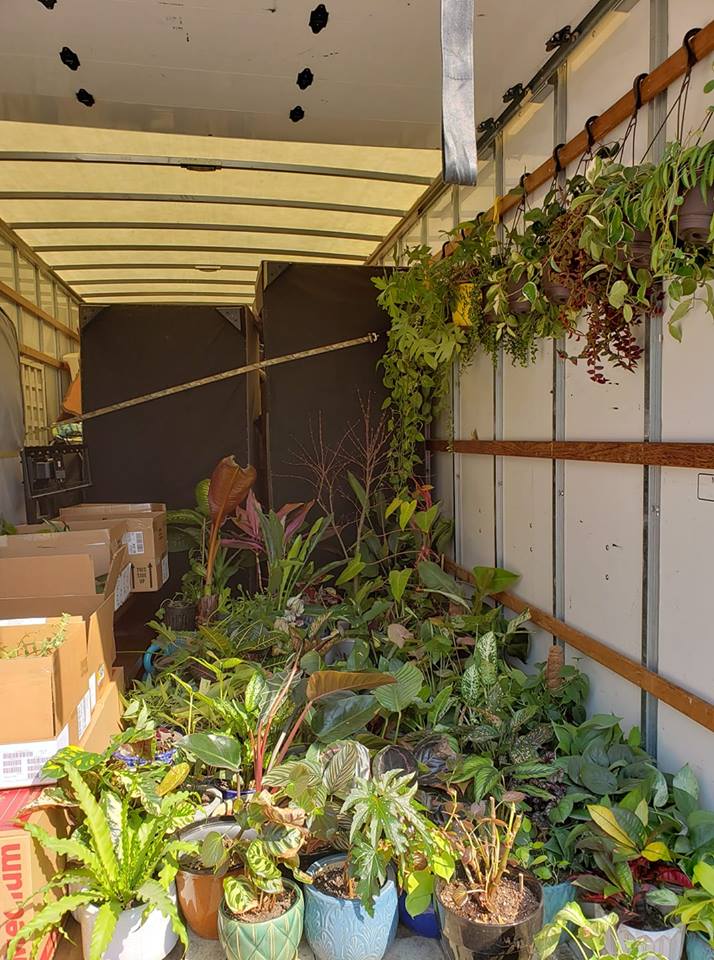
One Plant Addicts reader shared her experience after successfully moving 87 houseplants across the country. Her collection included pothos, monstera, fiddle leaf figs, bird of paradise, snake plants, philodendrons, palms, ferns, and banana plants.
Some of the strategies that worked well for her included:
- Keeping smaller and favorite plants inside a climate-controlled SUV.
- Covering some vehicle windows to reduce intense direct sunlight on foliage.
- Watering plants before departure rather than trying to water everything during the trip.
- Gently arranging trailing pothos vines above their containers.
- Lining the vehicle floor with a tarp or plastic to catch spilled soil and water.
- Placing plants close together and cushioning pots to reduce movement.
- Securing large containers so they could not slide or tip.
- Using padding and coverings to protect foliage from wind and physical damage when plants could not fit inside the vehicle.
Her biggest challenge was transporting the largest plants and protecting exposed foliage from wind and intense summer heat. Some palms suffered cosmetic damage during the trip but ultimately survived.
Every move is different, so use experiences like this as practical inspiration rather than a substitute for checking the needs of your particular plants, vehicle, route, weather conditions, and destination regulations.
Give Your Plants Time To Adjust
Even a carefully packed plant may look a little tired after a long move. Leaf drop, drooping, minor breakage, or temporary stress can happen after several days of changing temperature, humidity, light, and movement.
Focus on getting your plants into a stable environment and returning to their normal care routine. With careful preparation and realistic expectations, many of your favorite plants can make the journey to your new home right along with you.
Sources
- USDA Animal and Plant Health Inspection Service — Think Before You Move With Plants or Soil
- USDA Animal and Plant Health Inspection Service — Domestic Soil
- USDA Animal and Plant Health Inspection Service — Plant Health Contacts
- California Department of Food and Agriculture — Transporting Plants Into California