


Light Needs

Mature Height

Mature Spread

Growing Zones
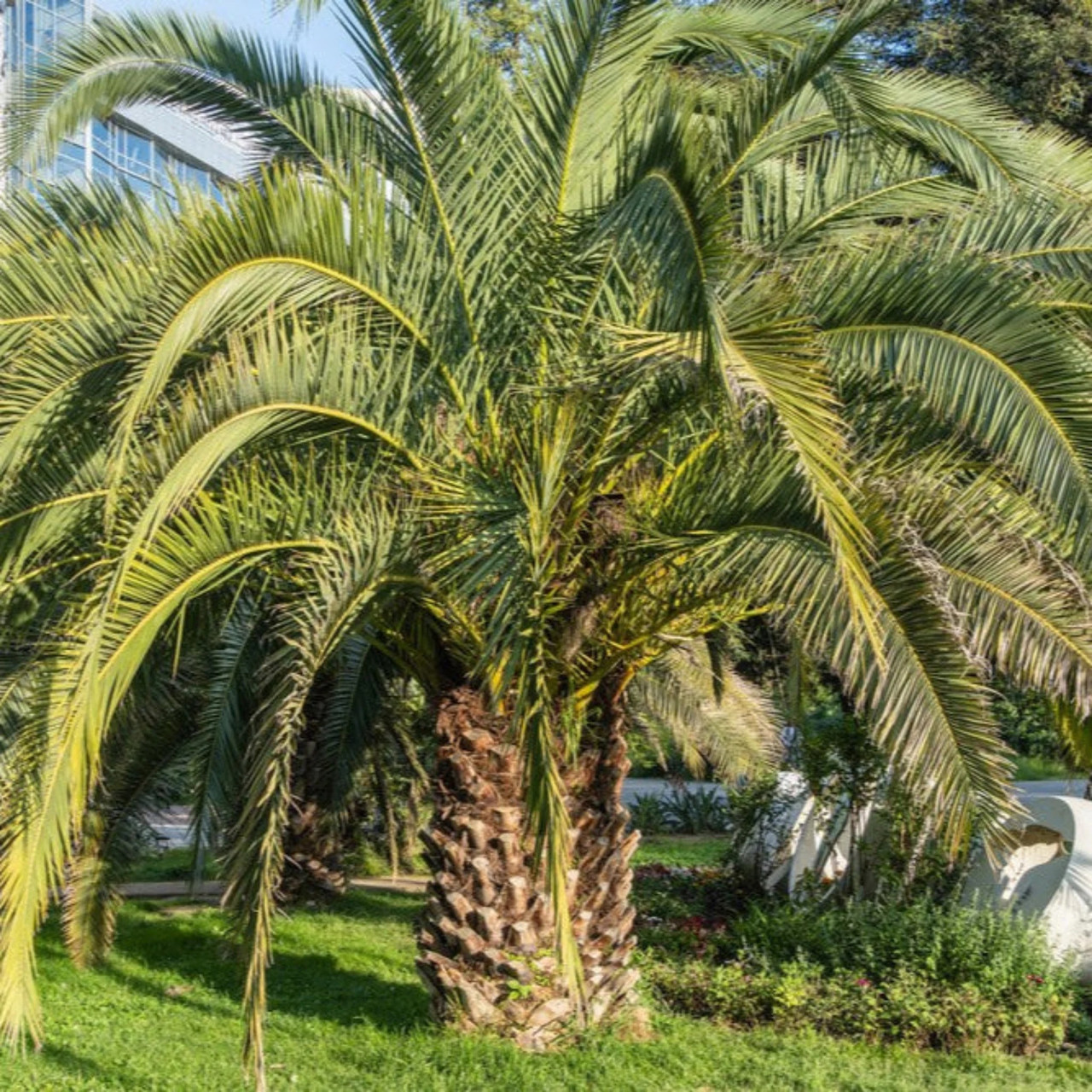
Pindo Palm is a cold-hardy feather palm that turns any yard into a laid-back retreat. Butia capitata has arching blue-green to gray-green fronds that curve down from a stout single trunk, giving it a relaxed southern look with a manageable height. In warm climates, summer flowers develop into amber-orange edible fruit often used for jelly, which is why it is also called jelly palm. It works best near pools, patios, and open lawns where its wide fronds have room to show their shape.
This South American palm is native to regions of Brazil, Uruguay, Argentina, and nearby grassland or dry woodland habitats. It is one of the hardier feather-leaved palms, tolerating heat, drought after establishment, and brief cold better than many palms with similar foliage. Growth is slow, and mature plants commonly reach 15 to 20 feet tall with a broad 10 to 15 foot canopy. Use it as a specimen palm, a container accent while young, or a low tropical anchor in coastal and southern-style landscapes.
Pindo Palm Care
Plant Pindo Palm in full sun to partial shade, with full sun preferred in cooler climates and light afternoon shade helpful in hotter regions. It grows in sandy, loamy, or clay-influenced soils as long as drainage is good, and it prefers slightly acidic to alkaline soil pH. Avoid low planting spots that hold water around the trunk, since soggy soil can lead to root and crown problems.
Water deeply during the first growing season whenever the top 2 to 3 inches of soil dry out. Established palms handle dry periods well, but the canopy looks fuller with occasional deep watering during long heat spells. Feed from spring through late summer with a palm fertilizer that includes magnesium and micronutrients, then allow growth to slow naturally as cooler weather arrives.
Prune only fronds that are fully brown, loose, or damaged, since green fronds still supply energy to the palm. Old fruit stalks can be removed if dropped fruit near patios or walkways becomes messy. In colder parts of its range, mulch the root zone before winter and protect young plants during brief hard freezes, keeping mulch pulled back from the trunk.
Pindo Palm Spacing
Space Pindo Palm 10 to 15 feet from buildings, walks, and other large plants so the arching fronds can spread without crowding. For container growing, start young palms in a heavy 20- to 25-gallon pot with drainage and shift up gradually as the root system fills the container. Grow this palm with rosemary, juniper bushes, red hot poker, or ice plants in sunny, well-drained beds that can handle heat, leaner soil, and periodic dry weather.
Pindo Palm Plant Facts
Growing Conditions
- Hardiness ZonesGrowing Zones
- USDA Zones 8 to 11 (perennial); grown as an annual elsewhere (outdoors year-round); grown indoors elsewhere (outdoors year-round); grown in containers elsewhere (grown as a seasonal crop)
- Sun Exposure
- Part Sun to Full Sun (5+ Hours Direct Sun)
- Mature Height
- 15-20 Feet
- Mature Spread
- 10-15 Feet
- Growth Rate
- Moderate
- Growth Habit
- , Upright
- Water Needs
- Average
Flowers & Foliage
- Flower Colors
- , Yellow, White, Pink
- Bloom Time
- Summer
- Harvest Time
- Late Summer to early Fall
- Foliage Color
- , Green, Blue
- Foliage Description
- Blue-Green
- Foliage Type
- , Evergreen
- Seasonal Interest
- , 3 Season Interest
Garden Benefits
Plant Overview
- Common Name
- Pindo Palm
Simple Plant Spacing Calculator

Please Note: The pictures below are to give a general representation of the different container sizes. The actual size/ages of plants are estimates and will vary based on type of plant, time of year, last pruning & many other factors.
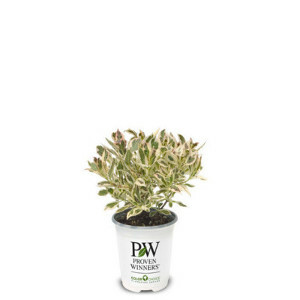
Also Known As:
Quart
Plant Age:
~ 6 months - 1 year
Plant Size:
~ 4"-8"
Pot Size:
~ 4.75"H x 4.5"W
Volume:
1.50 quarts
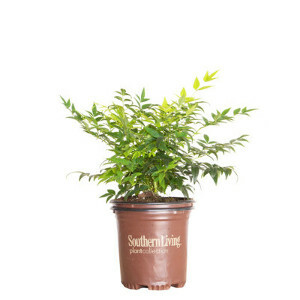
Also Known As:
2.5 Quart Pot
Plant Age:
~ 1 - 2 years old
Plant Size:
~ 8"-12"
Pot Size:
~ 6.5"H x 6.5"W
Volume:
2.20-2.30 quarts
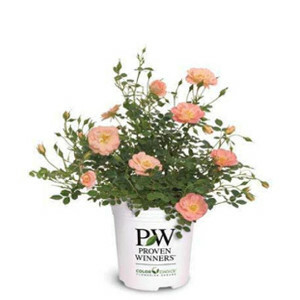
Also Known As:
#1 Container
1 Gallon
Plant Age:
~ 1 - 2 years old
Plant Size:
~ 10"-14"
Pot Size:
~ 7"H x 7.75"W
Volume:
2.26-3.73 quarts
Also Known As:
#2 Container
2 Gallon
Plant Age:
~ 1.5 - 3 years old
Plant Size:
~ 12"-18"
Pot Size:
~ 9.5"H x 9.5"W
Volume:
1.19-1.76 gallons
Also Known As:
#3 Container
3 Gallon
Plant Age:
~ 2 - 4 years old
Plant Size:
~ 12"-30"
Pot Size:
~9.5"H x 11"W
Volume:
2.32-2.76 gallons

Also Known As:
#5 Container
5 Gallon
Plant Age:
~3-4 years old
Plant Size:
~ 20" - 60"
Pot Size:
~11" H x 10 1/2” W
Volume:
3.5 - 4 gallons

We stand behind our plants with industry-leading guarantees to give you peace of mind.
We want your plants to arrive in great condition! If you notice any issues upon delivery, contact us within 3 days.
Starting January 1, 2026 all bushes, perennials & trees purchased come with an extended 1-year warranty for added confidence. If your plant dies due to a health issue within a year, we’ll make it right.
Plants that are currently in stock typically ship within 2-7 business days after your order is placed.
Plant Addicts ships to the lower 48 states within the U.S. Unfortunately, we do not currently ship to Alaska, Hawaii, or internationally.
This plant cannot be shipped to the following states: AZ, OR, AK, HI. These restrictions apply only to this specific plant due to agricultural regulations or other limitations. Other plants may still be available for shipping to these states.
If you have any questions about shipping restrictions, feel free to reach out to our team!