
Wee Bit Hydrangeas 1 to 3 of 3 total


Wee Bit Hydrangeas 1 to 3 of 3 total
Chat/Email Support
Mon-Thur, 7 AM - 6 PM CST
Fri, 7 AM - 5 PM CST
Sat-Sun, 9 AM - 3 PM CST
Chat Us Email Usinfo@plantaddicts.com
Phone Support
Mon-Fri, 8 AM to 5 PM CST

Wee Bit® hydrangeas fit big, florist-style flower heads onto tidy mounds about 2 feet tall. Flowers turn pink, red, purple, or blue depending on your soil, and bloom on both old and new wood.
Many bigleaf hydrangeas grow 3 to 6 feet tall and wide, which can swallow a front walk or a small bed. Wee Bit® hydrangeas stay around 2 feet tall and 2½ feet wide without any pruning, so they fit under low windows, along paths, and in patio pots.
The series was bred to put the big, showy flower heads of florist hydrangeas on a tough landscape shrub. Plants are hardy in Zones 5–9, tolerate salt, and bloom on both old and new wood.
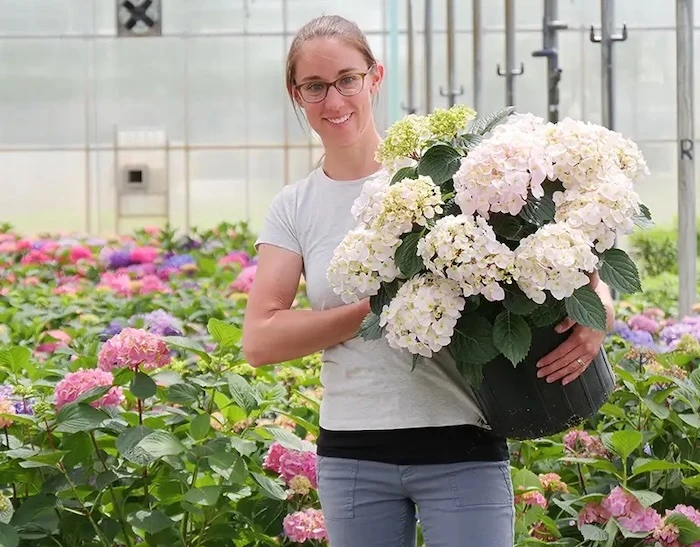
Giddy and Innocent were bred at Spring Meadow Nursery in Grand Haven, Michigan, the company that develops Proven Winners® ColorChoice® shrubs. Breeders there cross hydrangeas by hand and keep only the rare plant that beats its parents.
Wee Bit Innocent™ is the work of Megan Mathey, who joined Spring Meadow in 2013 after earning a master’s degree in plant breeding and genetics at Oregon State University.
Tim Wood made this cross in 2011 and chose one seedling in 2015 for its strong stems and color response to soil pH. The goal: Paris’s red flowers on a sturdier garden plant. It reached garden centers in 2021.
Grumpy arrived for testing under the working name “Grumpy,” and the name stuck. Gardeners clearly didn’t mind: it won Proven Winners’ Shrub Madness fan vote, a bracket of 64 shrubs.
Megan Mathey crossed these in 2017 and picked one plant in 2018 for its sturdy stems and semi-double florets. Each flower head holds roughly 400–500 florets.
All three grow about 2′ tall and 2.5′ wide. Each varies by flower form and color response to pH.
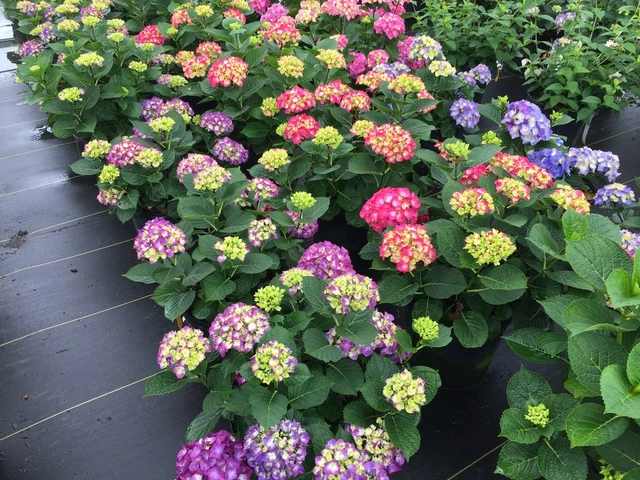
The red specialist. Even in acidic soil, its flowers lean red-violet instead of turning blue. Rich color on a dense, low mound.
Shop Wee Bit Giddy® →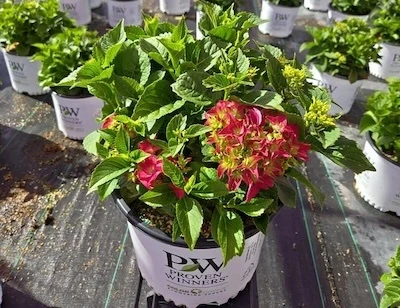
The color shifter. Large, full flower heads with overlapping petals can shift from blue to red, depending on soil pH.
Shop Wee Bit Grumpy® →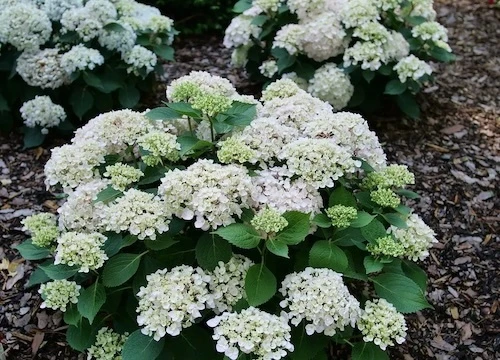
The pastel one, with doubled florets that open creamy green-yellow before taking on color. Sturdy stems, and more flowers in late summer and fall.
Shop Wee Bit Innocent™ →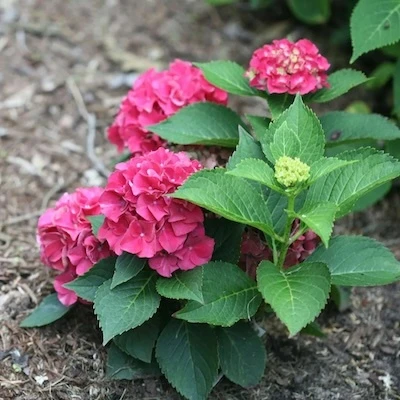
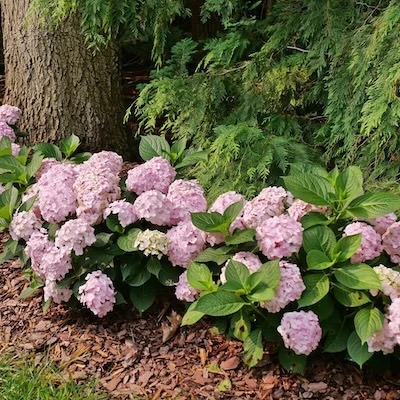
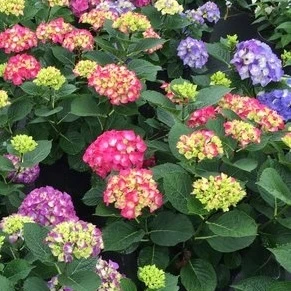
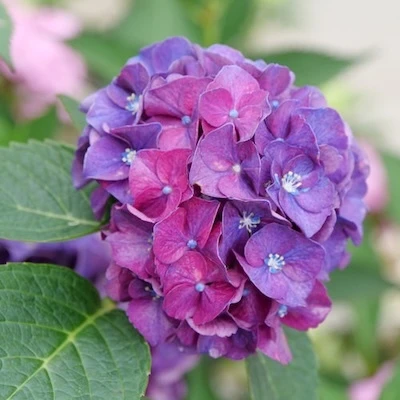
Bigleaf hydrangea flowers change color with soil pH. In acidic soil, the roots can take up aluminum, which turns flowers blue or purple. In neutral to alkaline soil, aluminum stays locked up, and flowers turn pink or red. Each Wee Bit® responds differently.
Test first. A soil test tells you your starting pH and saves guesswork.
For blue or purple: lower pH to about 5.5 with aluminum sulfate, following the label. Grumpy responds the most.
For pink or red: raise pH toward 6.5 or higher with garden lime.
Give it time. Color shifts over a season or more. Containers change fastest, since you control the mix.
Spend 30 seconds with Wee Bit Grumpy®, then take a closer look at Wee Bit Innocent™ and its soft, doubled florets.
Wee Bit® hydrangeas set flower buds on last year’s stems as well as new growth. Cutting them back at any time of year removes flowers, and they stay small on their own.
In spring, after new leaves appear, trim only dead stems. Snip spent flowers just above a set of leaves.
Part to full sun in the North. In the South, provide at least 4 hours of sun with shade in the afternoon.
Fertile, moist, and well drained. Wet feet cause problems, so loosen heavy clay with compost.
About 1 inch a week when rain falls short. A 2–3″ layer of mulch keeps roots cool and moist.
Use a slow-release shrub fertilizer in early spring and again in late spring. Stop by late July so stems can harden off.
Plant 30″ apart for a hedge or mass planting. Set the crown at the same depth it grew in the pot.
In Zone 5, a hard winter can damage buds on old stems. Plants still flower later on new growth.
About 2 feet tall and 2½ feet wide at maturity, in a rounded mound. Space them about 30 inches apart.
Yes. They bloom on both old and new wood, so the first flowers open in early to midsummer and more follow later in summer or fall. Wee Bit Innocent™ is especially known for its fall rebloom.
Both bloom red in neutral to alkaline soil. In acidic soil they split: Grumpy turns purple-blue, and can turn deep royal blue with aluminum sulfate, while Giddy stays red-violet.
For blue, lower the soil pH to around 5.5 and add aluminum sulfate according to the label. For pink or red, raise the pH to 6.5 or higher with garden lime. Test your soil first, and expect changes to take a season or more.
Part sun to full sun. In hot Southern summers they do best with morning sun and afternoon shade. Too much shade means fewer flowers.
Yes, their small size makes them good container plants. Use a large pot with drainage holes, water whenever the top inch of soil is dry, and move pots to a sheltered spot for winter in cold climates.
Ideally never. Pruning removes flower buds. Remove dead or winter-damaged stems in spring once new growth shows, and deadhead faded blooms just above a set of leaves.
The usual causes are winter damage to buds, too much shade, pruning, or too much nitrogen fertilizer. Because Wee Bit® also blooms on new wood, it often flowers even after a hard winter.
Not reliably. Deer often browse bigleaf hydrangeas, especially flower buds. Where deer are common, use a repellent or fencing.
Yes. The ASPCA lists hydrangeas as toxic to dogs, cats, and horses. Eating the leaves or flowers can cause vomiting and diarrhea, so call your vet if a pet chews on one.
Yes. Cut no more than a third of the flowers so the plant keeps growing well. For dried flowers, let the heads age on the plant until they feel papery, then cut and hang them upside down.
No. Both are compact bigleaf hydrangeas, but Wee Bit® was bred for better landscape performance. Giddy, for example, combines Cityline® Paris’s red color with the durability of Let’s Dance® Rave.
Choose red, blue, or pastel, then let your soil fine-tune the color.