
Did you know you can grow a pineapple plant from the leafy top of a grocery store pineapple? Instead of tossing the crown into the compost after enjoying the fruit, you can plant it and grow a beautiful tropical houseplant. With patience and the right conditions, your pineapple plant may even produce its own fruit!
Growing a pineapple from a supermarket top is a fun, inexpensive gardening project that requires very few supplies. It's also a great activity for kids and an easy way to experiment with growing plants from kitchen scraps.
We'll show you how to prepare and plant a pineapple crown, how to care for it while roots develop, and what to expect during the first several months of growth. We'll also share photos of our own pineapple plant as it gets established.
Growing a Pineapple From a Top: Quick Facts
Plant: Pineapple (Ananas comosus)
Propagation method: Planting a pineapple crown
Difficulty: Beginner-friendly
Light: Bright light, gradually increasing to full sun
Soil: Well-draining potting mix
Water: Allow the soil to dry somewhat between waterings
Ideal temperature: Approximately 68–86°F
Time to fruit: Often 18–32 months, if conditions are favorable
What You'll Need to Grow a Pineapple Top
You don't need special gardening equipment to start growing a pineapple. Most of the materials are probably already around your home.
Choosing a good pineapple: Look for a crown with firm, healthy leaves and no signs of rotting near the base. Avoid pineapple tops that are badly damaged, completely dried out, or showing signs of decay.
How to Plant a Pineapple Top: Step by Step
Pineapples can be grown from the leafy crown attached to the top of the fruit. Follow these simple steps to turn your leftover pineapple top into a new plant.
STEP 1
Cut the Top Off Your Pineapple
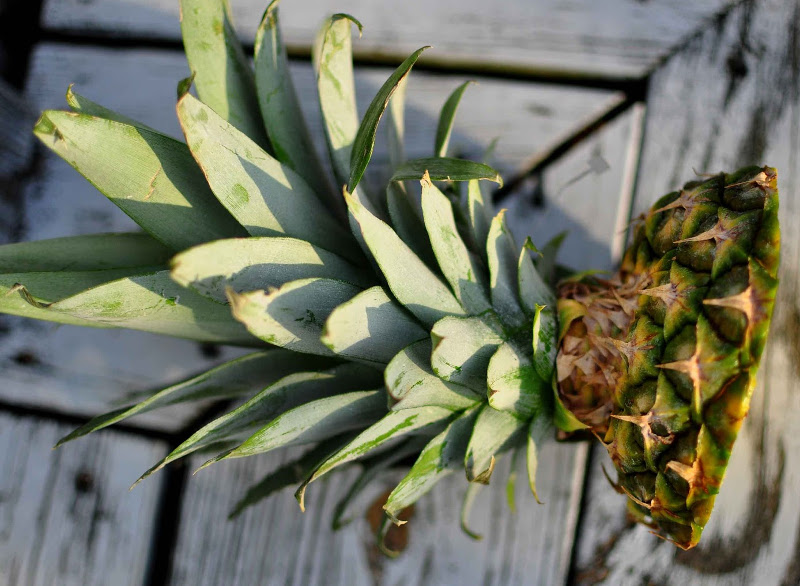
Start by cutting the leafy crown off the top of your pineapple. Leave a small amount of fruit attached initially so you have room to trim and prepare the stem.
Carefully remove the remaining fruit flesh from around the base. Leaving too much pineapple flesh attached can encourage rotting once the crown is planted.
Peel away several of the lowest leaves to expose a short section of stem. This is where new roots can develop.
STEP 2
Allow the Cut End to Dry
Place the prepared pineapple top in a dry, shaded location with good airflow for a day or two. This allows the cut surface to begin drying and reduces the risk of decay after planting.
In our original experiment, we planted the pineapple top directly into the soil without waiting. It worked for us, but allowing the base to dry is a useful precaution and generally gives you a better chance of success.
STEP 3
Plant the Pineapple Crown in Soil
Fill a pot with well-draining potting mix. Choose a container with drainage holes so excess water can escape.
Make a small hole in the center of the soil and insert the prepared pineapple crown with the leaves pointing upward. Bury the exposed lower stem, keeping the center of the leafy crown above the soil surface.
Gently move soil around the base to hold the crown upright. The plant should feel secure without being buried too deeply.
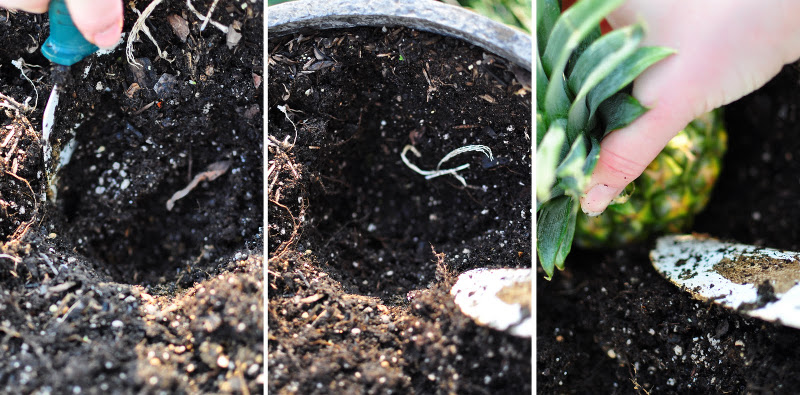
Pot or garden bed? Growing a pineapple in a container is usually the easiest option, especially in areas with cold winters. In consistently warm, frost-free climates, pineapples can also grow directly in well-drained garden soil.
STEP 4
Firm the Soil Around the Plant
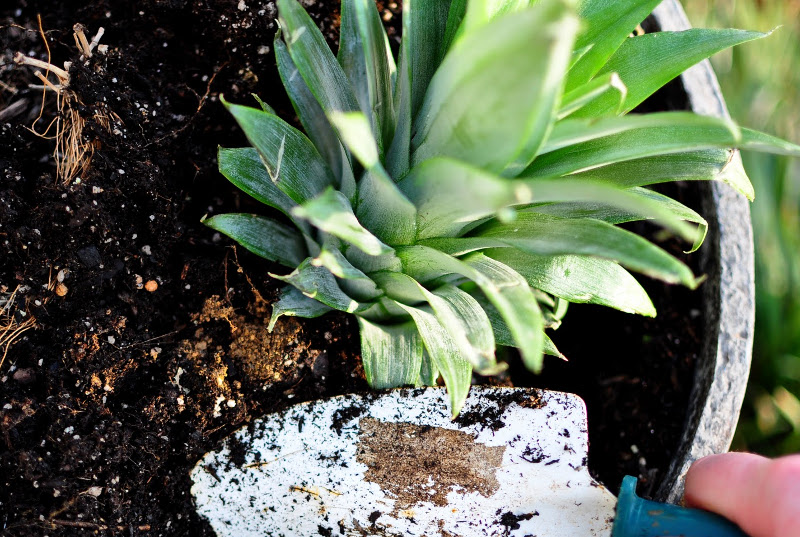
Once the pineapple crown is positioned, gently press the soil around the stem to eliminate large air pockets.
You want enough support to keep the pineapple upright, but avoid packing the soil so tightly that it becomes difficult for water to drain or roots to develop.
STEP 5
Water and Place in a Warm Location
Water the newly planted crown enough to moisten the soil and settle it around the base. Allow excess water to drain away.
Place the container in a warm location with bright, indirect sunlight while the crown begins establishing roots.
Keep the soil lightly moist but never waterlogged during establishment. Once the plant is actively growing, allow the upper soil to dry somewhat between waterings.
Avoid overwatering: Pineapple crowns are susceptible to rotting when kept in consistently wet soil. Good drainage and careful watering are especially important before the crown has established roots.
Several Weeks After Planting: What to Expect
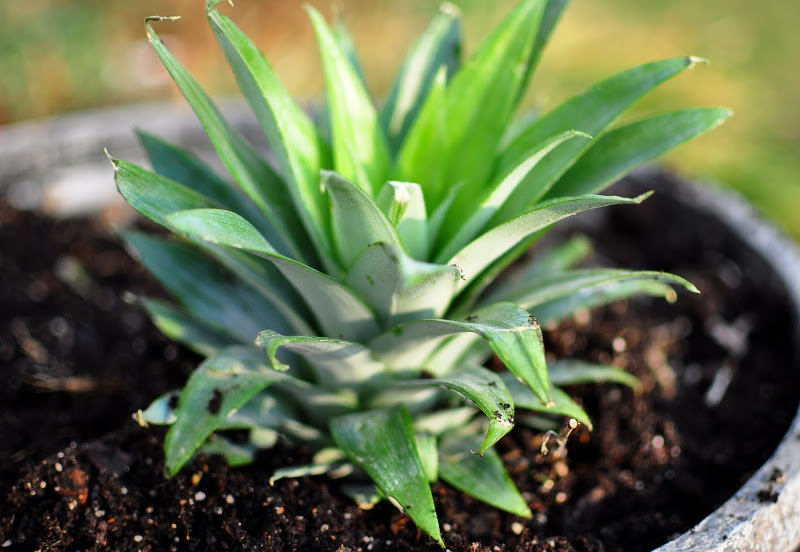
Don't panic if your pineapple top looks a little rough during the first several weeks. The older leaves may begin to dry, brown, or droop while the plant adjusts to its new growing conditions.
What's most important is the condition of the center of the crown. Healthy new growth emerging from the middle is an encouraging sign that your pineapple is establishing itself.
Root development can take several weeks or longer depending on temperature, moisture, and the condition of the original crown. Be patient and avoid repeatedly pulling the plant out of the soil to check the roots.
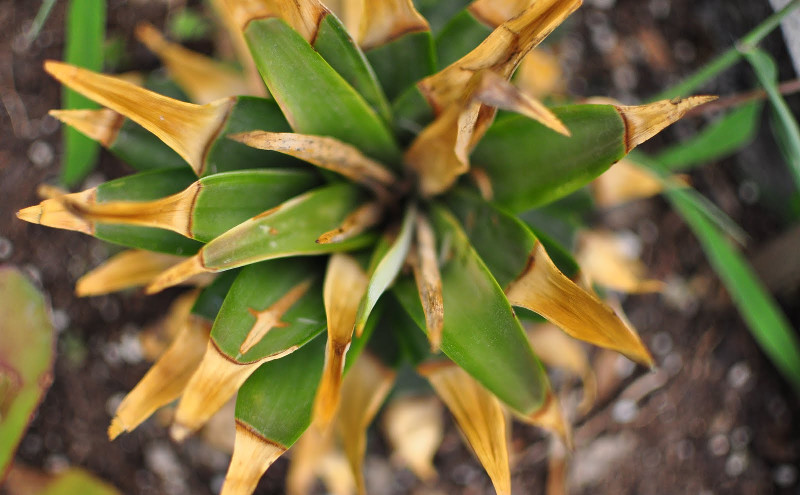
Signs your pineapple is rooting: Look for firm central leaves, new growth from the middle, and a crown that gradually feels more securely anchored in the soil. Older outer leaves may decline without indicating that the entire plant is dying.
You can leave older leaves in place while they still contain healthy green tissue. Once completely dry and brown, they can be removed carefully.
However, if the center of the plant becomes soft, mushy, or easily pulls away, the crown may be rotting rather than simply adjusting to transplanting.
Several Months After Planting: New Pineapple Growth
After several months, our pineapple plant began showing noticeable new growth. Fresh, bright green leaves emerged from the center, while many of the older leaves gradually dried and declined.
The plant required relatively little attention beyond proper watering, adequate light, and time to establish itself.
We even experimented with a little leftover coffee as a fertilizer, but coffee isn't a recommended substitute for a balanced plant fertilizer. For more consistent results, use a fertilizer labeled for container plants, following the manufacturer's directions.
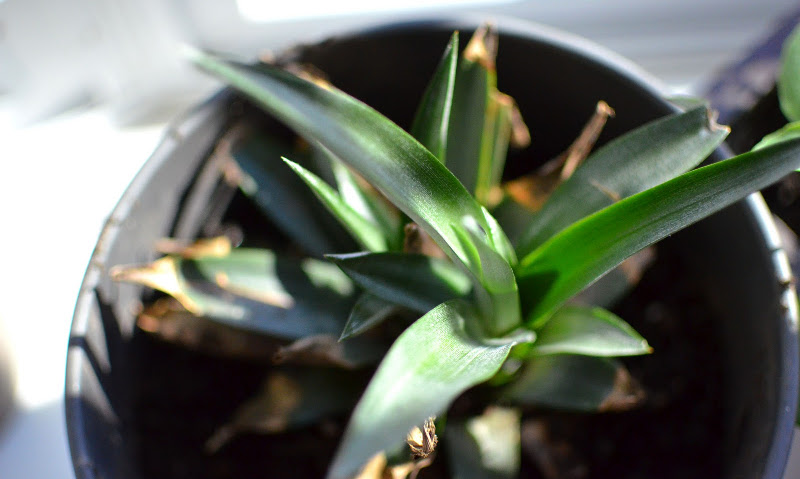
By the time warm spring and summer weather arrives, a well-established pineapple plant can often be moved outdoors to enjoy additional sunlight.
Just remember to introduce it gradually to stronger sunlight instead of moving it directly from a shaded indoor location into intense afternoon sun.
How to Care for a Pineapple Plant
Once your pineapple top begins growing, care is similar to that of many other tropical container plants. The most important factors are warmth, light, well-draining soil, and proper watering.
Sunlight
Pineapple plants grow best with plenty of bright light. An established plant benefits from full sun when conditions permit. Indoors, place it near a bright window or supplement with a grow light if natural sunlight is limited. Gradually acclimate plants before moving them outdoors.
Watering
Pineapples tolerate some dryness better than constantly soggy soil. Water when the upper portion of the potting mix begins to dry, then let excess water drain completely. Reduce watering during cooler months when growth slows.
Soil and Containers
Use a well-draining potting mix in a container with drainage holes. As your pineapple gets larger, move it into a bigger pot if the roots begin outgrowing the container. Avoid oversized pots that hold more moisture than the roots can use.
Temperature
Pineapples prefer warm growing conditions, approximately 68–86°F. Their growth slows during cool weather, and frost can damage the plant. Bring container-grown pineapples indoors before nighttime temperatures regularly fall below about 50–60°F.
Fertilizing
Once your pineapple is actively producing new leaves, you can fertilize lightly during the growing season using a balanced fertilizer suitable for container plants. Follow the product label and avoid overfertilizing young plants.
Will a Pineapple Top Actually Grow Another Pineapple?
Yes! A pineapple crown can develop into a mature plant capable of producing a new pineapple fruit. However, fruiting takes patience, particularly when plants are grown indoors or in climates with shorter growing seasons.
According to the University of Florida IFAS Extension, homegrown pineapples may take approximately 18–32 months from planting to produce ripe fruit. The timing varies with the growing conditions, propagation material, and variety.
Pineapple plants typically produce one primary fruit on the main growing point. After fruiting, the original plant gradually declines, but it can produce small offsets, often called pups, that can develop into new pineapple plants.
Growing from a crown vs. seeds: A pineapple crown is a form of vegetative propagation, meaning the new plant develops from part of the original plant rather than from seed. The resulting plant is genetically the same cultivar as the parent, although fruit size and quality can still vary based on growing conditions.
Even if your pineapple never produces fruit, you'll still have a distinctive tropical houseplant that started as something you would otherwise have thrown away.
Common Problems When Growing a Pineapple Top
Why Are My Pineapple Leaves Turning Brown?
Some older leaves naturally decline as the crown becomes established. However, widespread browning can also result from cold temperatures, watering problems, or root damage. Check the plant's center and soil moisture to identify the likely cause.
Why Isn't My Pineapple Top Growing?
Rooting and establishment can take time. Ensure the plant receives sufficient warmth, bright light, and appropriate moisture. Cooler conditions and low light can greatly slow growth.
Why Is the Center of My Pineapple Mushy?
A soft or rotting center often indicates crown rot or other decay. Excess moisture, poor drainage, and damaged planting material can contribute. A severely rotted crown may not recover.
Can I Plant a Pineapple Top Directly Outside?
Yes, in consistently warm, frost-free conditions with suitable drainage. In colder climates, growing a pineapple in a container is generally more practical so it can be moved inside before temperatures fall.
Give Your Supermarket Pineapple a Second Life
Growing a pineapple plant from a grocery store crown is a rewarding way to reuse kitchen scraps while adding a fun tropical plant to your home.
It's a project that requires patience more than expensive materials. With the proper preparation, soil, water, and sunlight, you can watch a discarded pineapple top gradually transform into a thriving plant.
And if you're lucky enough to harvest your own pineapple someday, that will make the experience even sweeter!

Gardening References
- University of Florida IFAS Extension. Pineapple — Gardening Solutions. Information about pineapple propagation, care, and fruiting.
- University of Florida IFAS Extension. Pineapple Growing in the Florida Home Landscape. Detailed guidance on growing conditions, temperature requirements, and fruit production.
- North Carolina State Extension. Ananas comosus Plant Profile. Plant characteristics, propagation, and container growing recommendations.