
Desert Eve™ Yarrow 1 to 4 of 4 total


Desert Eve™ Yarrow 1 to 4 of 4 total
Chat/Email Support
Mon-Thur, 7 AM - 6 PM CST
Fri, 7 AM - 5 PM CST
Sat-Sun, 9 AM - 3 PM CST
Chat Us Email Usinfo@plantaddicts.com
Phone Support
Mon-Fri, 8 AM to 5 PM CST
Desert Eve™ Yarrow is among the earliest-flowering yarrows available, opening its flat clusters of red, rose, and yellow flowers in late spring and continuing into fall. Compact mounds of fine, fern-like foliage hold the flowers on sturdy stems, and once established, plants shrug off heat, drought, poor soil, deer, and rabbits.
 Desert Eve™ Yarrow Selections
-->
Classic yarrow is tough, but it can flower late, grow tall, and flop by midsummer. Desert Eve™ was bred to fix that. Plants form compact mounds of fine, fern-like foliage, flower weeks ahead of many yarrows, and hold their flat flower clusters on sturdy, upright stems from late spring into fall. They thrive in the hot, dry, sunny spots where other perennials struggle.
Desert Eve™ is one of the earliest-flowering yarrows on the market. The first flowers open as spring bulbs fade, and a quick trim after the first flush keeps color coming into fall.
Heat, drought, sandy or gravelly soil, and salty seaside wind barely slow it down. Once established, it rarely needs watering or feeding.
Flat flower clusters make easy landing pads for butterflies and bees, but the aromatic, ferny foliage is rarely touched by deer or rabbits.
Desert Eve™ looks like a tidier version of common yarrow, but its compact habit comes from a second yarrow species.
Desert Eve™ is a cross between woolly yarrow (Achillea tomentosa), a low, drought-tolerant species, and common yarrow (A. millefolium). The result is compact mounds of very fine foliage under strong, upright flower stems.
Syngenta breeder Henk Stemkens made the original crosses in Enkhuizen, a Dutch town known as a center of seed and flower breeding: Yellow in 2002 and Red in 2003. Each variety was chosen from seedlings for color, habit, and flower production, then grown from cuttings so every plant matches the original.
Desert Eve™ is a long-day plant that needs no cold period to flower. Lengthening spring days trigger the buds, which is why it blooms so early and why young plants flower well in their first season.
All three colors share the same early bloom, compact habit, and drought tolerance. Choose one color for a bold drift, or plant the collection for a sunset blend.

Rich brick-red clusters with tiny yellow centers
What sets it apart: Flowers open bright red, then soften toward orange-red and pale buff as they age, so one plant shows several autumnal shades at once. It is also the widest-spreading color in the series.
Try it with: Crocosmia, dark-flowered cosmos, blue salvia, or ornamental grasses.
Shop Desert Eve™ Red →
Deep rosy pink with golden-yellow centers
What sets it apart: The softest of the three colors, with gold centers that sparkle against the rosy petals. Gray-green foliage gives it a slightly cooler look, which suits cottage gardens and pastel plantings.
Try it with: Catmint, lavender, purple coneflower, or silvery lamb’s ear.
Shop Desert Eve™ Rose →
Clear lemon-yellow clusters
What sets it apart: The brightest color in the series, from a yellow-flowered woolly yarrow parent. Each tiny flower in the cluster is about twice the width of those on classic ‘Moonshine’ yarrow.
Try it with: Blue or purple salvia, Russian sage, or veronica for strong contrast.
Shop Desert Eve™ Yellow →
Red, Rose & Yellow together
What sets it apart: One plant of each color for a ready-made sunset blend. Plant them as a drift along a border, or grow all three together in a pot at least 16 inches wide.
Try it with: Ornamental grasses, sedum, and coneflower for a low-water meadow look.
Shop the Collection →| Variety | Flower Color | Mature Size | Best For |
|---|---|---|---|
| Red | Brick red, aging to orange-red and buff | 16–20″ H × 18–24″ W | Hot-color borders, covering more ground |
| Rose | Deep rose with golden centers | 14–18″ H × 14–18″ W | Cottage gardens, pastel and pollinator plantings |
| Yellow | Clear lemon yellow | 14–18″ H × 14–18″ W | Bright contrast with blue and purple flowers |
| Collection | One each of red, rose, and yellow | About 18″ H × 18″ W per plant | Sunset-mix drifts and 16″+ containers |

Desert Eve™ Red repeats the scarlet of crocosmia, while dark-flowered cosmos adds depth beside it. The yarrow’s flat flower clusters also contrast nicely with crocosmia’s arching sprays.
All three thrive in full sun, so the combination stays colorful from early summer into fall with very little watering.
Its compact size suits the front and middle of a border, along walkways, driveways, and hot strips beside pavement where few plants survive.
Plant in drifts of three to five with coneflower, grasses, and salvia. Clumps fill in within a season or two for a low-water, meadow-style look.
Use one plant in an 8-inch pot, or all three colors in a pot 16 inches or wider. It works as a filler beside grasses, salvia, and trailing plants.
Cut stems when flower clusters are fully open and firm. To dry them, hang small bunches upside down in a dark, airy spot; the colors hold well.
Yarrow does best with less water and less fertilizer. Give it sun and drainage and it takes care of itself.
Choose a spot with at least 6 hours of direct sun, and more if possible. Plants in shade grow lanky and flower less.
Average to poor soil is ideal, including sandy and gravelly ground. Avoid rich soil and low spots that stay wet, which cause floppy stems and root rot.
Water new plants every 3–5 days until they put on new growth, and regularly through the first season. After that, water only during long droughts; pots need water more often.
Yarrow rarely needs feeding. Extra nitrogen produces leafy, floppy plants with fewer flowers. A thin layer of compost is plenty.
Deadheading is optional, but cutting faded flower stems back to the foliage keeps plants tidy and encourages more flowers into fall.
Leave stems standing over winter to protect the crown and shelter beneficial insects. Cut them back as new growth appears in spring, and divide clumps every 2–4 years when the center thins.
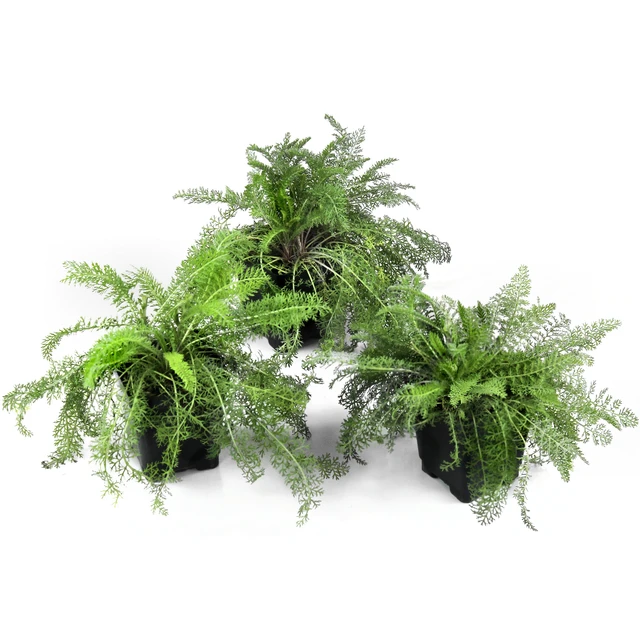
Remove last year’s stems as fresh ferny growth appears. This is also the best time to divide crowded clumps.
Desert Eve™ begins flowering ahead of many yarrows, just as spring bulbs and early perennials finish.
Cut faded stems back to the foliage to encourage new buds. Water only during long dry spells.
Flowering continues into fall. Leave the stems standing through winter for crown protection and wildlife cover.
Wild common yarrow spreads by underground stems and can wander through loose soil. Desert Eve™ forms a denser clump that widens steadily but stays manageable. Divide it every 2–4 years in spring to keep it in bounds and the center vigorous.
It is not required, but it helps. Cutting faded flower stems back to the leafy base after the first flush keeps plants tidy and encourages a fresh round of flowers later in summer and fall.
Flopping usually means too much of a good thing: rich soil, fertilizer, frequent watering, or too little sun. Desert Eve™ was bred for a compact habit and sturdy stems, so it stands up better than most, but it still does best in lean soil and full sun.
Common yarrow (Achillea millefolium) grows wild across much of North America. Desert Eve™ is a garden hybrid of common yarrow and woolly yarrow (A. tomentosa), a species native to Europe and Asia, so it is not a straight native. It still feeds butterflies, bees, and other pollinators.
Yes. Desert Eve™ is a perennial for USDA Zones 4–9. In colder zones the top growth dies back in winter and regrows from the crown in spring; in warmer zones the foliage may stay partly evergreen.
Yes. Use at least an 8-inch pot for one plant, or a 16-inch or larger pot for all three colors. Choose a container with drainage holes and a well-drained potting mix, and let the soil dry between waterings.
That is normal. Desert Eve™ Red opens bright red and gradually softens toward orange-red and pale buff as each flower ages. New flowers keep opening red, so plants show a mix of shades.
Yes. Desert Eve™ Yarrow tolerates juglone, the natural compound black walnut releases into the soil that harms many other plants. Just make sure the spot still gets full sun.
The ASPCA lists yarrow as toxic to dogs, cats, and horses. Eating it can cause vomiting, diarrhea, and skin irritation. Plant it away from pets that like to chew on plants, and contact your veterinarian with any concerns.
Choose red, rose, or yellow Desert Eve™ Yarrow, or get all three in the collection, for borders, pollinator gardens, containers, and cut-flower beds.
Shop Desert Eve™ Yarrow →