
Southgate Rhododendrons 1 to 6 of 6 total


Southgate Rhododendrons 1 to 6 of 6 total
Chat/Email Support
Mon-Thur, 7 AM - 6 PM CST
Fri, 7 AM - 5 PM CST
Sat-Sun, 9 AM - 3 PM CST
Chat Us Email Usinfo@plantaddicts.com
Phone Support
Mon-Fri, 8 AM to 5 PM CST

Southgate® rhododendrons were bred in Louisiana to handle heat and humidity, which kill most rhododendrons, yet they’re hardy to Zone 6. Compact evergreen shrubs carry large trusses of pink, lavender, and white flowers in spring.
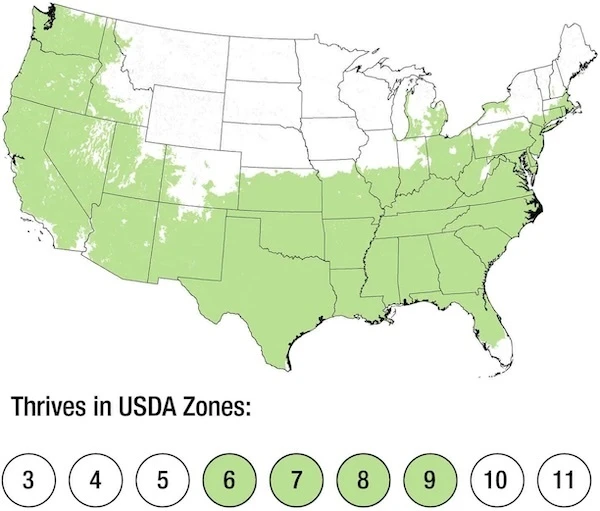
Most rhododendrons sold today are “ironclads,” descended from species that grow on cool mountainsides in the Appalachians and Asia. In the South, they often succumb to long hot summers, muggy nights, and warm, wet soil.
Southgate® was bred under those conditions in Louisiana, yet it still handles cold down to about −10°F. This means gardeners along the Gulf Coast and in traditional rhododendron regions farther north can grow these shrubs.
Southgate started with a string of dead plants. In the 1960s, Louisiana native John Thornton was studying veterinary medicine in Michigan when he first saw rhododendrons. Back home in Franklinton, about 50 miles north of New Orleans, every rhododendron he planted died.
Instead of giving up, he joined the American Rhododendron Society and the Royal Horticultural Society and ordered from their seed exchanges. After trying nearly two dozen wild species, he found one that bloomed in Louisiana heat and resisted Phytophthora root rot: Rhododendron hyperythrum, from Taiwan.
Starting in 1974, he crossed tough ironclad varieties with that Taiwanese species, then spent decades crossing and selecting again. He registered his first named selections in 2004, and Southern Living Plant Collection introduced them as Southgate® in the early 2010s.
Several Southgate® varieties were first registered under people’s names. Their registered names, such as ‘Brandi Michele Raley,’ ‘Tyler Morris,’ and ‘Lisenne Rockefeller,’ became the shorter Brandi, Radiance, and Divine.
Rhododendron buds are often a deeper color than the open flowers, so each plant shows two shades in spring. The stripe under each photo displays bud color to open-flower color.
 Southgate® RadianceRegistered as ‘Tyler Morris’
Ruffled pink to light purple flowers with a reddish-purple blotch. A cross of ‘Royal Purple’ and Thornton’s Taiwanese parent species, and the coolest color in the series.
 Southgate® BrandiRegistered as ‘Brandi Michele Raley’
The most compact Southgate®, with a dense habit and glossy, dark green leaves that curl back slightly. A good fit for containers and smaller foundation beds.
 Southgate® BreezePink and white
Medium pink buds open to white flowers marked with a maroon blotch, on a medium-dense plant. A natural fit for a foundation bed under windows.
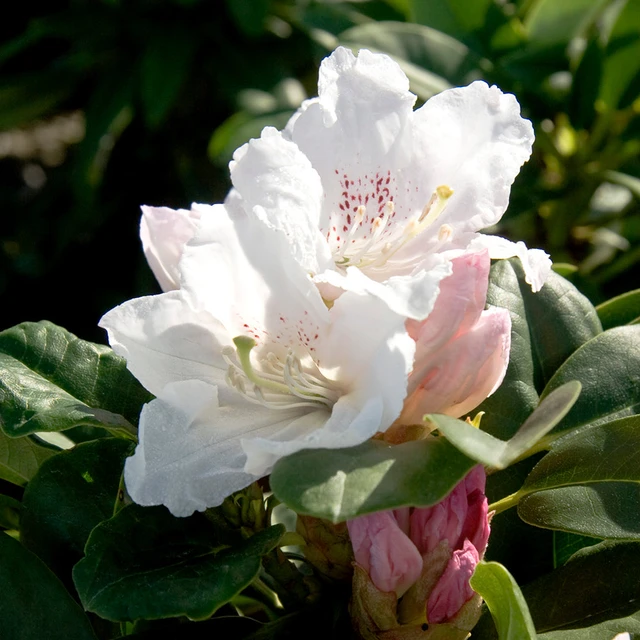 Southgate® DivineRegistered as ‘Lisenne Rockefeller’
White flowers with purple specks. Unlike its siblings, Divine’s pollen parent is a different Taiwanese species, R. pseudochrysanthum.
 Southgate® GraceRegistered as ‘Elizabeth Ard’
Large, deep pink buds open to crisp white flowers with purple spots on a dense, wide plant with long, deep green leaves. Space it for a hedge or mass planting.
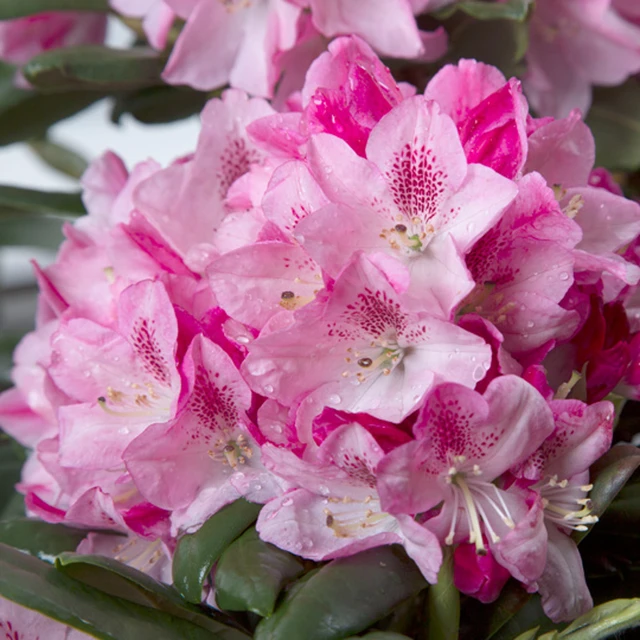 Southgate® SplendorLavender-pink
Big trusses that look like small bouquets. Petals are light pink on top and dark pink underneath, speckled with dark pink spots.
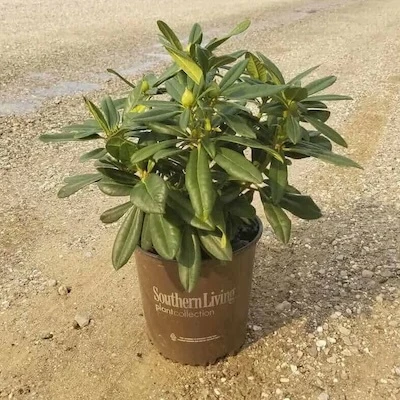
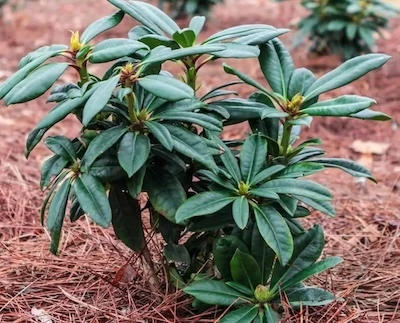
Most of the year, your rhododendron will arrive as a leafy evergreen shrub without flowers, like the nursery plants below. Plants bought in late winter or early spring often have plump flower buds and bloom their first season.


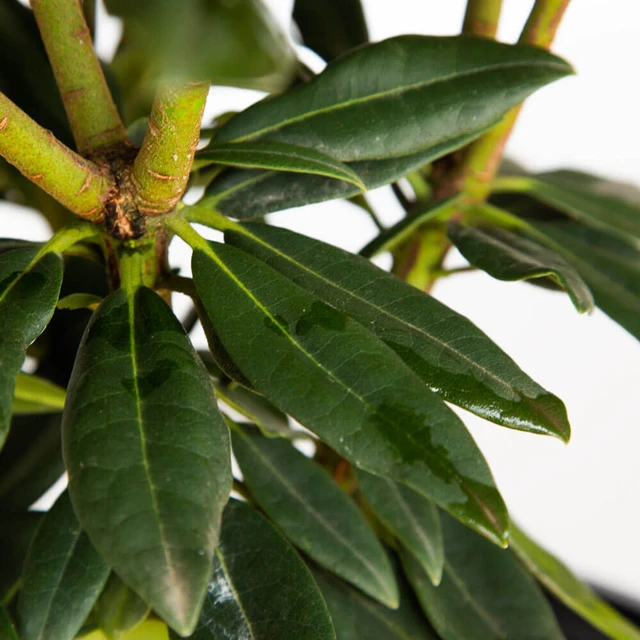
Linda Vater transforms a tired rose bed into a low-care shrub border designed around Southgate® Breeze, with three evergreen partners for color in other seasons.
Here’s how a new spring bed of three Southgate® rhododendrons came together. The most important step is planting high: rhododendron roots need air, and a root ball set too deep in wet soil can rot.
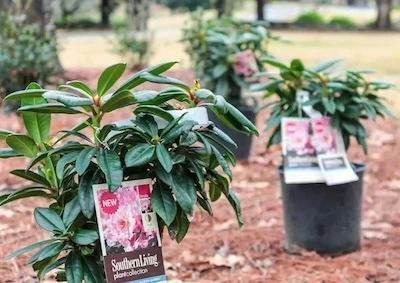
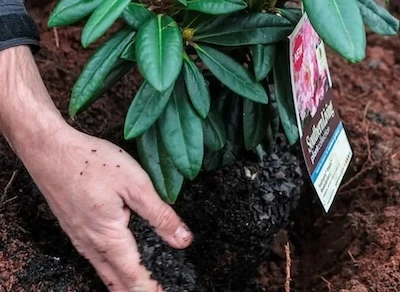
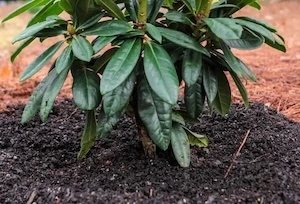
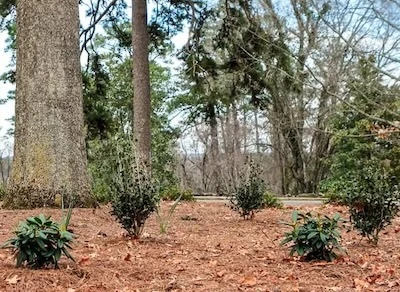
Heat tolerance doesn’t change what every rhododendron needs: acidic soil, steady moisture, and fast drainage.
Feed once in early spring with a slow-release fertilizer for acid-loving plants.
Snip off faded flower clusters, and do any shaping right after bloom.
Next year’s flower buds form now, so don’t prune.
Water deeply during dry spells. Shallow roots should never dry out.
A good time to plant in the South.
Refresh the mulch, and keep watering until the weather cools.
Evergreen leaves keep the bed green. Fat buds at the branch tips become next spring’s flowers.
Water during dry, windy spells when the ground isn’t frozen.
Yes, with the right plant. Most rhododendrons struggle in the heat, humidity, and warm, wet soils of the Southeast, but Southgate® was bred in Louisiana for those conditions. Give it afternoon shade, acidic soil, and a raised bed or other well-drained spot.
Botanically, all azaleas are rhododendrons. Gardeners use “rhododendron” for plants like Southgate®, which have larger, leathery leaves and big round clusters (trusses) of flowers at the branch tips. True rhododendron flowers usually have 10 stamens, while azalea flowers have 5.
Morning sun with afternoon shade, or bright, filtered light under tall trees. In the South, full afternoon sun can scorch the leaves. In deep shade the plants stay healthy but set fewer flower buds.
In spring. In south Louisiana, flowers typically open in early April. Farther north they bloom later, around May in the St. Louis area. They bloom once a year and do not rebloom.
Yellow leaves with green veins usually mean chlorosis, an iron shortage caused by soil that isn’t acidic enough. Test your soil and lower the pH with sulfur or iron sulfate if needed. Soggy soil and poor drainage can also turn leaves yellow.
Right after the flowers fade. Rhododendrons form next year’s buds in summer, so pruning later in the year removes flowers. Southgate® plants are naturally compact, so most need little more than removing spent flower clusters.
They’re rated for Zones 6–9 and hardy to roughly −10°F, so Zone 5 winters are likely too cold. In Zone 6, plant them out of drying winter wind.
Yes. The ASPCA lists rhododendrons and azaleas as toxic to dogs, cats, and horses. Eating the leaves or flowers can cause vomiting, drooling, and more serious symptoms, so call your veterinarian if a pet chews on one.
Often, yes. Deer browse rhododendron leaves and buds, especially in winter. If deer visit your yard, use fencing or a repellent.
Yes. Brandi, the most compact variety, is the best choice. Use a large container with drainage holes and a bark-based potting mix for acid-loving plants. Potted plants dry out faster and their roots are more exposed to cold, so water often in summer and move pots to a sheltered spot in hard freezes.
Slowly to moderately. Most varieties reach about 4 feet tall and 4–6 feet wide in 10 years. Brandi stays smaller.
Choose from six Southgate® colors, from deep lavender to pure white, all bred to handle hot, humid summers.
Shop All Southgate® Rhododendrons