
Cityline Hydrangeas 1 to 5 of 5 total


Cityline Hydrangeas 1 to 5 of 5 total
Chat/Email Support
Mon-Thur, 7 AM - 6 PM CST
Fri, 7 AM - 5 PM CST
Sat-Sun, 9 AM - 3 PM CST
Chat Us Email Usinfo@plantaddicts.com
Phone Support
Mon-Fri, 8 AM to 5 PM CST
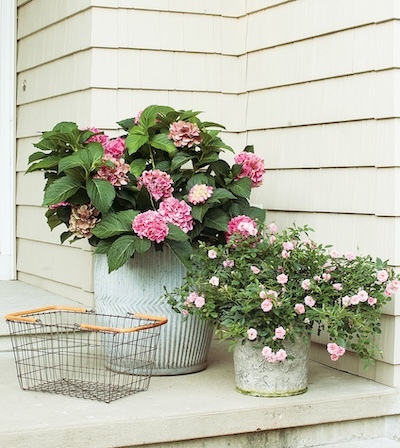
Bred in Germany as potted gift plants, Cityline® hydrangeas stay about 1 to 3 feet tall with no pruning, yet carry big, 5-inch flower heads in red, pink, purple, and blue.
Many bigleaf hydrangeas grow 3 to 6 feet wide and need careful pruning to stay in bounds. Prune at the wrong time and you cut off next summer’s flowers. Cityline® hydrangeas avoid the problem by staying about 1 to 3 feet tall and wide on their own.
Despite their size, they carry full-size mophead flowers on stiff stems, with a big flower head at the end of nearly every stem. That makes them easy to fit into foundation beds, front-of-border spots, patio pots, and balcony planters.
Cityline® wasn’t bred for gardens at all. Its compact size comes from a search for a better potted hydrangea.
Brothers Franz-Xaver and Konrad Rampp of Rampp Jungpflanzen, a young-plant nursery in Pfaffenhausen, Germany, selected Paris and Vienna from a group of hydrangea seedlings.
The breeders wanted potted hydrangeas that grew early and could be held in cold storage without the chemical growth regulators often used to keep potted hydrangeas short.
Paris (U.S. Plant Patent 10,906) and Vienna (10,930) were patented in 1999 with notably high mildew resistance.
Proven Winners found the plants being sold as gift plants in Germany and saw they performed just as well outdoors. Each is named for a city, except Mars, which is named for the planet.
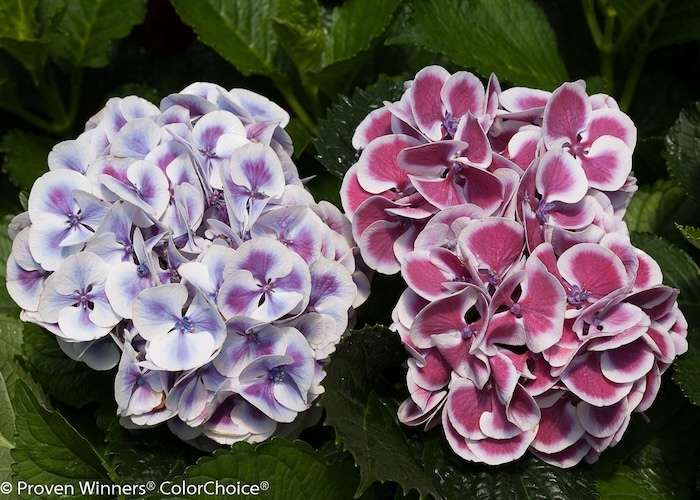
Like other bigleaf hydrangeas, Cityline® flower color depends on how acidic your soil is. Choose the variety that suits your soil, or adjust the soil to get the color you want.
| Variety | Alkaline Soil | Acidic Soil |
|---|---|---|
| Paris | Rich red-pink | Red, purplish centers |
| Vienna | Purple-pink | Light blue |
| Venice | Fuchsia to rich mauve | Mid-blue |
| Rio | Purple | Deep blue |
| Mars | Pink & white | Blue & white |
Best picks: Rio for the deepest blue, then Venice and Vienna.
Best picks: Paris for red in any soil, then Vienna and Venice for pink.
Be patient: soil changes work slowly, and color often shifts over a season or more. Treat in fall or early spring, and expect a mix of shades along the way.
All five stay compact, need no routine pruning, and bloom from early through late summer. Here is what makes each one different.
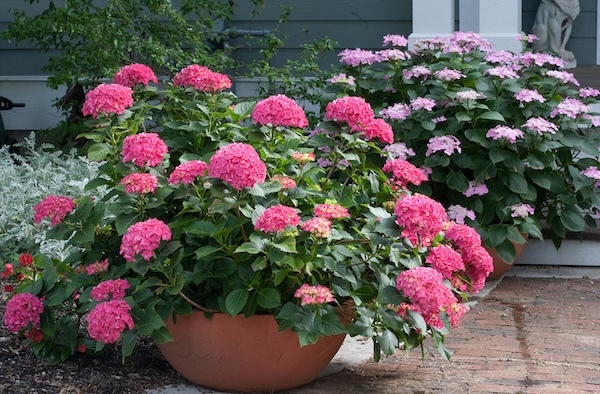
The reddest bigleaf hydrangea, in the smallest package
Paris is one of the smallest hydrangeas on the market, often staying under 2 feet tall. Its deep fuchsia-red flowers hold their color in almost any soil, developing only purplish centers in acidic ground.
Good to know: Its patent records extremely high mildew resistance, so the dark green leaves stay clean all season.
Shop Cityline® Paris →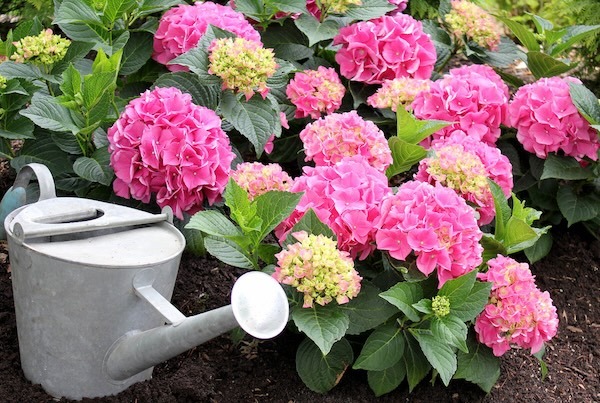
Big mopheads on thick, sturdy stems
One of the first two Cityline® selections, Vienna forms a neat mound covered in large mophead flowers. Blooms open green, then mature to purple-pink in neutral to alkaline soil or light blue in acidic soil.
Good to know: Thick stems hold the heavy heads upright, which makes Vienna a strong choice for tall urns and front-entry containers.
Shop Cityline® Vienna →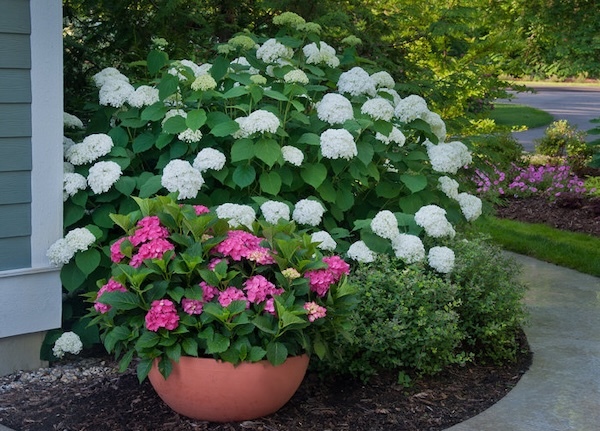
Bright fuchsia flowers that can turn rich blue
Venice is very compact, with big, long-lasting fuchsia-pink flowers that shift to mauve or mid-blue in more acidic soil. Late in summer, the flowers age to an attractive green, and glossy, mildew-resistant leaves keep the plant looking fresh.
Good to know: Its tidy size suits foundation beds and the front of shrub borders, where it won’t block windows or walkways.
Shop Cityline® Venice →
The best blue, and an early bloomer
Rio blooms early, with large, long-lasting flowers that range from strong blue to purple depending on soil. It is the go-to Cityline® for blue flowers, especially in containers where you control the potting mix.
Good to know: The fullest plant in the series, Rio makes a dramatic centerpiece in mixed containers.
Shop Cityline® Rio →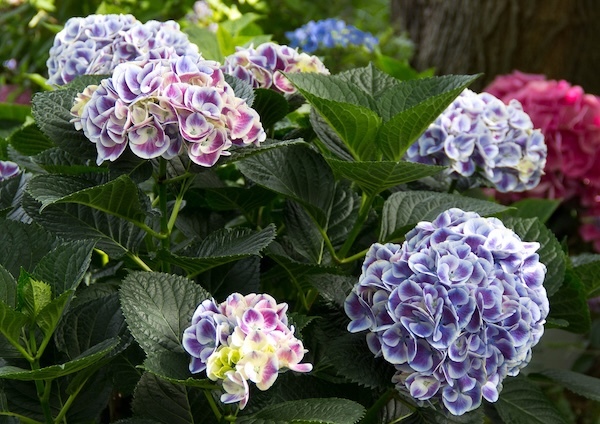
Variegated flowers edged in white
Mars is the most unusual Cityline®. Each floret is edged in white, so flowers read as magenta-pink and white in alkaline soil or indigo-blue and white in acidic soil. The bicolor flowers last a long time and age to green.
Good to know: Mars stands out in arrangements. Pair it with dark foliage like Black Lace® elderberry to make the white edges glow.
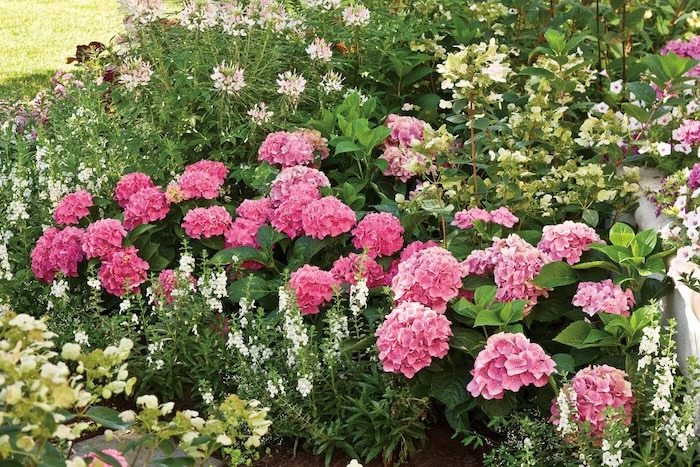
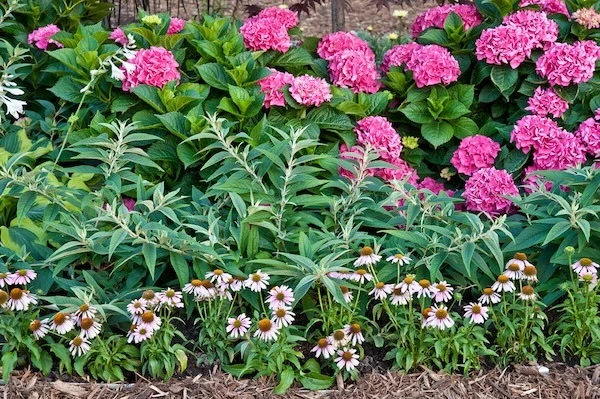
Shop Cityline® Mars →Their compact size lets Cityline® hydrangeas go where full-size hydrangeas can’t: up front, up close, and in pots.

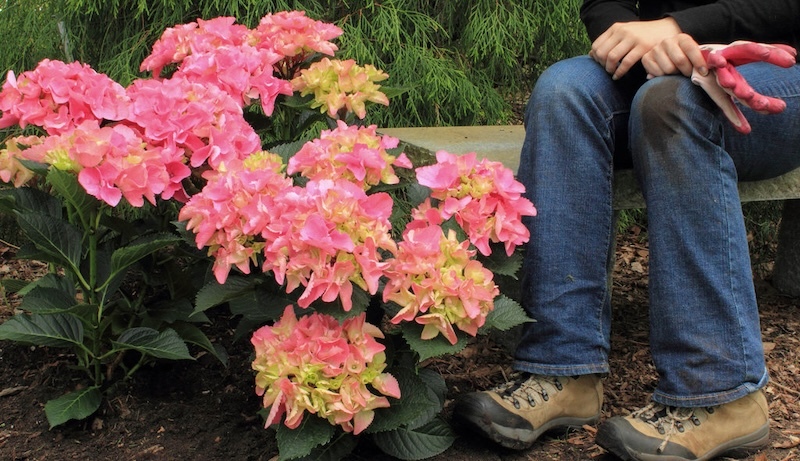
See why Paris is called the reddest hydrangea and one of the smallest on the market, and why you should skip pruning it.
A quick look at how soil pH sets Cityline® flower color, and how lime or sulfur can shift it toward pink or blue.
Give Cityline® steady moisture and a little afternoon shade, and protect the flower buds over winter. Most of the work is knowing what not to do.
Cityline® hydrangeas bloom on old wood: next summer’s flower buds form on this year’s stems in late summer and fall. Cut those stems in fall, winter, or spring and you cut off the flowers. Because the plants stay small on their own, there is rarely any reason to prune.
Use a container with drainage holes, about 16 inches wide or more for one plant. Don’t leave it sitting in a saucer of water.
Water whenever the top inch of soil is dry, letting some water run out the bottom each time.
Use a potting mix for acid-loving plants and a blue hydrangea fertilizer. Encore® azaleas and other acid lovers can share the same pot and food.
In Zones 5–6, move pots to an unheated garage or shed after the leaves drop and keep the soil barely moist, or plant into the ground in fall.
Quick answers to the questions gardeners ask most about color, pruning, and growing compact hydrangeas.
Blue flowers need acidic soil, below about pH 6, with aluminum available to the plant. Test your soil, then lower the pH with elemental sulfur or aluminum sulfate at label rates. Color shifts gradually, often over a season or more. If your soil is alkaline, growing Rio, Venice, or Vienna in a pot of acidic potting mix is the easiest route to blue.
That is normal aging. As florets mature late in summer, they lose some color and turn green or antique shades. Venice and Mars are especially known for aging to an attractive green. It is not a sign of a problem.
No. Paris holds its red color in most soils. In acidic soil it develops only purplish centers. Choose it if you want red flowers regardless of your soil.
No. They stay compact on their own and bloom on old wood, so pruning usually removes flower buds. In spring, once leaves appear, cut out only dead stems. If you need to shape a plant, do it right after it flowers.
Because Cityline® blooms on old wood, a missed season usually means the buds were lost. Common causes are pruning in fall or spring, a harsh winter or late spring frost, or too much shade. Heavy nitrogen fertilizer can also produce leaves instead of flowers. In Zones 5–6, protect the buds over winter and skip pruning.
No, they are not reblooming hydrangeas. They flower once each year, starting in early summer, but the long-lasting flower heads change color as they age, so the display runs from early summer into late summer.
Yes, in cooler climates and with consistently moist soil. In hot regions, morning sun and afternoon shade keep the leaves from scorching and the flowers from fading quickly.
Yes. They were originally bred as pot plants. In mild climates, pots can stay outdoors all year. In Zones 5–6, potted roots and buds need extra protection, so move pots to an unheated garage or shed for winter, or plant them into the ground in fall.
Space plants about 2 to 4 feet apart. Use the closer spacing for a quick, full edging or mass planting, and the wider spacing to let each plant show its rounded shape.
No. Deer will browse hydrangea leaves and flower buds. Where deer are common, use a repellent or grow Cityline® in containers close to the house.
Yes. The ASPCA lists hydrangea as toxic to dogs, cats, and horses. Eating the leaves or flowers can cause vomiting, diarrhea, and lethargy. Keep plants away from pets that chew on plants, and contact your veterinarian with concerns.
Yes. They are rated salt tolerant and flourish in seaside gardens. Water regularly, since sandy coastal soil dries out quickly.