

Light Needs

Mature Height

Mature Spread

Growing Zones
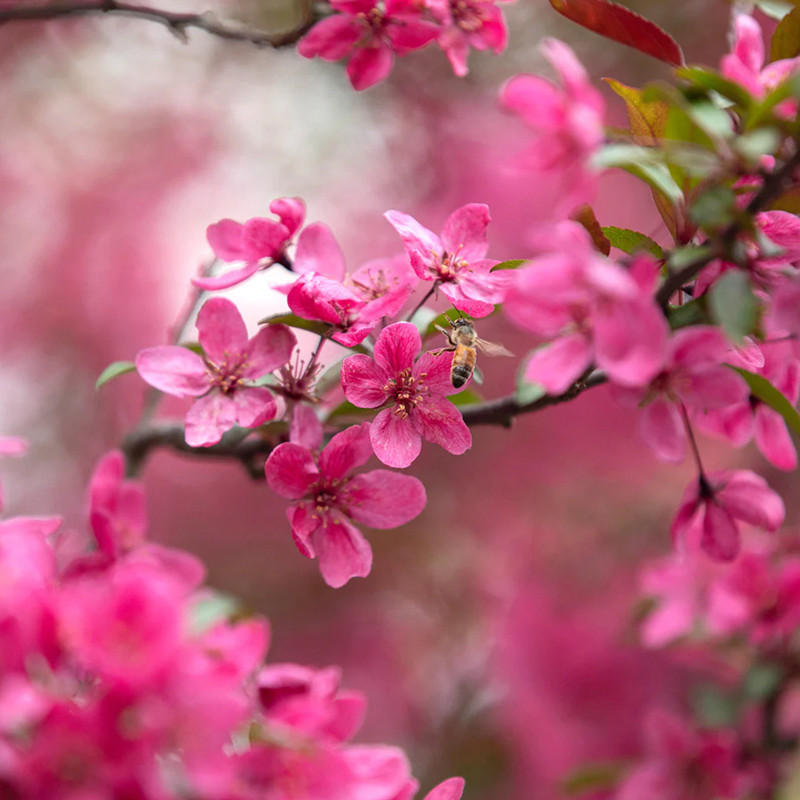
Prairie Fire Crabapple lights up spring with deep pink-red flowers packed across a rounded ornamental canopy. Prairie Fire Crabapple, Malus 'Prairifire', follows its bloom with purple-red fruit that persists into fall and winter, giving birds a useful cold-season food source. New foliage opens with maroon-purple tones, matures to dark green with reddish veins, and shifts orange in autumn. We like this crabapple where it can be seen from a kitchen window, because the seasonal changes keep the view interesting well past spring.
This University of Illinois introduction is valued for stronger disease resistance than many older crabapple selections. It grows about 15 to 20 feet tall and wide, with an upright form that becomes more rounded with age. The small fruits are edible but tart, making them better suited for jelly, preserves, or cider than fresh eating. Use it as a specimen, in a loose driveway allee, near a pollinator garden, or at the edge of a cottage-style planting where flowers, fruit, and fall color all contribute.
Prairie Fire Crabapple Care
Plant Prairie Fire Crabapple in full sun for the heaviest bloom, best fruit set, and strongest foliage color. It grows in well-drained loam, sandy soil, or clay soil, and adapts to average garden conditions once established. A slightly acidic to neutral pH is preferred, though this crabapple is fairly adaptable when drainage is good.
Water regularly during the first growing season, checking about 3 inches down and soaking when the soil feels dry. Established trees tolerate some drought, but deep watering during long dry spells helps reduce stress and supports next year’s flower buds. Feed in early spring with a balanced slow-release fertilizer before new growth appears.
Prune in late winter to remove dead, damaged, crossing, or crowded branches, even though a few flower buds may be lost. Avoid spring pruning, since fresh cuts can increase fire blight risk during active growth. Rake fallen leaves if disease has been present, and keep mulch pulled back from the trunk to protect the bark.
Prairie Fire Crabapple Spacing
Space Prairie Fire Crabapple 15 to 20 feet from other trees, structures, and large shrubs so the rounded canopy can develop naturally. For container growing, use a very large 25-gallon or larger planter only while the tree is young, with plans to move it into the landscape as it matures. Plant it with bee balm, daylilies, catmint, or viburnum in sunny beds where pollinator activity, seasonal color, and well-drained soil suit the planting.
Simple Plant Spacing Calculator

Please Note: The pictures below are to give a general representation of the different container sizes. The actual size/ages of plants are estimates and will vary based on type of plant, time of year, last pruning & many other factors.
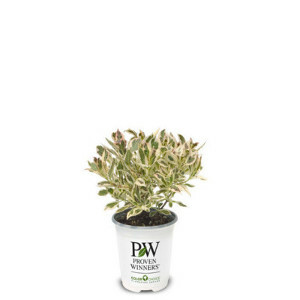
Also Known As:
Quart
Plant Age:
~ 6 months - 1 year
Plant Size:
~ 4"-8"
Pot Size:
~ 4.75"H x 4.5"W
Volume:
1.50 quarts
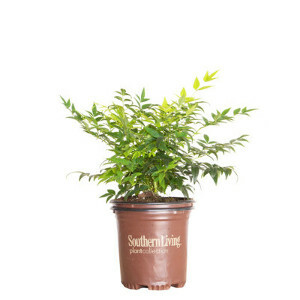
Also Known As:
2.5 Quart Pot
Plant Age:
~ 1 - 2 years old
Plant Size:
~ 8"-12"
Pot Size:
~ 6.5"H x 6.5"W
Volume:
2.20-2.30 quarts
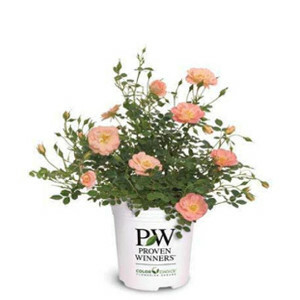
Also Known As:
#1 Container
1 Gallon
Plant Age:
~ 1 - 2 years old
Plant Size:
~ 10"-14"
Pot Size:
~ 7"H x 7.75"W
Volume:
2.26-3.73 quarts
Also Known As:
#2 Container
2 Gallon
Plant Age:
~ 1.5 - 3 years old
Plant Size:
~ 12"-18"
Pot Size:
~ 9.5"H x 9.5"W
Volume:
1.19-1.76 gallons
Also Known As:
#3 Container
3 Gallon
Plant Age:
~ 2 - 4 years old
Plant Size:
~ 12"-30"
Pot Size:
~9.5"H x 11"W
Volume:
2.32-2.76 gallons

Also Known As:
#5 Container
5 Gallon
Plant Age:
~3-4 years old
Plant Size:
~ 20" - 60"
Pot Size:
~11" H x 10 1/2” W
Volume:
3.5 - 4 gallons

We stand behind our plants with industry-leading guarantees to give you peace of mind.
We want your plants to arrive in great condition! If you notice any issues upon delivery, contact us within 3 days.
Starting January 1, 2026 all bushes, perennials & trees purchased come with an extended 1-year warranty for added confidence. If your plant dies due to a health issue within a year, we’ll make it right.
Plants that are currently in stock typically ship within 2-7 business days after your order is placed.
Plant Addicts ships to the lower 48 states within the U.S. Unfortunately, we do not currently ship to Alaska, Hawaii, or internationally.
This plant cannot be shipped to the following states: AR,AZ,CA,ID,LA,OR,WA, AK, HI. These restrictions apply only to this specific plant due to agricultural regulations or other limitations. Other plants may still be available for shipping to these states.
If you have any questions about shipping restrictions, feel free to reach out to our team!