
Pugster Butterfly Bushes 1 to 8 of 8 total


Pugster Butterfly Bushes 1 to 8 of 8 total
Chat/Email Support
Mon-Thur, 7 AM - 6 PM CST
Fri, 7 AM - 5 PM CST
Sat-Sun, 9 AM - 3 PM CST
Chat Us Email Usinfo@plantaddicts.com
Phone Support
Mon-Fri, 8 AM to 5 PM CST
Pugster® butterfly bushes pack large, fragrant flower spikes onto short, sturdy stems. Their long summer-to-fall bloom season draws butterflies, bees, and hummingbirds to borders, containers, patios, and small gardens.
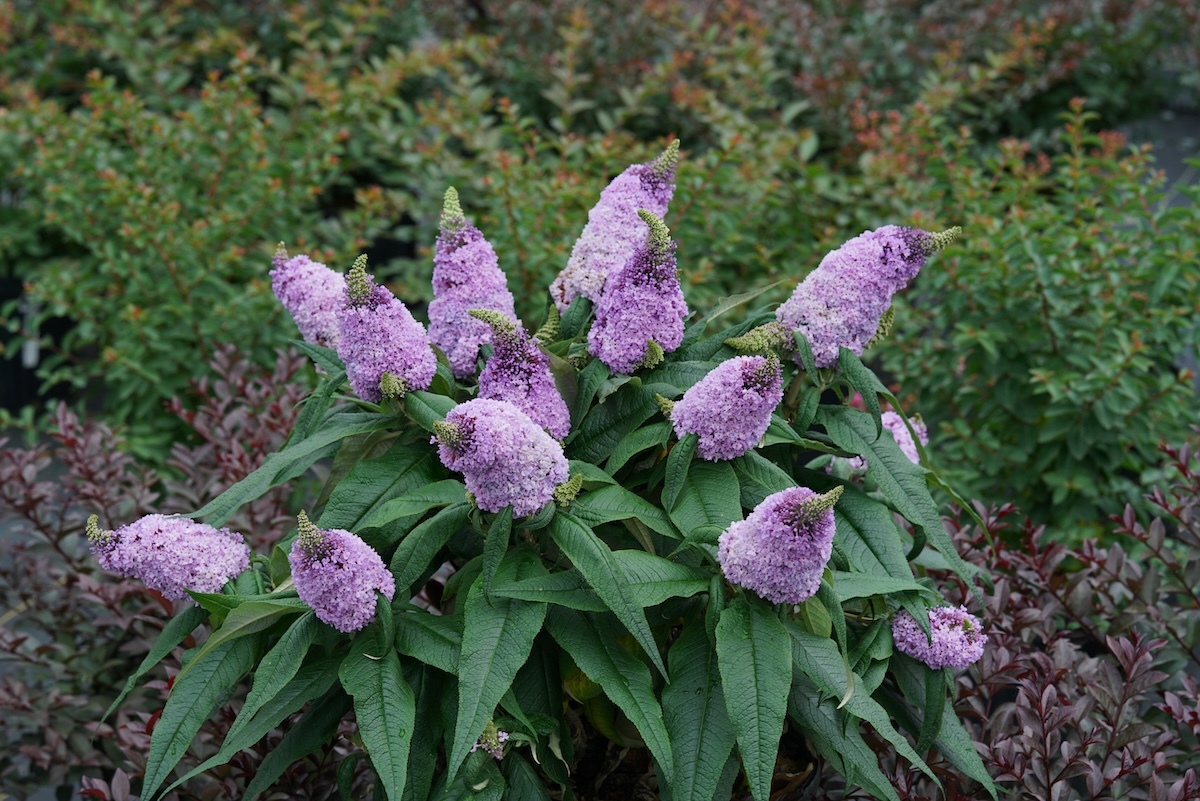
Pugster® butterfly bushes were bred for oversized flower spikes on a much smaller, stockier plant. Thick stems support the large flowers and help give the series greater durability than many older dwarf selections. Most Pugsters stay only about 1 to 3 feet tall, making them easy to fit into borders, containers, low hedges, and smaller landscapes.
The shrubs stay low and compact without sacrificing flower size. Thick spikes of tiny, fragrant blooms cover the short, rounded plants in summer.
Pugster® butterfly bushes flower on new growth and produce blooms through summer and into fall. Deadheading is not necessary to keep new flowers coming.
Fragrant flower spikes attract butterflies, bees, and hummingbirds. Their compact size makes it easy to repeat several plants throughout a sunny pollinator planting.
The series covers a broad range of flower colors, from white and pastel purple to saturated blue, pink, and purple-pink. Pico Punch® is the smallest selection, and Sorbet® adds unique multicolored blooms.
| Variety | Flower Color | Mature Size | Zones | Best Feature |
|---|---|---|---|---|
| Pugster Blue® Butterfly Bush | Deep violet-blue | 2' H × 2–3' W | 5–9 | Large blue flower spikes on a dwarf plant |
| Pugster® Amethyst Butterfly Bush | Amethyst purple | 2' H × 2' W | 5–9 | Soft purple flowers with warm-colored eyes |
| Pugster Pinker® Butterfly Bush | Rich pink | 2' H × 2–2.5' W | 5–9 | Saturated pink flowers with orange eyes |
| Pugster Pico Punch® Butterfly Bush | Rich purple-pink | 1–2' H × 1–2' W | 5–9 | Smallest Pugster® for tight spaces & edging |
| Pugster Sorbet® Butterfly Bush | Purple & white | 2–3' H × 2–3' W | 5–9 | Multicolored flowers & seedless In-Check® selection |
| Pugster Periwinkle® Butterfly Bush | Periwinkle purple | 2' H × 2–3' W | 5–9 | Cool-toned purple flowers for mixed borders |
| Pugster White® Butterfly Bush | White | 2' H × 2–3' W | 5–9 | Bright white flowers & tidy branching |
| Pugster Pink® Butterfly Bush | Soft pink | 2' H × 2–3' W | 5–9 | Classic soft pink Pugster® color |
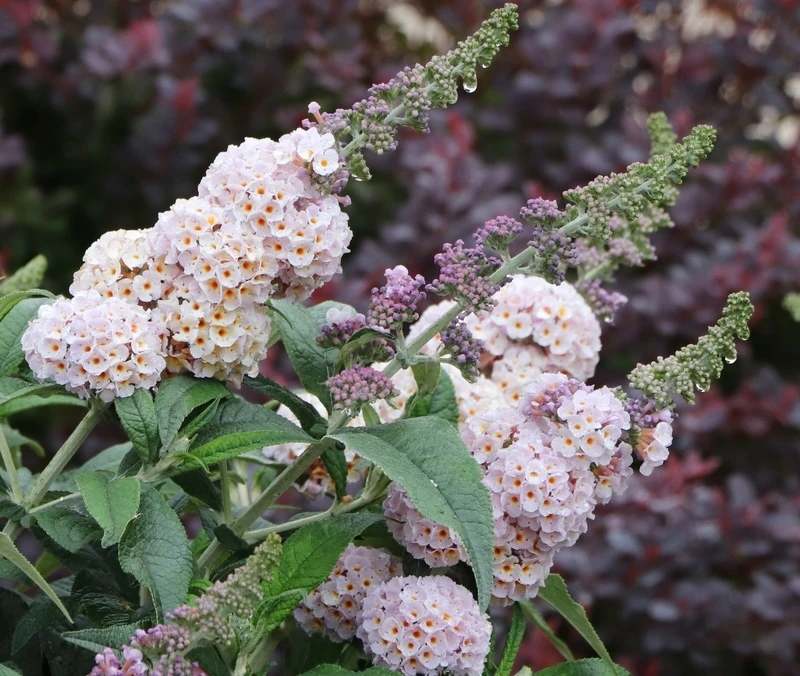
Many dwarf shrubs become smaller in every way, including their flowers. Pugster® takes a different approach. The plants remain short and stocky but carry substantial flower spikes more typical of much larger butterfly bushes.
Pugster Blue® can produce flower spikes up to about 6 inches long, creating a dramatic scale against a plant only about 2 feet tall.
Thick stems help support the flowers and contribute to the sturdy habit that gives the series its distinctive appearance.
Pugster® is low maintenance once established. Plenty of sun and excellent drainage are the two most important requirements.
Give Pugster® butterfly bushes at least six hours of direct sunlight each day. Full sun supports dense growth, heavy flowering, and a compact habit.
Butterfly bush tolerates average and even relatively lean soil, but poorly drained soil can cause problems, especially during winter. Avoid low spots that stay wet. In heavy soil, planting the crown slightly above grade can improve drainage around the root system.
Keep newly planted Pugsters watered through their first growing season. Established plants tolerate dry periods well, but deep watering during extended drought helps prevent wilting and stress.
Leave the stems standing through winter. Once green growth begins to emerge in spring, remove dead wood and cut the plant back to healthy buds. Avoid fall pruning, especially in colder climates.
Pugster® butterfly bushes do not need rich soil or heavy feeding. If needed, apply a light dose of slow-release shrub fertilizer in spring. Excess fertilizer can encourage leafy growth instead of flowers.
Deadheading is not required for continuous flowering. New flower spikes continue developing through the season without removing faded blooms.
Their low height and long flowering season make Pugsters useful in places where a traditional butterfly bush would become too large.
Use Pugsters in front of taller shrubs, ornamental grasses, and perennials since their low habit keeps neighboring plants visible.
Repeat several colors through a sunny pollinator bed to provide nectar-rich flowers for butterflies, bees, and hummingbirds.
Their compact size makes Pugsters easy to place near patios and outdoor seating where the flowers, fragrance, and visiting butterflies can be enjoyed up close.
Repeat one variety along a walkway or bed edge for a low band of summer and fall flowers.
The dwarf habit fits large outdoor containers. Pico Punch® is a great choice if planter space is limited.
Groups of Pugsters create a broad sweep of flowers without the height and open structure of traditional butterfly bushes.
With varieties ranging from about 1 to 3 feet tall, the series allows smaller and urban landscapes to enjoy butterfly bush flowers.
Long flower spikes can be clipped for fresh arrangements. White and cool purple selections readily combine with garden bouquets.
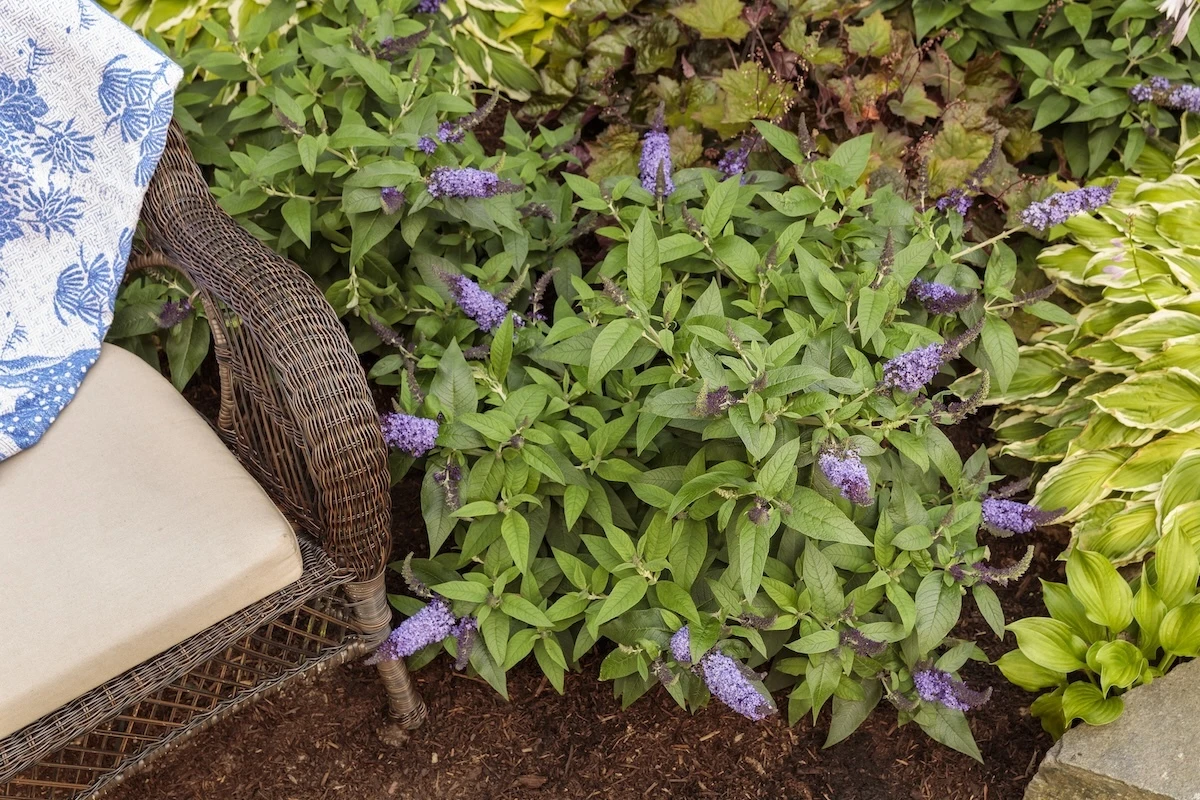
Traditional butterfly bushes can overwhelm spaces close to patios and walkways. Pugster® stays much lower, so the fragrant flowers can be planted near outdoor living areas without creating a large wall of foliage.
Place several plants near a sunny seating area and you can enjoy both the flowers and the butterflies, bees, and hummingbirds that visit them throughout summer.
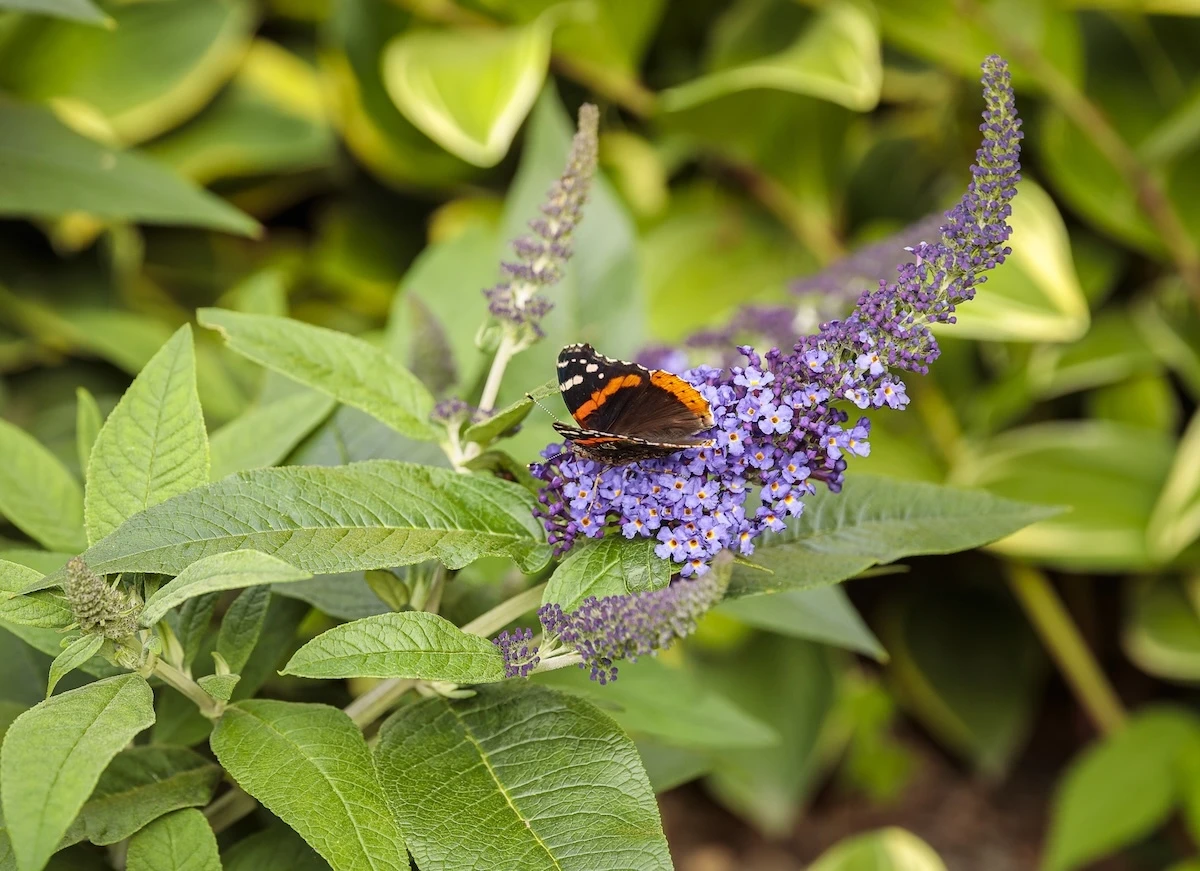
Each long flower spike is made up of many small nectar-rich flowers, so butterflies and other pollinators can find multiple feeding opportunities in one place.
Butterfly bush is a nectar plant rather than a host plant for monarch caterpillars. Pair Pugster® with milkweed and other native host plants to create a more complete butterfly habitat.
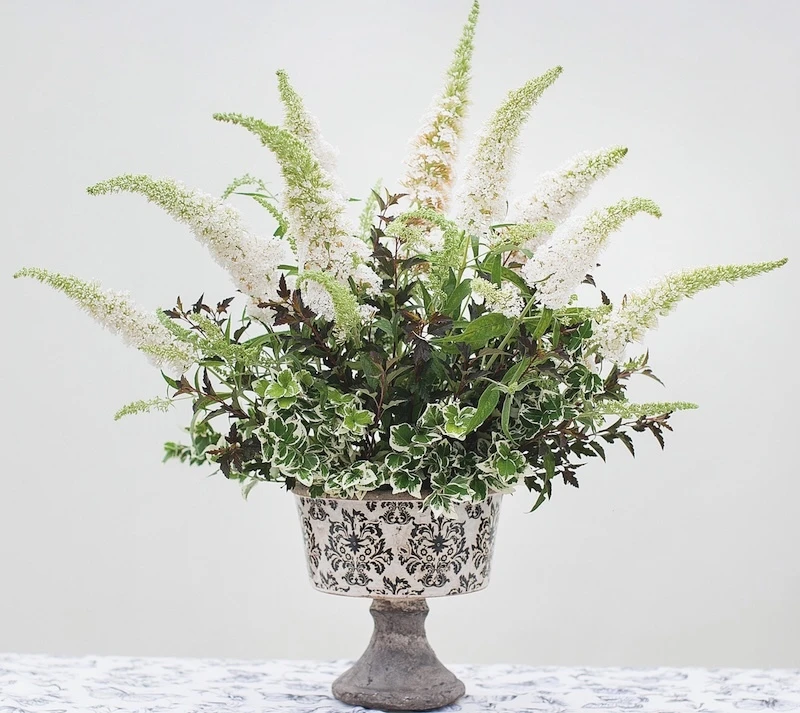
Pugster® flowers can also be cut for fresh arrangements. Their long, tapered flower spikes add a different shape to bouquets filled with rounded garden flowers.
Cut stems when plenty of individual flowers are open but the spike still looks fresh. The white flowers in the adjacent photo belong to Pugster White® and pair easily with other garden colors.
Plant Addicts offers a broad selection of Pugster® colors along with practical care information, purchase protection, and support from a family-owned online plant nursery.

Shop thousands of plants for landscapes, pollinator gardens, patios, and containers.
Shop All Plants

Bushes, perennials, and trees purchased from Plant Addicts include an extended one-year plant warranty for added protection.
View Our Warranty

Find thousands of practical plant care articles covering planting, pruning, watering, fertilizing, and seasonal care.
Explore Plant Care

Plant Addicts is a small family-owned business focused on helping gardeners find plants that fit their landscapes.
About Plant Addicts
Butterfly bush can be invasive or regulated in some parts of the United States, so the answer depends on the specific cultivar and where you live. Pugster Sorbet® is a seedless member of Proven Winners' In-Check® program. Other Pugster® cultivars may be restricted from sale or shipment in certain states. Check the individual product page and your state or local invasive plant regulations before planting.
Prune Pugster® butterfly bushes in spring after new growth begins to appear. Waiting for swelling buds or fresh green growth makes it easier to identify living stems after winter. Avoid pruning in fall, especially in colder climates.
Once spring growth begins, remove dead or damaged stems and cut the remaining branches back to healthy buds to create a compact, rounded plant. Pugsters flower on new wood, so spring pruning encourages fresh stems that will carry that season's flowers. Avoid cutting back the plant repeatedly during summer.
Wait until spring rather than cutting Pugster® back in fall. Once the plant begins showing new growth, remove winter-damaged wood and shorten the remaining stems as needed. In cold areas, butterfly bush can be slow to break dormancy, so give the plant time before deciding a stem is dead.
Most Pugster® butterfly bushes mature around 2 feet tall and 2–3 feet wide. Pugster Pico Punch® is even smaller at roughly 1–2 feet tall and wide, and Pugster Sorbet® can reach approximately 2–3 feet tall and wide. Their compact size is one of the main differences between Pugsters and traditional butterfly bushes.
Pugster® butterfly bushes flower during summer and continue producing new blooms into fall, often until frost. Exact timing varies with climate and spring temperatures.
No. Pugster® butterfly bushes continue flowering without routine deadheading. You can remove faded blooms for appearance if desired, but it is not necessary to keep the shrub producing flowers.
Yes. Plant Pugster® butterfly bushes where they receive at least six hours of direct sunlight per day. Full sun supports dense growth and the heaviest flower production.
Yes. Their dwarf habit makes Pugsters well suited to substantial outdoor containers. Use a planter with generous drainage holes and a fast-draining potting mix, and monitor moisture more frequently during hot weather. Pico Punch® is especially useful where container space is limited.
Butterfly bush is generally considered deer and rabbit resistant, and the Pugster® series is commonly recommended where browsing pressure is a concern. Deer resistance does not mean deer-proof, so occasional browsing can still occur.
Plant Addicts sells Pugster Blue®, Amethyst, Pinker®, Pico Punch®, Sorbet®, Periwinkle®, White®, and Pink® butterfly bushes online. Availability and shipping eligibility vary by cultivar and destination, so check the products above for current options.
Choose Blue® for deep violet-blue flowers, Amethyst for softer purple, Pinker® for rich pink, Periwinkle® for cool purple, White® for bright neutral blooms, Pink® for classic soft pink, Pico Punch® for the smallest spaces, or Sorbet® for unusual purple-and-white flowers.