
Quick Fire Hydrangeas 1 to 6 of 6 total


Quick Fire Hydrangeas 1 to 6 of 6 total
Chat/Email Support
Mon-Thur, 7 AM - 6 PM CST
Fri, 7 AM - 5 PM CST
Sat-Sun, 9 AM - 3 PM CST
Chat Us Email Usinfo@plantaddicts.com
Phone Support
Mon-Fri, 8 AM to 5 PM CST
Quick Fire® hydrangeas start the show earlier than most panicle hydrangeas, opening white before shifting through pink and rich rosy-red tones. Choose from tiny, compact, full-sized, and tree-form plants for nearly any garden space.
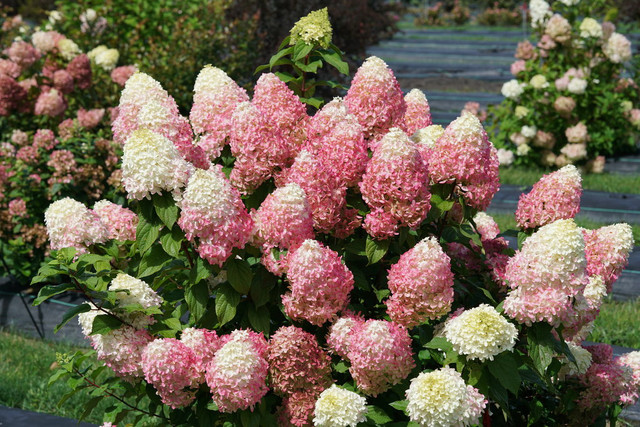
Quick Fire® hydrangeas are known for dependable flowers that appear earlier than those of many other panicle hydrangeas. Blooms begin white, then develop pink and increasingly rich rosy-red tones as the season progresses. With plants ranging from under 3 feet to 8 feet tall, the series offers the same long season of changing color in sizes suited to everything from containers to large flowering hedges.
Quick Fire® varieties begin flowering earlier than most panicle hydrangeas, bringing hydrangea season forward and giving the flowers more time to develop their pink and red fall tones.
Blooms emerge creamy white before taking on pink and deeper red tones. The change happens naturally as the flowers mature and is not controlled by soil pH.
Tiny Quick Fire® stays under 3 feet tall, Little Quick Fire® fits smaller landscapes, and full-sized Quick Fire® and Quick Fire Fab® can anchor large beds, hedges, and screens.
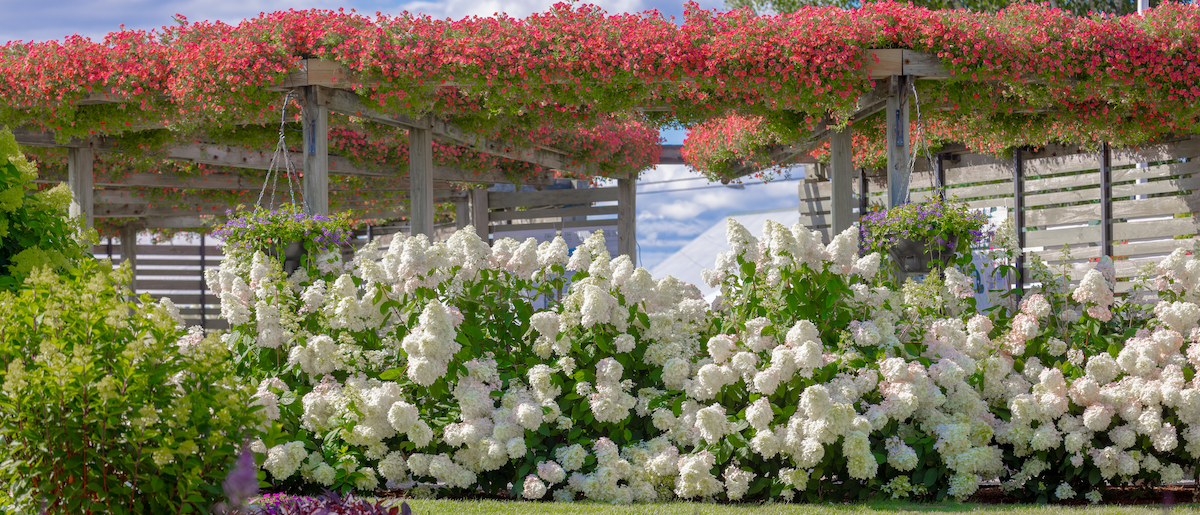
Start with the space you have available. The series ranges from a petite shrub suited to edging and containers to large flowering shrubs and a tree-form focal point.
| Variety | Mature Size | Flower Color | Form | Best For |
|---|---|---|---|---|
| Tiny Quick Fire™ Hydrangea | 1.5–3' H × 2–3' W | White aging to pink-red | Compact shrub | Edging, containers, small beds & mass plantings |
| Little Quick Fire® Hydrangea | 3–5' H × 3–5' W | White aging to deep pink-red | Dwarf shrub | Foundations, low hedges, borders & large containers |
| Quick Fire® Hydrangea | 6–8' H × 6–8' W | White aging to rosy pink-red | Large shrub | Hedges, screens, specimens & large borders |
| Quick Fire Fab® Hydrangea | 6–8' H × 5–6' W | White to pink to deep red | Large shrub | Hedges, specimens, screens & cut flowers |
| Quick Fire Fab® Hydrangea Tree | 6–8' H × 5–6' W | White to pink to deep red | Tree form | Focal points, entries, patios & smaller garden beds |
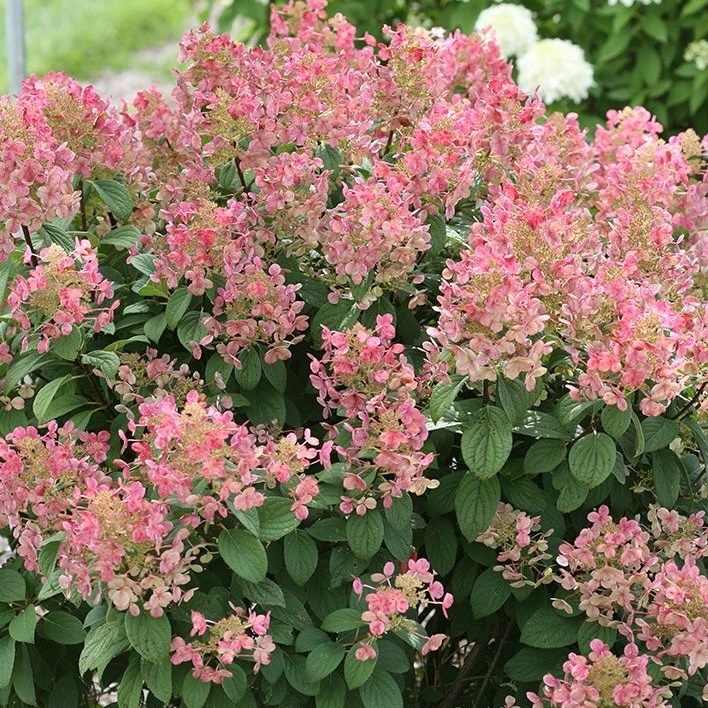
Quick Fire® hydrangeas do not stay one color all summer. New flowers begin white or creamy white, then blush pink as they mature. Later in the season, the flowers can deepen to rich rosy-pink and red shades.
Temperature, sunlight, moisture, and climate can influence how strongly the later colors develop. Unlike many bigleaf hydrangeas, changing the soil pH will not turn Quick Fire® flowers blue.
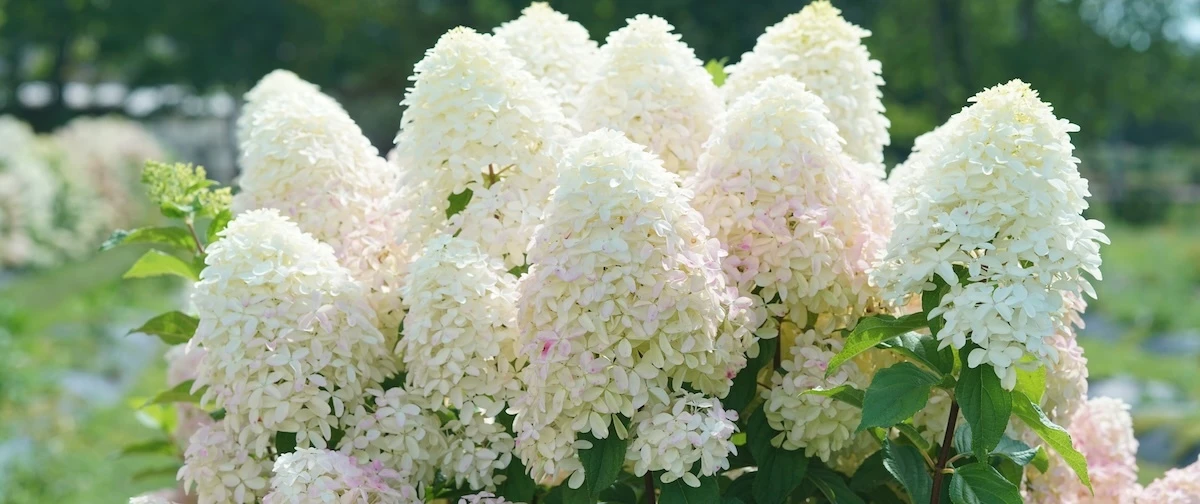
Quick Fire Fab® adds another variation to the look with large, full panicles and unusual cross-shaped florets that create a dense, textured flower head.
Panicle hydrangeas are among the easiest hydrangeas to grow. Give Quick Fire® the right amount of light, good drainage, and regular moisture during establishment, and yearly care is straightforward.
Plant Quick Fire® hydrangeas in part sun to full sun. In cooler climates, more direct sun supports strong growth and flowering. Some afternoon shade is helpful in regions with intense summer heat.
Panicle hydrangeas adapt to many soil types but perform poorly in waterlogged ground. Plant in soil that drains readily after rain. A 2- to 3-inch mulch layer helps conserve moisture and moderate soil temperature.
Keep the root zone consistently moist during the first growing season. Established plants need less frequent watering, but deep irrigation during hot, dry periods supports healthy foliage, flowering, and flower color development.
Quick Fire® hydrangeas bloom on new wood. Prune before vigorous spring growth begins, removing dead or weak stems and shortening the main branches by about one-third if shaping is needed. Heavy late-spring pruning can delay the early flower display.
Established Quick Fire® hydrangeas generally need little fertilizer. If growth is weak or the soil is nutrient-poor, apply a slow-release fertilizer for flowering shrubs in early spring according to the product label.
Spent flowers do not need to be removed for the shrub to rebloom the following year. Leave mature panicles in place for fall and winter interest, cut them for arrangements, or remove them during spring pruning.
The unusually broad range of sizes is one of the biggest advantages of the Quick Fire® family.
Tiny Quick Fire™ fits along walkways, at the front of shrub borders, and in compact urban or suburban beds.
Little Quick Fire® brings early summer flowers to foundation plantings and stays a manageable size.
Full-sized Quick Fire® and Quick Fire Fab® create substantial flowering hedges with months of changing color.
Quick Fire Fab® Tree lifts the flowers above a single trunk, creating a vertical accent for entries, patios, and mixed beds.
Tiny Quick Fire™ and Little Quick Fire® are the easiest shrub forms to accommodate in large outdoor planters.
Harvest panicles at different stages for white, pink, or deeper rosy-red flowers in fresh and dried arrangements.
Pair Quick Fire® hydrangeas with lower perennials and shrubs to add height and a long season of summer flowers.
Repeat one compact variety across a larger bed for a simple planting with strong summer-to-fall impact.
Choosing the right hydrangea is only part of a successful planting. Plant Addicts combines nursery-grown plants with plant care resources and purchase protection to help gardeners get their shrubs established and growing well.

Shop thousands of landscaping plants grown and shipped from professional nurseries.
Shop Plants

Eligible plants include Plant Addicts' extended warranty for added protection after your order arrives.
View Our Warranty

Access more than 3,000 plant care articles covering planting, pruning, watering, fertilizing, and seasonal care.
Explore Plant Care

Plant Addicts is a family-owned online nursery focused on helping gardeners choose plants that fit their landscapes.
About Plant Addicts
Quick Fire® hydrangeas are among the earliest panicle hydrangeas to flower. Depending on climate and spring weather, flowers generally begin in early summer and can appear several weeks earlier than many other panicle hydrangeas. The blooms start white and gradually turn pink and deeper rosy-red as the season progresses.
Little Quick Fire® is also an early-blooming panicle hydrangea. It typically begins flowering in early summer, with white flowers developing increasingly pink and red tones through summer and into fall. Exact timing varies with climate and spring temperatures.
The original Quick Fire® Hydrangea is a large shrub that reaches approximately 6–8 feet tall and 6–8 feet wide. Give it enough room to develop its natural upright, rounded form or use several plants for a substantial flowering hedge or screen.
Little Quick Fire® generally matures to approximately 3–5 feet tall and 3–5 feet wide. Its smaller size makes it easier to use near foundations, in mixed borders, as a low flowering hedge, or in a large container.
Prune Quick Fire® hydrangeas in late winter or early spring before vigorous new growth begins. Panicle hydrangeas flower on new wood, so you can shorten the branches by about one-third and still get flowers that summer. Avoid waiting until late spring because later pruning can delay the early bloom that makes the Quick Fire® series distinctive.
Quick Fire® hydrangeas bloom on new wood. Their flower buds develop on stems produced during the current growing season, which helps them flower reliably even after severe winters.
Tiny Quick Fire™ is the smallest shrub in the series. It grows approximately 18 inches to 3 feet tall and 2–3 feet wide, making it a useful choice for small beds, edging, mass plantings, and containers.
Both are large, early-blooming panicle hydrangeas. Quick Fire® has looser flower clusters with fertile and sterile florets, whereas Quick Fire Fab® produces larger, fuller panicles with distinctive cross-shaped florets. Quick Fire Fab® grows approximately 6–8 feet tall and 5–6 feet wide.
No. Quick Fire® hydrangeas are panicle hydrangeas, so adjusting soil pH will not turn their flowers blue. The white-to-pink-to-red color progression occurs naturally as the flowers mature.
Yes. Quick Fire® hydrangeas perform well in full sun when they receive adequate moisture. Full sun is especially suitable in cooler climates. In areas with very hot summers, some protection from intense afternoon sun can help reduce heat and moisture stress.
Yes, especially the compact varieties. Tiny Quick Fire™ and Little Quick Fire® are the easiest shrub forms to maintain in large containers. Choose a sturdy container with drainage holes and enough room for the root system, and remember that container-grown hydrangeas require more frequent watering than plants growing in the ground.
Choose Tiny Quick Fire™ for the smallest spaces, Little Quick Fire® for compact landscapes, the original Quick Fire® for a large flowering shrub, or Quick Fire Fab® for full flower panicles in shrub or tree form.