
Vision Astilbe 1 to 5 of 5 total


Vision Astilbe 1 to 5 of 5 total
Chat/Email Support
Mon-Thur, 7 AM - 6 PM CST
Fri, 7 AM - 5 PM CST
Sat-Sun, 9 AM - 3 PM CST
Chat Us Email Usinfo@plantaddicts.com
Phone Support
Mon-Fri, 8 AM to 5 PM CST
Vision Astilbes add upright flower plumes and dense, finely cut foliage to shaded borders, woodland gardens, containers, and mass plantings. Choose from white, pink, raspberry-mauve, and red selections, including compact plants that fit easily near the front of a perennial bed.

Vision Astilbes display upright flower plumes above dense clumps of textured foliage. Their compact scale works well along shaded paths, at the front of perennial borders, around patios, in containers, and in larger groups beneath trees and shrubs. The collection offered by Plant Addicts ranges from creamy white and pale pink to raspberry-mauve and red.
Upright plumes rise above fern-like foliage during summer, adding height and flower color to beds where many sun-loving perennials struggle.
These are not towering astilbes. The five selections carried by Plant Addicts range from roughly 14 inches to just over 2 feet tall, making them easy to layer with other shade plants.
Vision-type Chinese astilbes can handle short dry periods better than many astilbes once established, but they still perform best when the root zone remains consistently moist.
Compare flower color and mature size to choose the right Vision Astilbe for a border, mass planting, container, or shaded mixed bed.
| Variety | Flowers | Mature Size | Zones | Why Choose It |
|---|---|---|---|---|
| Visions Astilbe | Raspberry-pink to mauve | 14–16" H × 12–15" W | 4–9 | Compact classic selection with fragrant plumes and coarse green foliage |
| Vision in Red Astilbe | Red with pink tones | 15" H × 15" W | 4–9 | Strong red color in a compact upright clump |
| Vision in White Astilbe | Creamy to bright white | 20–28" H × 12–18" W | 4–8 | White plumes brighten shaded beds and contrast with dark foliage |
| Visions in Pink Astilbe | Pale pink | 18–24" H × 24–30" W | 3–8 | Broader mound with soft pink flowers and blue-green foliage |
| Little Vision in Pink Astilbe | Pink | 14–16" H × 14–16" W | 4–9 | Compact upright choice for edging, containers, and small beds |
The flowers share the feathery texture that makes astilbe distinctive, but the individual selections range from pale white and pink to deeper raspberry and red shades.

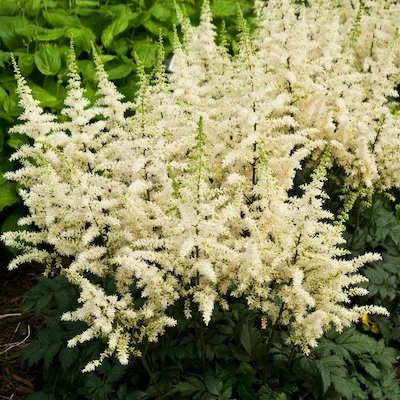
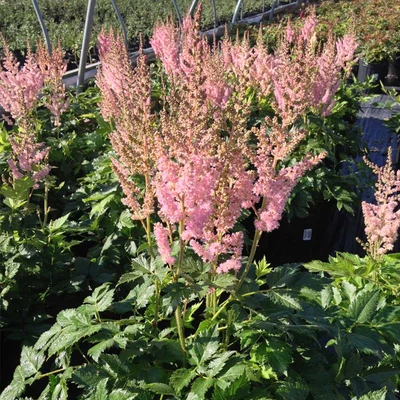

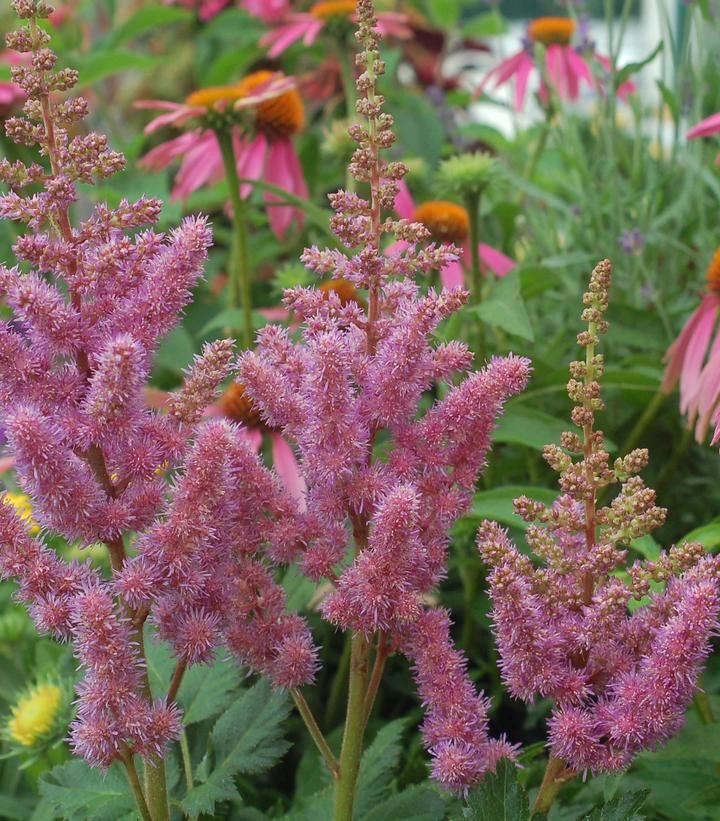
Vision Astilbes are great for adding contrast. Their upright, feathery plumes stand apart from broad hosta leaves, rounded hydrangea flowers, and daisy-shaped perennial blooms.
Match companions by moisture needs; astilbe performs best with plants that also appreciate rich soil and a consistently moist root zone.
In brighter sites, give astilbe reliable moisture and protection from the strongest afternoon sun. The combination helps keep foliage from developing dry, brown edges.
Astilbe is easy to maintain once it is planted in the right place. The main requirement is keeping the shallow root zone from drying out.
Morning sun, filtered light, or part shade provides a good balance between flowering and foliage quality. Vision Astilbes tolerate more sun when the soil remains moist. Deep shade can reduce flowering.
Do not allow the root zone to dry completely during active growth. Deep watering and an organic mulch layer help maintain steady moisture during warm weather.
Plant in humus-rich soil that holds moisture but still drains excess water. Slightly acidic to neutral conditions work well. Compost can improve both moisture retention and soil structure.
Deadheading does not trigger another flush of flowers. Remove old flower stalks for a cleaner appearance or leave the dried seedheads standing for added fall and winter texture.
Old foliage can remain through winter and be removed before new spring growth develops. Leaving the dormant top growth in place can also provide extra winter protection around the crown.
Divide established astilbe every three to four years in early spring if growth becomes crowded. Replant healthy crown sections promptly and keep them well watered as they establish.
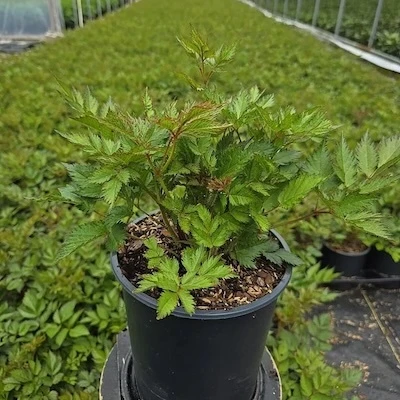
The flower plumes get most of the attention, but foliage and plant shape matter for the rest of the growing season. These nursery-grown plants show the differences in scale, leaf texture, and habit.
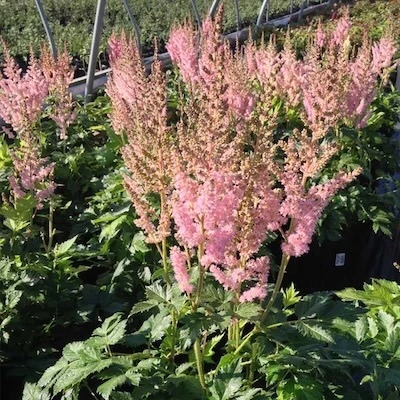
A broader mounded selection with strong upright flower stems and blue-green to green foliage.
A relatively narrow clump with dark green to bronzy foliage and white flower stems rising above it.
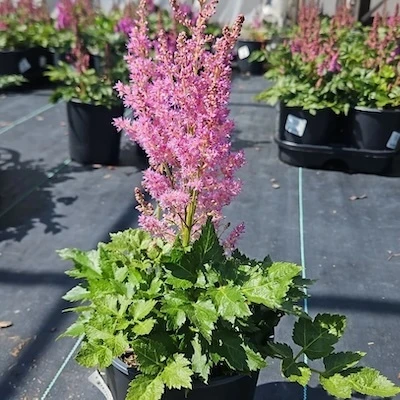
Compact green foliage creates a low mound below the upright raspberry-pink flower plumes.
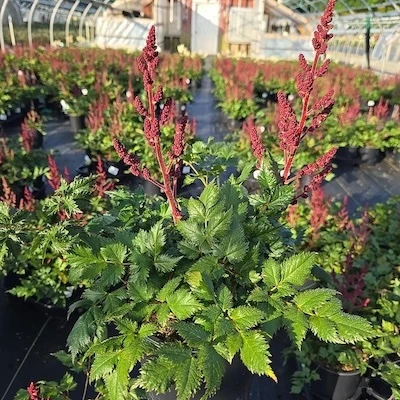
Dense green foliage and a compact upright habit make this red-flowering selection easy to repeat through a shaded bed.
Compare the Vision Astilbes we carry in one place along with practical astilbe care, purchase protection, and support from a family-owned online plant nursery.

Shop plants for shade gardens, perennial borders, containers, mass plantings, and larger landscape projects.
Shop All Plants

Perennials purchased from Plant Addicts include an extended one-year warranty for added protection.
View Our Warranty

Find practical guidance covering planting, watering, light, fertilizer, pruning, containers, division, and winter care.
Explore Astilbe Care

Plant Addicts is a small family-owned business focused on helping gardeners choose plants that fit their landscapes.
About Plant Addicts
Vision Astilbes are compact flowering perennials grown for upright summer plumes and textured foliage. Plant Addicts carries five selections with flowers ranging from white and pale pink to raspberry-mauve and red.
Part shade is a reliable choice. Morning sun or filtered light supports good flowering without exposing foliage to intense afternoon heat. Some selections tolerate full sun when soil stays consistently moist, and plants can grow in full shade with fewer flowers.
Vision-type Chinese astilbes have better drought tolerance than many astilbes, but they should not be treated as dry-site plants. They grow and flower best in rich soil with consistent moisture, especially when exposed to more sun.
The selections carried by Plant Addicts flower during summer, with exact timing varying by cultivar and climate. Some begin earlier in summer, and others extend the Astilbe season into midsummer or later.
No. Deadheading Astilbe does not produce another flush of flowers. Spent plumes can be removed for appearance or left standing to add dried texture and winter interest.
Vision in White Astilbe produces creamy to bright white plumes above dark green to bronzy foliage. It grows about 20 to 28 inches tall and 12 to 18 inches wide.
Vision in Red Astilbe produces red plumes with pink undertones. Its compact plant reaches about 15 inches tall and wide.
Visions Astilbe stays around 14 to 16 inches tall and 12 to 15 inches wide and produces raspberry-pink to mauve plumes. Visions in Pink grows taller and substantially wider, reaching about 18 to 24 inches tall and 24 to 30 inches across, with softer pale-pink flowers.
Little Vision in Pink, Visions, and Vision in Red are all compact choices. They stay around 14 to 16 inches tall, a nice size along border edges, near pathways, and in smaller shaded beds.
Yes. Their compact size works well in containers with drainage holes and a moisture-retentive potting mix. Container-grown Astilbe requires regular watering because the root zone can dry much faster than it does in the ground.
Astilbe is considered deer and rabbit resistant. Browsing is still possible when other food is scarce, but Astilbe is generally less appealing to these animals than many other garden perennials.
Yes. The upright flower plumes can be cut for fresh arrangements, and dried flowers can also be used indoors. Cutting flowers does not cause the plants to produce another bloom cycle.
Leave the foliage and dried flower stems through fall and winter if you enjoy their texture. Remove old growth in early spring before new shoots expand.
Divide mature clumps about every three to four years when they become crowded or flowering begins to decline. Early spring is a good time to divide and replant the crowns.
Plant Addicts sells Visions Astilbe, Vision in Red Astilbe, Vision in White Astilbe, Visions in Pink Astilbe, and Little Vision in Pink Astilbe online. Availability and container sizes vary during the growing season.
Choose Vision in White to brighten a darker planting, Vision in Red for deeper color, Visions for compact raspberry-mauve plumes, Visions in Pink for a broader soft-pink mound, or Little Vision in Pink for compact borders and containers.