
Northern Exposure™ Coral Bells 1 to 5 of 5 total


Northern Exposure™ Coral Bells 1 to 5 of 5 total
Chat/Email Support
Mon-Thur, 7 AM - 6 PM CST
Fri, 7 AM - 5 PM CST
Sat-Sun, 9 AM - 3 PM CST
Chat Us Email Usinfo@plantaddicts.com
Phone Support
Mon-Fri, 8 AM to 5 PM CST

Northern Exposure™ heuchera were bred from a prairie wildflower found in northern Saskatchewan. They handle bitter cold, then surprised their breeders by thriving in hot, humid trials as far south as Miami.
Coral bells grow wild only in North America. Terra Nova Nurseries in Oregon set out to make its colorful heuchera hardier for northern gardens. The breeders crossed their hybrids with prairie alumroot, a tough species they sourced from northern Saskatchewan.
The cold hardiness was expected. The surprise came in trials across the country, where the plants also handled heat, humidity, and rainy summers. According to Terra Nova’s Chuck Pavlich, their background also includes Heuchera villosa, a coral bells species from the South.
Every Northern Exposure™ coral bell carries genes from this modest native wildflower, which gives the series its staying power.
Most of the series is rated to Zone 3.
Good resistance to heuchera rust, a common leaf disease.
Dense, multi-crowned clumps that fill in quickly.
Terra Nova calls them long-lived landscape plants.
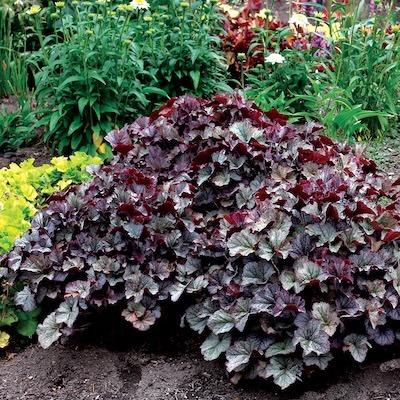
Each forms a rounded mound of broad, scalloped leaves shaped like geranium foliage, with short flower stalks in late spring or early summer.
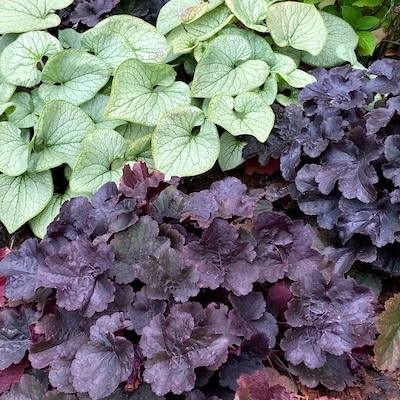 Black‘TNHEUNEB’
 Purple‘TNHEUNEP’
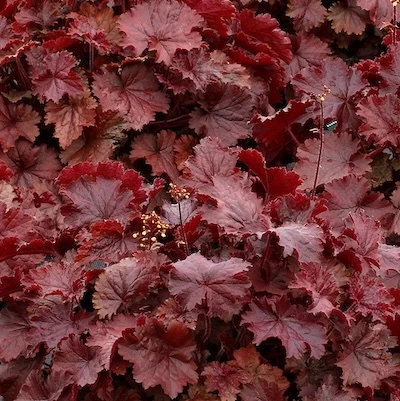 Red‘TNHEUNER’
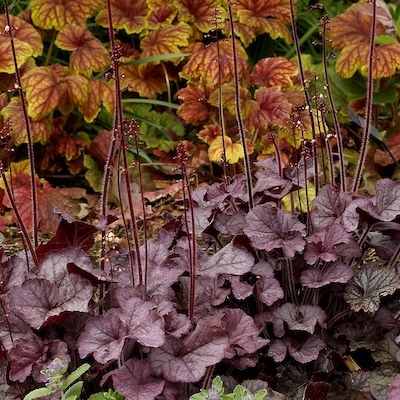 Silver‘TNHEUNES’
 Sienna‘TNHEUNESI’
“This plant is the one that you can plant everywhere: sun to shade, north to south.”
Chuck Pavlich of Terra Nova Nurseries explains where the series’ hardiness comes from and how the plants performed in trials from Alaska to Miami.
Their rounded leaves contrast well with spiky, feathery, and grassy plants. Group three or more of one color for impact, or mix colors in pots.

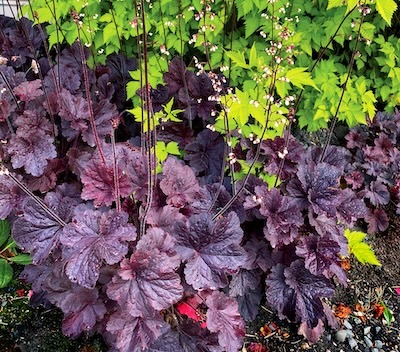


Astilbe, bleeding heart, ferns, hellebores, hosta, Japanese forest grass, lamium, brunnera, and foamflower.
Artemisia, bugleweed, daylilies, hardy geranium, iris, lady’s mantle, sedum, coneflowers, and ornamental grasses.
Coral bells are among the easiest perennials to grow. Most problems come from a few common habits.
MythPlant deep so the clump is stable.
FactKeep the crown level with the soil. Burying it can cause the plant to fail.
MythCoral bells need constant moisture.
FactWater deeply the first season. After that, slightly dry is better than soggy.
MythCut the foliage down in fall.
FactLeave it. The leaves feed the plant and shield the crown over winter.
MythCoral bells are strictly shade plants.
Fact4-6 hours of sun brings out the best color. Offer more shade only in hot regions.
MythSpotted leaves can go in the compost.
FactBag and trash leaves with rust spots. Composting can spread the disease.
MythCoral bells need lots of feeding.
FactA thin layer of compost or slow-release fertilizer each spring is enough.
They’re evergreen in milder regions and semi-evergreen in cold ones. In Zones 4–6 with little snow cover, winter wind can brown the leaves. Trim damaged foliage in early spring, once new leaves appear.
Most colors are rated to Zone 3, thanks to their prairie alumroot parent. Snow cover and a layer of mulch help, and good drainage matters even more, since wet, frozen soil is harder on coral bells than cold.
Usually heuchera rust, a fungus spread by wind and splashing water. Northern Exposure™ has good rust resistance, but if spots appear, remove the affected leaves and put them in the trash.
The roots are astringent, like alum, and were traditionally used for that property. “Alumroot” is common in the names of wild species, including the series’ prairie alumroot parent.
Yes, if water drains away. Mix compost into heavy clay or plant in a raised bed so the crown never sits in standing water.
Pinch or trim the growing tip just before spring growth starts. Like pinching other plants, this encourages new crowns to branch out from below.
Yes. The small, bell-shaped flowers attract hummingbirds and other pollinators in late spring and early summer.
Coral bells are considered non-toxic to cats and dogs, so they’re a good choice for yards where pets roam.
Yes. The leaves last well in small vases and bouquets, and the flower stems can be cut too. Cut in the morning and put stems in water right away.
Five Northern Exposure™ colors, from black to silver to sienna, for sun or shade.