
Firefly Yarrow 1 to 6 of 6 total


Firefly Yarrow 1 to 6 of 6 total
Chat/Email Support
Mon-Thur, 7 AM - 6 PM CST
Fri, 7 AM - 5 PM CST
Sat-Sun, 9 AM - 3 PM CST
Chat Us Email Usinfo@plantaddicts.com
Phone Support
Mon-Fri, 8 AM to 5 PM CST

Firefly yarrows were bred for a clumping habit and strong stems that hold big flower clusters. The blooms stay upright from early summer into fall–no flopping here! Drought tolerant and deer resistant, they grow 18 to 36 inches tall.
Yarrow is one of the toughest perennials for hot, dry, sunny spots, but many varieties sprawl open by midsummer or creep through the bed. Firefly yarrows were bred to fix both problems. They grow in tidy clumps instead of running, and sturdy stems hold their flat flower clusters upright through wind and rain.
At 18 to 36 inches tall, they fit the middle of a sunny border. Cut them back after the first flush of flowers and they bloom again into fall.
Firefly looks like classic cottage-garden yarrow, but each variety was chosen from years of seedling trials.
Hans Hansen bred Firefly at Walters Gardens in Zeeland, Michigan. Sunshine and Fuchsia were developed in 2014, then grown and compared for several years before release.
Proven Winners bred the series for a clumping rather than spreading habit and stronger stems less prone to flopping. The upright, heavily branched stems withstand wind and rain.
Yarrow grows wild across North America, and Proven Winners calls Firefly a “Native Roots” perennial: a hybrid bred for longer bloom and a sturdier habit.
Fun fact: each flat “flower” is really a cluster of tiny flower heads. Firefly Sunshine has about 400 per stem.
All six display sturdy stems, drought tolerance, and summer-long color. What sets them apart is flower color, foliage, and size.
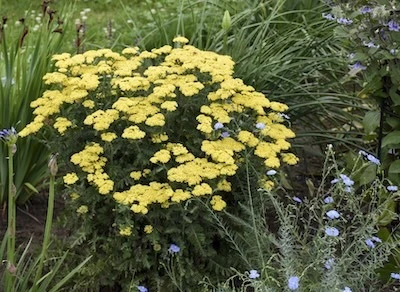
Bright yellow over gray-green foliage
Stands out for: one of the longest-lasting colors in the series, on a fairly narrow plant that fits tighter spaces.
Pair it with: blue flax, salvia, or clematis, or red hot poker for a hot palette.
Shop Firefly Sunshine →
Peachy orange, aging to soft yellow
Stands out for: new peach flowers mix with older yellow blooms on the same plant, like a ripening peach.
Pair it with: fine grasses, pink or yellow yarrow, and coral or orange flowers.
Shop Firefly Peach Sky →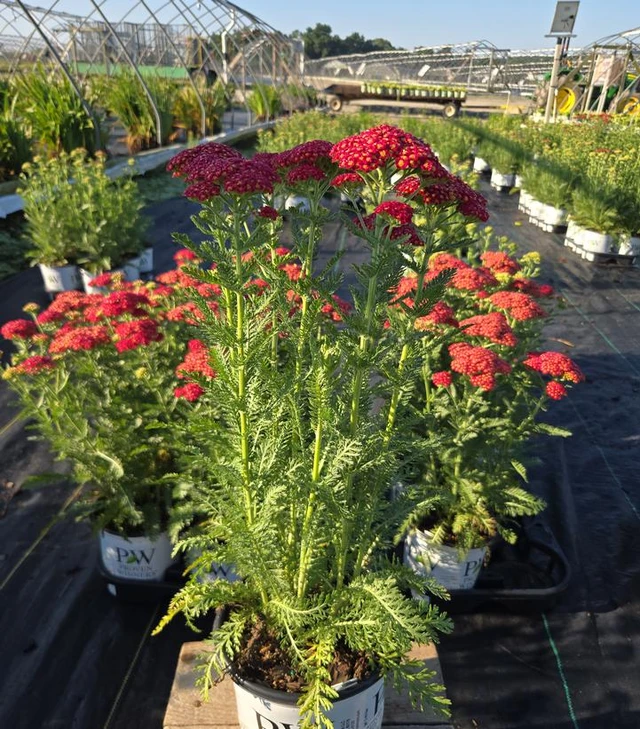
Cherry red with small yellow eyes
Stands out for: the brightest red in the series, set off by silvery-green foliage.
Pair it with: silver foliage, blue salvia, or Firefly Sunshine for a firecracker mix.
Shop Firefly Red Pop →
Deep fuchsia, aging to light pink
Stands out for: clusters fade from deep fuchsia to soft pink, so each plant shows two shades at once.
Pair it with: purple coneflower, catmint, and white Firefly Diamond.
Shop Firefly Fuchsia →
Lavender-pink, aging to light pink
Stands out for: the lowest, broadest Firefly, with a billowy habit for the front of the border.
Pair it with: fine-textured grasses and purple coneflower.
Shop Firefly Amethyst →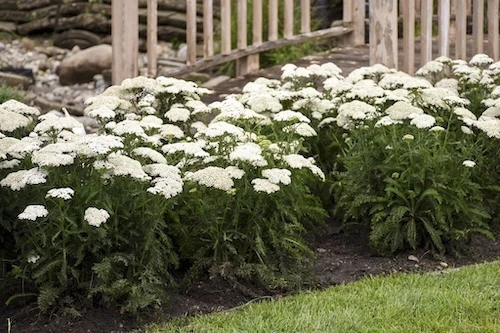
Fragrant ivory white over dark green foliage
Stands out for: flowers that retain their white color as they age and blend easily with other colors.
Pair it with: red hot poker, other Firefly colors, or an all-white border.
Shop Firefly Diamond →Bars show mature height. Use them to place shorter colors in front and taller ones behind.
Tip: space plants about as far apart as their mature width, roughly 2 to 3 feet, so each clump has room to fill out.
Firefly’s upright habit and flat flower clusters contrast nicely with spiky, airy, and grassy plants that share its love of sun and dry soil.


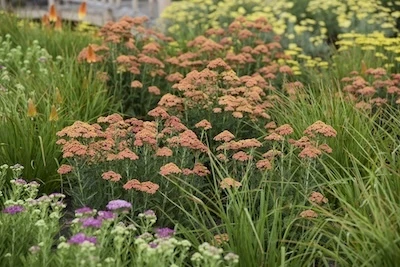

More good partners: catmint, Russian sage, salvia, coneflower, coreopsis, sedum, lavender, red hot poker, and ornamental grasses.
This short overview from Proven Winners shows Peach Sky’s upright habit and the way its peachy flowers soften to yellow as they age.
It’s the tallest Firefly, so plant it toward the back of a sunny border.
Yarrow thrives on benign neglect. Sun and drainage do most of the work.
Choose a spot with 6–8 hours of sun. Plant in spring after frost, or in fall at least 6 weeks before your first frost.
Average to poor, well-drained soil is ideal. Rich or soggy soil leads to floppy stems and root rot.
Water regularly until established. After that, let the soil dry between waterings and water only during long dry spells.
A light spring feeding of slow-release fertilizer or a thin layer of compost is plenty. Too much leads to leafy, floppy plants.
When the first flush fades, cut plants back by half to keep them compact and encourage more flowers into fall.
Leave stems standing over winter, then cut back last year’s growth before new shoots emerge. Divide crowded clumps every few years.
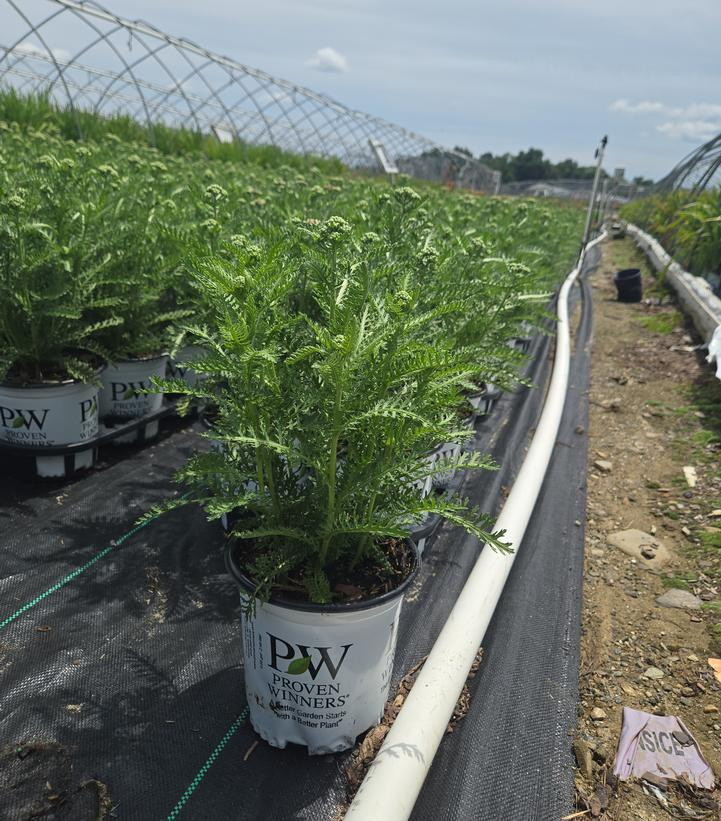
Depending on the season, your yarrow may ship with only foliage, like these Firefly Fuchsia plants at the nursery. That’s normal. Flowers follow once the plant settles in and early summer arrives.
Firefly was bred for a clumping rather than spreading habit. Plants widen steadily to about 2 to 3 feet across but don’t run through the bed the way some common yarrow does. Divide clumps every few years in spring if the center thins.
Yarrow usually flops when the soil is too rich, too wet, or overfertilized, or when plants get too little sun. Firefly was bred for stronger stems that resist flopping, but it still performs best in full sun and lean, well-drained soil.
Cut plants back by about half once the first flush of flowers fades to encourage a second round of bloom. In early spring, remove last year’s dead stems before new growth begins.
Yarrow (Achillea millefolium) grows wild across North America. Firefly is a hybrid that Proven Winners groups with its “Native Roots” perennials, bred for longer bloom and a sturdier habit. It feeds bees and butterflies, but for restoration projects that call for straight native species, choose wild yarrow.
Yes. Firefly yarrow is a perennial hardy in USDA Zones 3–8. Top growth dies back in winter and regrows from the crown in spring.
Avoid shade and moisture lovers such as astilbe, hosta, coral bells, and begonias. They need richer soil and more water than yarrow wants. Choose sun-loving, drought-tolerant partners instead.
Yes. Firefly works as an upright “thriller” in large pots. Use a container at least 16 inches wide with drainage holes and an all-purpose potting mix, and let the soil dry slightly between waterings.
Yes. Cut stems when the flower clusters are fully open and firm. To dry them, hang small bunches upside down in a dark, airy spot; the colors hold well.
Yes. The aromatic, ferny foliage is rarely eaten by deer or rabbits, which makes Firefly a good choice for gardens with heavy browsing.
The ASPCA lists yarrow as toxic to dogs, cats, and horses. Eating it can cause vomiting, diarrhea, and increased urination. Plant it away from pets that chew on plants, and call your veterinarian with any concerns.
Choose yellow, peach, red, fuchsia, lavender-pink, or ivory white, or plant several colors for a summer-long glow.
Shop All Firefly Yarrow →