
Let's Dance® Hydrangeas 1 to 12 of 12 total






Let's Dance® Hydrangeas 1 to 12 of 12 total
Chat/Email Support
Mon-Thur, 7 AM - 6 PM CST
Fri, 7 AM - 5 PM CST
Sat-Sun, 9 AM - 3 PM CST
Chat Us Email Usinfo@plantaddicts.com
Phone Support
Mon-Fri, 8 AM to 5 PM CST
Let’s Dance® hydrangeas combine the flowers gardeners love about bigleaf hydrangeas with improved reblooming performance. They flower on old and new wood, giving plants more opportunities to bloom from early summer into the season.
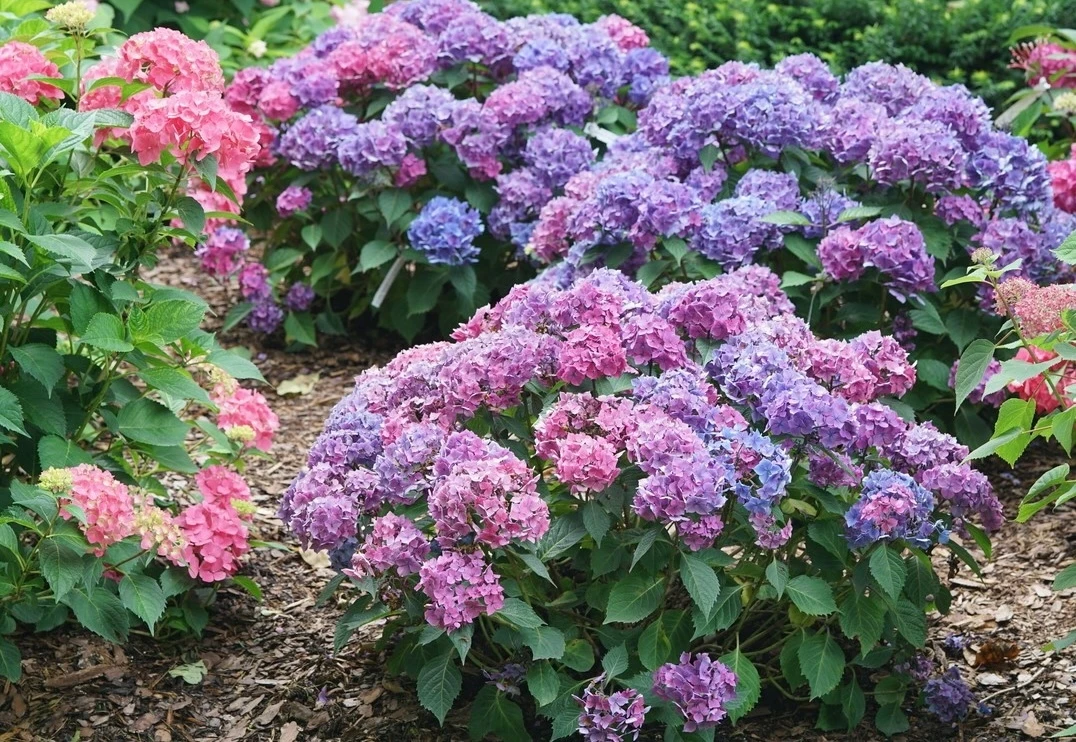
Bigleaf hydrangeas are famous for their large flowers, but a late freeze or winter damage can ruin the season on varieties that flower only from old stems. Let’s Dance® hydrangeas were bred and tested to flower on old and new wood, giving the plants another opportunity to set buds and bloom during the same growing season.
Early flowers can develop from stems carried through winter, with later blooms forming on fresh growth produced during the current season.
The series was selected for fast new-wood bud development, helping rebloom arrive sooner than it does on older reblooming bigleaf hydrangeas.
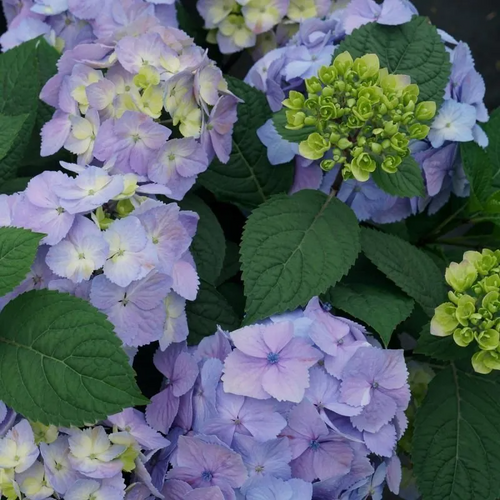
Many varieties can flower blue, purple, or pink depending on cultivar genetics, soil acidity, and the availability of aluminum.
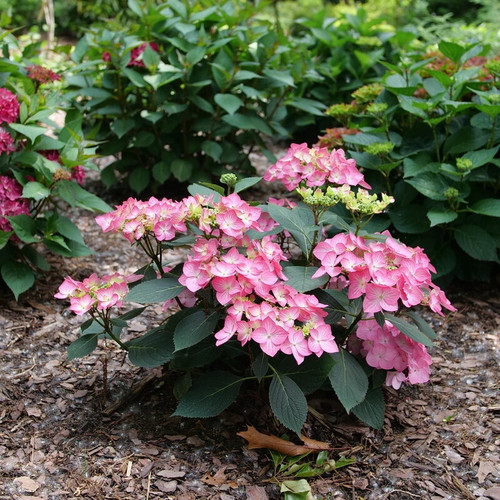
Most Let’s Dance® selections stay between about 1 and 4 feet tall, making them a good fit for containers, foundations, borders, and low hedges.
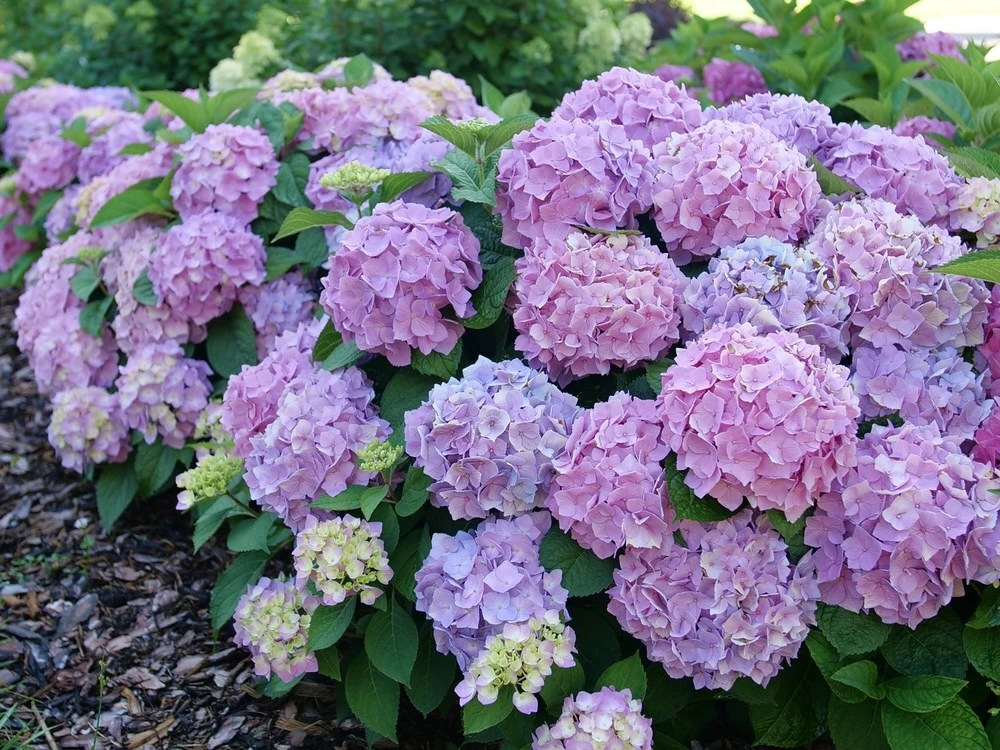
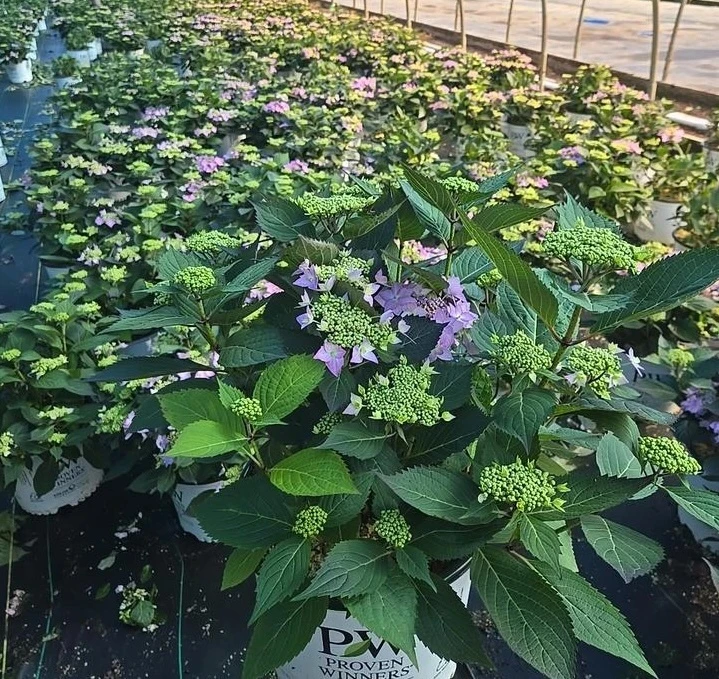
Bigleaf hydrangeas can lose old-wood flower buds to winter cold, late spring freezes, or poorly timed pruning. Proven Winners developed the Let’s Dance® program to improve flowering reliability rather than simply introduce another flower color.
Potential introductions are compared with existing varieties and subjected to the same stresses that cause problems in home gardens. Plants that fail to flower reliably are removed from the program.
The result is a collection selected for fast rebloom, sturdy habits, strong flower color, and better performance across a wider range of climates.
Some members of the series set new-wood flower buds particularly fast Their spring and summer bloom cycles overlap closely enough to create a much more continuous flower display.
Selected for continuous summer flowering and excellent old-wood bud survival. The compact plant readily develops blue flowers in suitable acidic soil.
Forms flower buds along the length of its stems and sets new-wood buds quickly, helping flowers return earlier after the first flush.
A newer cold-hardy hybrid selected for strong flower coverage, dependable rebloom, and flowers on both old and new wood.
Use flower form, mature size, color, and reblooming style to find the best selection for your garden.
| Variety | Flower Form & Color | Mature Size | Zones | Bloom Style |
|---|---|---|---|---|
| Let’s Dance Hot Stepper® Hydrangea | Mophead · Pink to deeper pink/purple tones | 3–4' H × 3' W | 4–9 | Continuous blooming |
| Let’s Dance Sky View® Hydrangea | Mophead · Sky blue, pink or purple | 2–3' H × 2–4' W | 4–9 | Continuous blooming |
| Let’s Dance Lovable® Hydrangea | Mophead · Saturated pink, purple or blue | 3–4' H × 3–4' W | 5–9 | Reblooming |
| Let’s Dance Big Band® Hydrangea | Mophead · Pink, purple or blue | 2.5' H × 2.5' W | 5–9 | Reblooming |
| Let’s Dance ¡Arriba!® Hydrangea | Mophead · Raspberry pink to violet blue | 2–3' H × 2–3' W | 4–9 | Reblooming |
| Let’s Dance Can Do!® Hydrangea | Lacecap · Strawberry pink to lavender | 3–4' H × 3' W | 4–9 | Continuous blooming |
| Let’s Dance® Rhythmic Blue® Hydrangea | Mophead · Blue, purple or pink | 3–4' H × 3–4' W | 5–9 | Reblooming |
| Let’s Dance® Rave® Hydrangea | Mophead · Purple, blue or pink | 2–3' H × 2–3' W | 5–9 | Reblooming |
| Let’s Dance® Starlight Hydrangea | Lacecap · Blue or pink | 2–3' H × 2–3' W | 5–9 | Reblooming |
| Let’s Dance® Diva! Hydrangea | Lacecap · Baby blue or pink | 2–3' H × 2–3' W | 5–9 | Reblooming |
| Let’s Dance® Big Easy® Hydrangea | Mophead · Green, pink, purple or blue | 2–3' H × 2–3' W | 5–9 | Reblooming |
| Let’s Dance® Blue Jangles® Hydrangea | Mophead · Deep blue or pink | 1–2' H × 2–3' W | 5–9 | Reblooming |
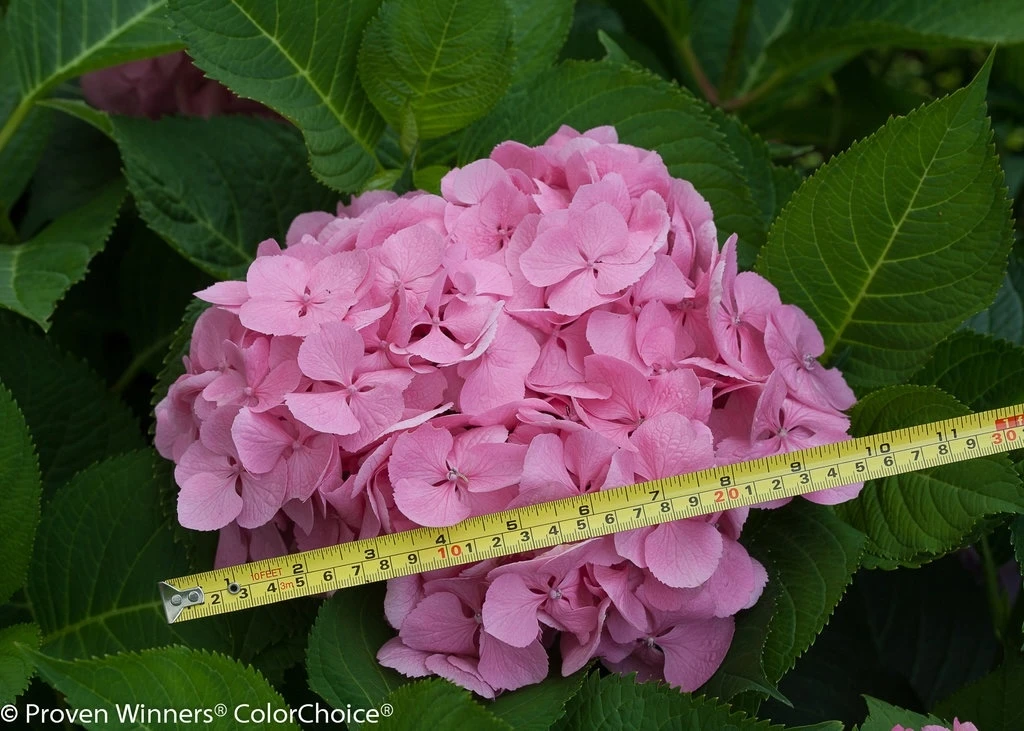
Let’s Dance® selections stay relatively compact, but their flowers can be impressively large. Let’s Dance® Big Easy® is a standout example, producing substantial mophead blooms that can reach nearly 10 inches across.
Other members of the collection offer oversized lacecaps, densely packed mopheads, unusual floret shapes, rich color, or fast rebloom. This range of flower forms gives gardeners plenty of options without requiring a large shrub.
In addition to excellent reblooming genetics, moisture, light, and pruning practices have a major effect on flowering.
Four to six hours of sun per day is ideal for most Let’s Dance® hydrangeas. Cooler climates can provide more sun. In hot climates, afternoon shade protects the foliage and helps reduce wilting.
Bigleaf hydrangeas lose moisture quickly through their large leaves. Water deeply during dry weather and do not allow newly planted shrubs to dry out. Soil should drain well and not stay saturated.
Let’s Dance® hydrangeas grow well in average garden soil that holds moisture but drains freely. They do not require acidic soil for healthy growth and can tolerate neutral to mildly alkaline conditions. Add organic matter to very sandy or poor soil to improve moisture retention.
The safest approach is to leave healthy stems intact. In spring, remove dead wood and any old flower heads still attached to the plant. Do not try to control plant size through regular trimming; choose a cultivar that naturally fits the available space.
Fertilizer is not required for rebloom, but it can speed growth and flower production. In cooler climates, a granular rose or flowering-shrub fertilizer can be applied monthly from early spring through late July. Stop feeding after that point so new growth can harden before winter.
In acidic soil around pH 6.5 or below, available aluminum can produce blue or purple flowers on varieties capable of changing color. At pH 7.5 or higher, flowers are more likely to be pink. For reliable blue color, test the soil first and use aluminum sulfate according to label directions if additional aluminum is needed.
Their compact sizes make many Let’s Dance® varieties easy to fit beneath windows or between larger foundation shrubs.
Pair the rounded shrubs with perennials, ferns, ornamental grasses, or smaller flowering shrubs for layered summer color.
Compact selections such as Sky View®, Blue Jangles®, ¡Arriba!®, and Big Band® grow readily in outdoor planters.
Repeat one cultivar along a path, foundation, or garden edge for a low mass of summer flowers.
Groups of one variety make the changing flower colors and overlapping bloom cycles easy to see.
Mophead and lacecap flowers can be harvested for fresh arrangements, with later-season blooms extending the cutting window.
Let’s Dance® hydrangeas grow well in morning sun and afternoon shade, a light pattern many other flowering shrubs do not prefer.
With several cultivars maturing around 2–3 feet, bigleaf hydrangeas can fit into spaces where older 5- or 6-foot selections would be too large.
Let’s Dance® hydrangeas come in a broad range of compact sizes. Blue Jangles® is exceptionally compact, and several other selections mature around 2 to 3 feet.
That makes the series suitable near patios, in foundation beds, beside pathways, and in large containers where traditional bigleaf hydrangeas may take up too much room.
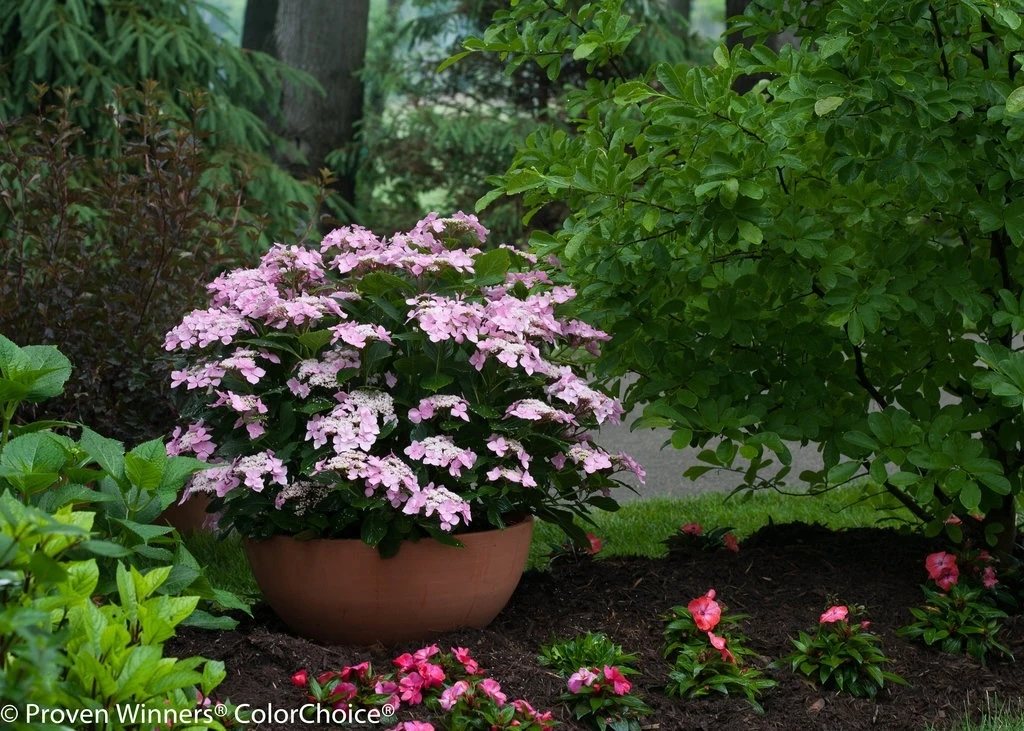
Large mophead and lacecap blooms make Let’s Dance® hydrangeas natural cutting-garden plants. Reblooming selections can also provide additional flowers after the first early-summer flush.
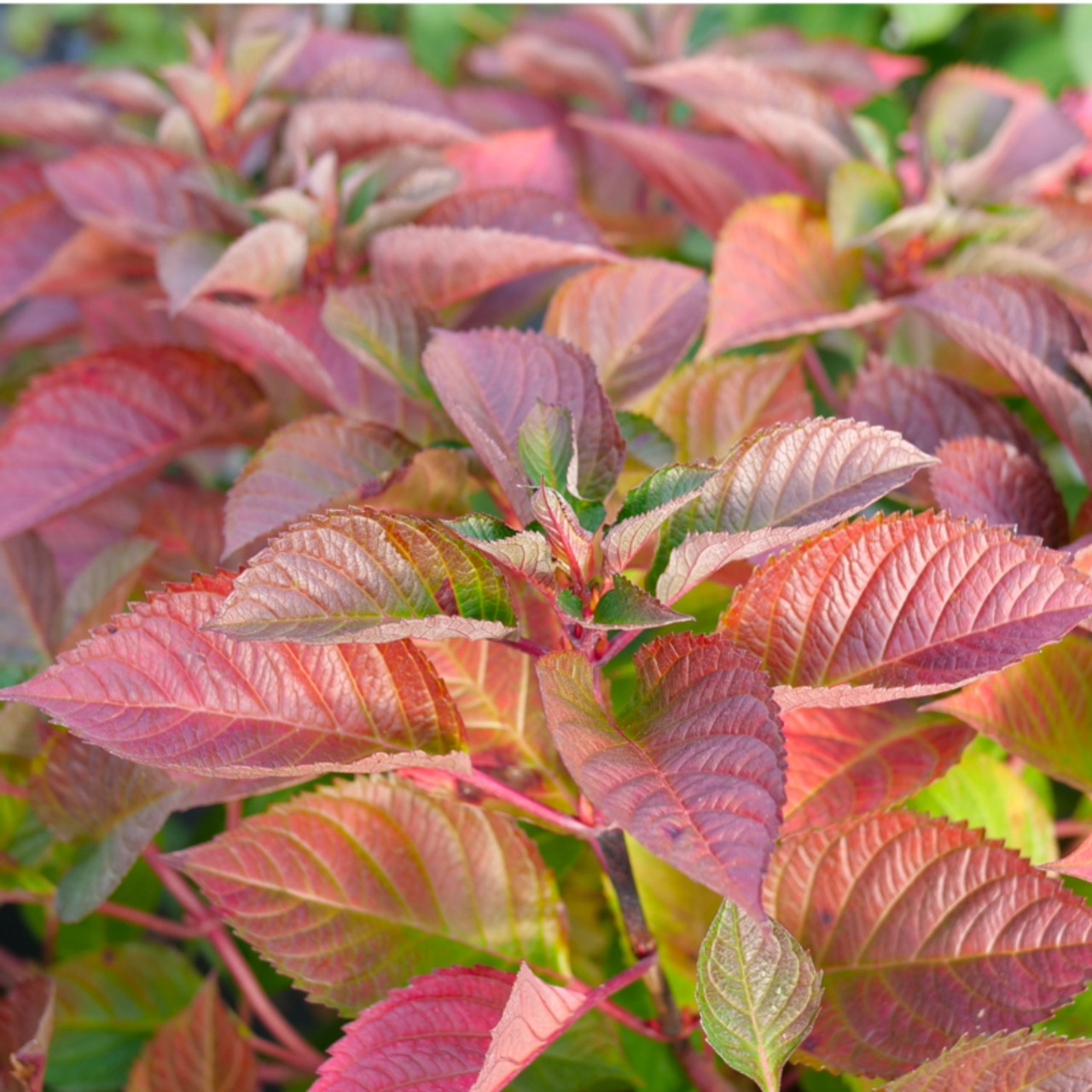
Flowers are the main attraction, but foliage can add another season of interest. Let’s Dance Lovable® develops red fall tones as temperatures cool, giving the shrub color after the main flowering period.
Its intense pink, purple, or blue summer mopheads and 3- to 4-foot habit are amazing in borders, groupings, containers, and cutting gardens before the foliage takes over the show later in the year.
Plant Addicts offers a broad selection of Let’s Dance® hydrangeas along with plant care information, purchase protection, and support from a family-owned online plant nursery.

Shop thousands of plants for foundations, containers, borders, and larger landscaping projects.
Shop All Plants

Bushes, perennials, and trees purchased from Plant Addicts include an extended one-year plant warranty for added protection.
View Our Warranty

Find practical hydrangea information covering planting, watering, pruning, fertilizing, flower color, and seasonal care.
Explore Hydrangea Care

Plant Addicts is a small family-owned business focused on helping gardeners choose plants that fit their landscapes.
About Plant Addicts
Routine pruning is usually not recommended for Let’s Dance® hydrangeas. In spring, remove dead stems and any old flower heads still attached to the plant. Keeping healthy stems intact preserves the greatest number of old-wood flower buds while allowing the plant to produce additional flowers from new growth.
Start by waiting for spring growth to show which stems are alive. Remove dead wood back to healthy buds and clip old flower heads just above a healthy pair of buds. Avoid shearing the entire shrub or cutting it back simply to control height. On a mature plant, up to one-third of the oldest stems can be removed near the base in early spring if rejuvenation is needed.
Mature size depends on the cultivar. Blue Jangles® is one of the smallest at about 1–2 feet tall and 2–3 feet wide. Many varieties mature around 2–3 feet. Larger selections such as Lovable®, Rhythmic Blue®, Can Do!®, and Hot Stepper® can reach approximately 3–4 feet tall.
Let’s Dance® hydrangeas bloom on both old and new wood. Old stems can provide the first flowers of the season, and fresh current-season growth can form additional flower buds. This reblooming habit gives the plants another chance to flower if some old-wood buds are lost to winter weather or spring frost.
All Let’s Dance® rebloomers can produce flowers on old and new wood. Continuous-blooming selections develop new-wood flower buds especially quickly, reducing the gap between the first bloom and later flowers. Sky View®, Can Do!®, and Hot Stepper® are current examples with especially strong continuous or rapid reblooming performance.
Blue flowers require both acidic soil and available aluminum. If the cultivar is capable of turning blue, use a soil amendment containing aluminum sulfate according to the package directions. Color change can take time, and some cultivars shift more readily than others.
About four to six hours of sunlight per day is ideal. Morning sun followed by afternoon shade works especially well. Plants in cooler climates can tolerate more direct sun, but afternoon shade becomes increasingly important in warmer regions.
Yes. Their compact habits make many Let’s Dance® hydrangeas suitable for large outdoor containers. Sky View®, Blue Jangles®, ¡Arriba!®, Big Band®, and other smaller selections are especially easy to place in planters. Choose a container with drainage holes and monitor soil moisture closely during hot weather.
Bigleaf hydrangeas lose moisture quickly through their large leaves and may wilt during hot afternoons even when growing conditions are generally good. Check the soil before watering. If it is dry several inches down, water deeply. Consistent afternoon wilting can also indicate that the plant would benefit from more shade during the hottest part of the day.
Choose Sky View®, Can Do!®, or Hot Stepper® for especially fast repeat flowering; Blue Jangles® for the smallest habit; Diva! for oversized lacecap blooms; Rhythmic Blue® for geometric mopheads; Lovable® for strong rebloom and fall foliage color; Starlight for lacecap flowers; or ¡Arriba!®, Big Band®, Rave®, and Big Easy® for compact plants covered in color-changing blooms.