
Leading Lady Bee Balm 1 to 6 of 6 total


Leading Lady Bee Balm 1 to 6 of 6 total
Chat/Email Support
Mon-Thur, 7 AM - 6 PM CST
Fri, 7 AM - 5 PM CST
Sat-Sun, 9 AM - 3 PM CST
Chat Us Email Usinfo@plantaddicts.com
Phone Support
Mon-Fri, 8 AM to 5 PM CST
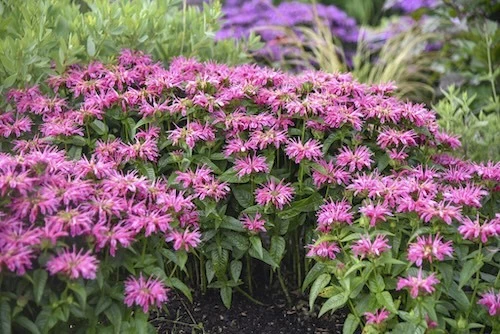
Leading Lady® bee balms flower about two weeks ahead of most bee balm, on tidy clumps just 10–14 inches tall. Bred for better powdery mildew tolerance, and loved by hummingbirds, butterflies, and bees.
Classic bee balm is a summer favorite, but it often flops over and develops powdery mildew. Some types also wander through the bed.
Leading Lady® bee balms puts the colorful, nectar-rich flowers and aromatic leaves on a much smaller, better-behaved package that fits the front of a border.
Breeder Hans Hansen of Walters Gardens in Zeeland, Michigan, started the Leading Lady® series in 2009, his first year as the nursery’s director of new plants. He crossed a familiar garden bee balm with a short native species from the central U.S.
Sister plants: Plum and Lilac resulted from that very first 2009 cross. Their patents list them as seedlings H9-38-02 and H9-38-01.
The next generation: Orchid came from a 2012 cross of two of these hybrids, and Pink and Razzberry from 2014 crosses. Hansen holds more than 500 U.S. plant patents on a wide range of perennials.
Every Leading Lady® grows about 10-14 inches tall and 18-28 inches wide. Look closely and you’ll see darker speckles on the petals, a trait inherited from their native parent.

One of the first two Leading Ladies. Magenta-purple flowers are misted with dark purple spots and framed by nearly black bracts. The richest color of the six.
Shop Leading Lady Plum →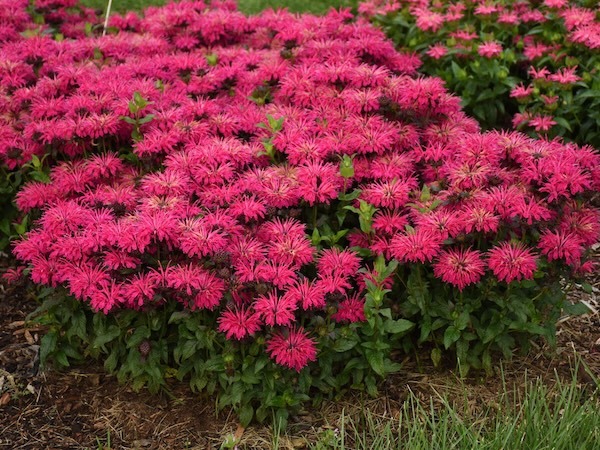
Bright raspberry-purple flowers with darker purplish-red spots. Its leaves and bracts take on a purple cast, adding depth to the plant.
Shop Leading Lady Razzberry →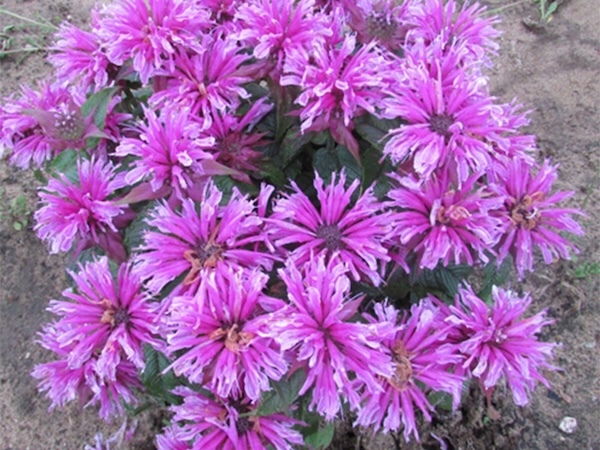
Magenta-pink flowers with dark fuchsia spotting, each head ringed by wine-colored bracts. Sits between Plum and Pink in color.
Shop Leading Lady Orchid →
Bright pink flowers with lighter centers and purplish-red speckles. In its patent trials, it bloomed earlier than several similar pink bee balms.
Shop Leading Lady Pink →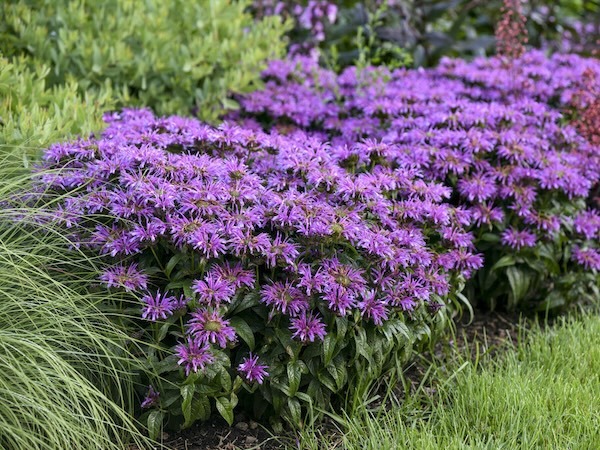
Light amethyst-purple flowers with darker spots inside. A cool, soft purple that pairs well with silver foliage and fine grasses.
Shop Leading Lady Amethyst →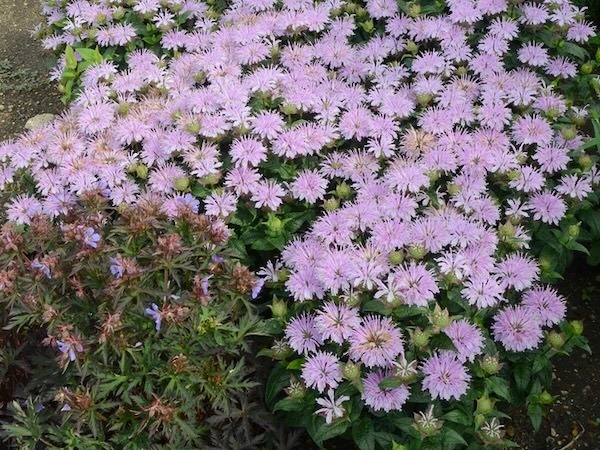
Plum’s sister, in light lilac-purple with red-purple spots and bracts. The palest of the six, and lovely with blue and white flowers.
Shop Leading Lady Lilac →Laura LeBoutillier uses Lady Plum to draw pollinators to her vegetables. Click a highlight to jump to that moment:
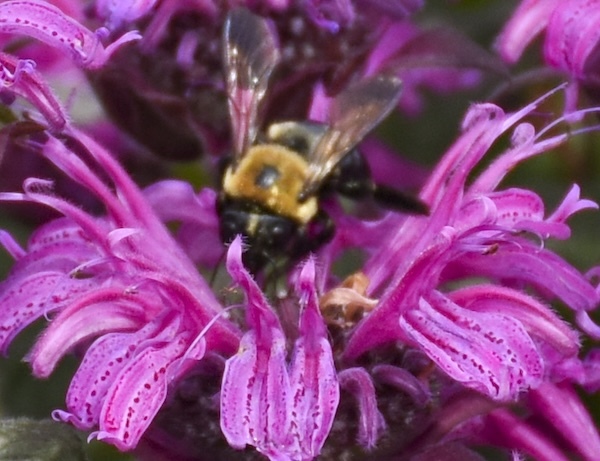
Each round bee balm flower head is a cluster of slender, tubular flowers. There are roughly 200 per head, and each lasts about five days, so there’s always fresh nectar.
Because they bloom in early summer, Leading Ladies feed pollinators between spring bulbs and the big midsummer perennials. The leaves smell lemony when brushed, and deer tend to leave them alone.
At a foot tall, Leading Ladies are short enough to edge a bed, line a path, or fill a container on their own.

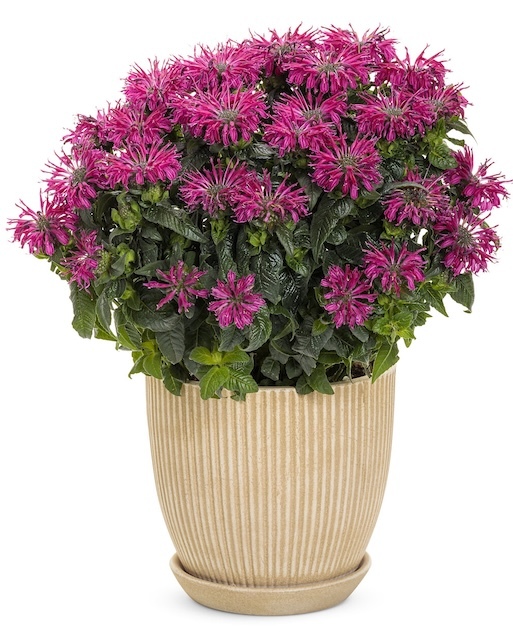

Full sun leads to the most flowers. Plants also grow in part sun (4-6 hours).
Room between plants allows air movement, which helps prevent powdery mildew.
Bee balm likes consistent moisture. Water at the base during dry spells, and mulch to hold moisture in.
Side shoots bloom above the first flowers, stretching the show into midsummer. Shear plants back after bloom to tidy them.
Grows in neutral to alkaline soil and in average to rich soil, as long as it drains well.
If a clump thins in the center, divide it in early spring and replant the healthy outer pieces.
In early summer. In Michigan trials, flowering starts around the first week of June, at least two weeks ahead of most garden bee balm, and continues into midsummer.
No. It forms a compact clump that spreads only slowly by short underground stems. Its breeder describes it as well-behaved and non-running, unlike some older bee balms.
Start with a tolerant variety like Leading Lady, which outperformed other bee balm in side-by-side trials. Then give it full sun, space plants for airflow, water at the soil rather than on the leaves, and keep the soil evenly moist.
Yes, with 4 to 6 hours of sun, though flowering is heaviest in full sun. In deep shade, plants stretch and bloom less.
It handles neutral to alkaline soil well. Heavy clay is fine if it drains, so mix in compost and avoid spots where water stands.
Wait until the second round of flowers fades, then shear the stems back by about half. This tidies the clump and refreshes the foliage. Cut it to the ground in late fall or early spring.
Its parents are both North American natives, garden bee balm (Monarda didyma) and eastern bee balm (M. bradburiana). Leading Lady itself is a garden hybrid of the two, sometimes called a nativar.
They’re relatives. Wild bergamot is Monarda fistulosa, a taller, lavender species. Leading Lady comes from two other Monarda species and is much shorter.
Yes. The flowers have a long vase life and add early-season color to arrangements. Cut stems when the flower heads are about half open.
Yes. The tubular flowers suit hummingbirds’ long bills, and their early bloom gives returning hummingbirds an early nectar source.
Six spotted, early-blooming colors from plum to lilac, all on foot-tall plants that hummingbirds can’t resist.
Shop All Leading Lady® Bee Balm