Self-watering planters are designed to reduce how often container plants need to be watered by storing water in a reservoir and gradually supplying moisture to the potting mix.
They can be especially useful for large patio planters, vegetables, annuals, herbs, and other plants that prefer relatively consistent moisture. They are also helpful for gardeners who travel, have limited time for daily watering, or simply want containers that are easier to maintain during hot weather.
How self-watering planters work
- Water is stored in a reservoir below the potting mix.
- Moisture moves upward through wicks, soil columns, or another capillary system.
- An overflow opening prevents the reservoir from filling beyond its designed level.
- A fill tube or opening makes it easy to refill the reservoir.
- Some systems include a water-level indicator.
- They reduce watering frequency but do not eliminate the need to monitor the plant.
- They work best with plants that prefer steady moisture rather than repeated drying.
How Does A Self-Watering Planter Work?
Most self-watering containers have two main areas: an upper growing area filled with potting mix and a lower reservoir that holds water.
Water moves from the reservoir into the potting mix through capillary action, sometimes called wicking. Depending on the planter design, this may happen through a wick, a column of potting mix extending into the reservoir, or another moisture-transfer system.
As the potting mix begins to dry, it draws additional water upward. This can help keep moisture more consistent than repeatedly watering from the top and allowing the planter to dry significantly between waterings.
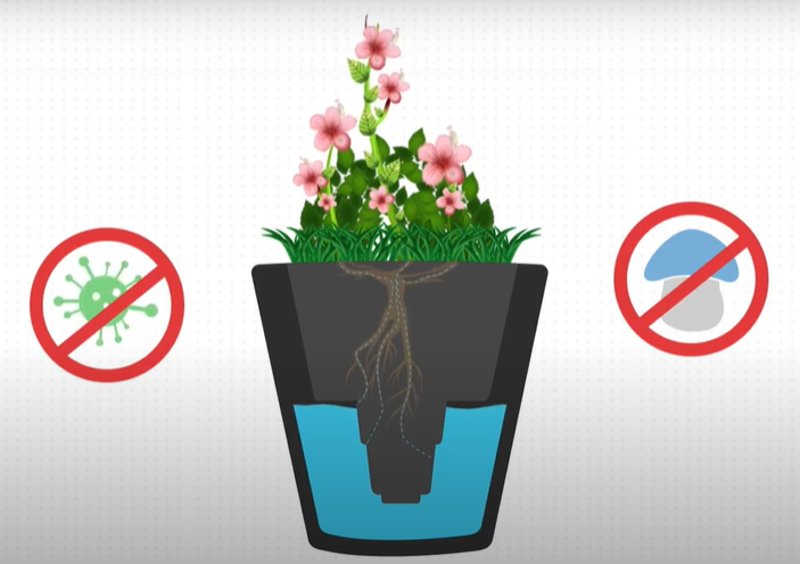
Parts Of A Self-Watering Planter
Water Reservoir
Stores water beneath the root zone so the plant has a reserve between fillings.
Wicking Area
Connects the reservoir with the potting mix so water can move upward.
Overflow Drain
Allows extra water to escape so rainfall or overfilling does not completely flood the planter.
Fill Opening
Provides a convenient way to add water directly to the reservoir.
How Do You Fill A Self-Watering Planter?
The exact method depends on the planter.
Some self-watering pots are filled through a tube or opening that leads directly to the reservoir. Others are designed to receive water from the top until the reservoir is filled.
Many systems also include an overflow drain that releases excess water once the reservoir reaches its intended capacity.
Follow the instructions for the specific planter because fill methods, plugs, overflow openings, and indoor versus outdoor configurations can differ.
How TruDrop Self-Watering Planters Are Filled
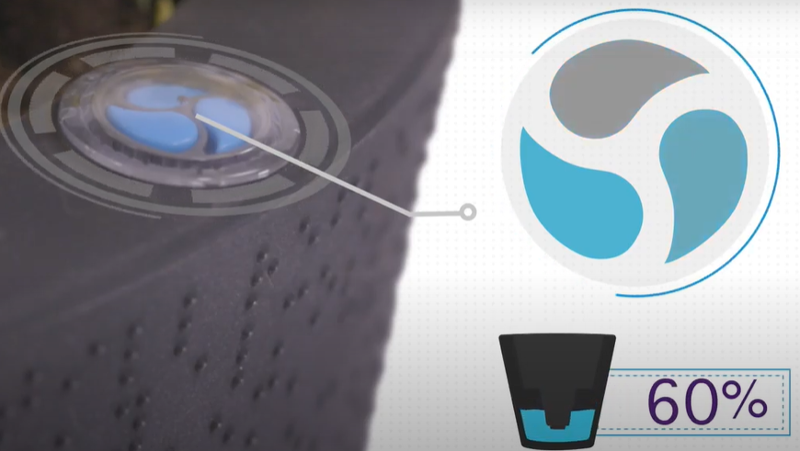
Crescent Garden TruDrop planters use a built-in reservoir and a water-level indicator. The indicator shows when the reservoir needs to be refilled and when it has reached capacity.
Crescent Garden states that TruDrop planters can extend the time between watering for up to six weeks, depending on planter size, plants, weather, and growing conditions.
Benefits Of Self-Watering Planters
Less Frequent Watering
A reservoir provides a larger stored water supply than a standard container.
More Consistent Moisture
Wicking can reduce extreme swings between very wet and very dry potting mix.
Useful During Hot Weather
Large reservoirs can help plants through periods when conventional containers would need frequent watering.
Convenient For Travel
They can extend the interval between watering when gardeners are away from home.
Do Self-Watering Planters Prevent Plant Disease?
Not automatically.
Watering through a reservoir can reduce how often foliage is splashed during irrigation, which may be helpful for plants that are susceptible to leaf-spot diseases.
However, disease depends on many factors including plant health, humidity, air circulation, pathogens, temperature, and how wet the root zone remains.
A self-watering planter should therefore be viewed as a moisture-management tool rather than a disease-prevention system.
Do Self-Watering Planters Cause Root Rot?
A properly designed self-watering planter does not automatically cause root rot.
The reservoir is generally separated from most of the root zone, and water is drawn upward into the growing medium as needed. An overflow opening prevents the water level from rising indefinitely.
Problems can still develop if:
- The potting mix is too dense or poorly aerated.
- The overflow drain is blocked.
- The plant prefers much drier conditions.
- The reservoir or planter is used differently than the manufacturer intended.
- The plant is already suffering from root disease or chronic saturation.
Most container plants prefer moisture without prolonged soggy conditions. Good potting mix and a functioning overflow system remain important even in a self-watering container.
What Plants Are Not Ideal For Self-Watering Planters?
Plants adapted to very dry conditions are usually less suited to constantly available reservoir moisture.
Examples may include many:
- Cacti
- Succulents
- Sedums and other drought-adapted stonecrops
- Mediterranean herbs that prefer substantial drying between waterings
- Other plants specifically adapted to very dry root conditions
Orchids also vary considerably. Many epiphytic orchids need substantial air around their roots and are better grown in specialized orchid containers and media rather than a typical reservoir planter.
Always consider the needs of the exact plant rather than assuming that every plant except a succulent will work well.
What Plants Do Best In Self-Watering Planters?
Self-watering systems are especially useful for plants that appreciate even moisture and grow vigorously during warm weather.
Annual Flowers
Petunias, impatiens, begonias, and other thirsty flowering annuals can benefit from consistent moisture.
Vegetables
Tomatoes, peppers, cucumbers, and other productive crops can use substantial amounts of water.
Leafy Greens
Lettuce, spinach, kale, and similar greens benefit from avoiding repeated drought stress.
Moisture-Loving Herbs
Basil, parsley, mint, and similar herbs can work well when the potting mix remains evenly moist.
Can Shrubs And Small Trees Use Self-Watering Planters?
Yes, depending on the plant and planter size.
Shrubs and small ornamental trees need enough root volume, adequate aeration, and a moisture level appropriate for the species. A large self-watering planter can work well for plants that prefer consistent moisture, but drought-adapted woody plants may be better suited to conventional containers.
Do You Still Need To Water From The Top?
Often, yes—especially immediately after planting.
Newly planted roots are concentrated near the original root ball and may not yet be connected effectively to the wicking zone. Watering from the top at planting helps settle the potting mix and thoroughly moisten the initial root zone.
After the system is established, the reservoir can handle much of the routine watering according to the planter manufacturer's instructions.
What Happens When It Rains?
Outdoor self-watering planters should have a properly functioning overflow system.
Once the reservoir reaches its intended maximum water level, excess rain should be able to leave the planter instead of continuing to raise the water level around the roots.
Check the overflow periodically to make sure it has not become blocked by roots, soil, or debris.
How Do You Fertilize Self-Watering Containers?
Both slow-release and water-soluble fertilizers can work in container gardens, but the best method depends on the planter and the plants.
Start by checking whether the potting mix already contains fertilizer.
Slow-release fertilizer can be mixed into or applied to the potting medium according to the product label.
Water-soluble fertilizer may also be appropriate, but do not automatically pour fertilizer into a reservoir unless the planter manufacturer and fertilizer label allow that method.
More fertilizer is not better. Because water and dissolved nutrients can remain within a reservoir system, excessive fertilizer can contribute to salt buildup and root damage.
Follow fertilizer label rates and watch plant growth rather than fertilizing automatically on a rigid schedule.
Learn more in Fertilizing Plants In Containers .
Should You Occasionally Flush The Potting Mix?
Periodic top watering can be useful in some self-watering systems because it allows excess dissolved salts to move through the growing medium and out through the overflow or drainage system.
Follow the planter manufacturer's instructions, especially if fertilizer is routinely added to the reservoir.
TruDrop Self-Watering Planters
Crescent Garden's TruDrop system is one example of an integrated self-watering planter.
TruDrop planters include a large built-in water reservoir, water-level indicator, fill opening, and overflow system. Crescent Garden states that the system can extend the interval between watering for weeks, with some outdoor trials reaching up to six weeks between reservoir fillings.
Actual refill frequency depends on:
- Planter and reservoir size
- Plant type and mature size
- Temperature
- Sun exposure
- Wind
- Rainfall
- Time of year
A large tomato plant in midsummer may use water much faster than a modest ornamental planting during mild spring weather.
The Nest Elevated Self-Watering Planter
Crescent Garden's Nest combines a TruDrop reservoir with an elevated raised-bed design.
The elevated height can reduce bending while planting, maintaining, and harvesting, making it useful for patios, balconies, herbs, vegetables, and edible container gardens.
Depending on the configuration, accessories such as trellising can provide vertical support for crops such as beans and cucumbers.
What Potting Mix Should You Use?
Use a quality container potting mix that can wick moisture while still maintaining enough air space around the roots.
Ordinary garden soil is generally too dense for container use and can interfere with the balance between moisture and aeration.
Avoid packing the mix excessively tightly because capillary watering works best when the growing medium has consistent contact while still maintaining pore space.
How Long Can A Self-Watering Planter Go Without Water?
There is no single refill interval that applies to every planter.
A large reservoir can dramatically extend the time between watering, but water use changes with weather, plant size, planter size, and exposure.
During extremely hot or windy weather, check the reservoir more frequently even if the manufacturer advertises a much longer maximum interval.
Never assume a planter is full simply because it was recently watered. Use the water-level indicator when the system provides one.
What Should You Do With A Self-Watering Planter In Winter?
Winter care depends on the planter design, material, climate, and plants growing inside it.
Reservoirs may need to be drained before freezing weather to avoid trapped water freezing inside the planter. Follow the manufacturer's winter-storage or drainage instructions for the specific model.
If hardy plants remain in the container outdoors, their roots will still need winter protection just like plants in a conventional planter.
See Winterizing Garden Planters for more information.
Pros And Cons Of Self-Watering Planters
Advantages
- Less frequent watering
- More even moisture
- Helpful during travel
- Useful for thirsty vegetables and annuals
- Can reduce water running immediately out of the planter
Considerations
- Not ideal for every plant
- Overflow must remain functional
- Fertilizer salts can accumulate
- Reservoirs may require winter draining
- Still require occasional monitoring
Are Self-Watering Planters Worth It?
For plants that prefer consistent moisture, self-watering planters can significantly reduce the amount of day-to-day watering required.
They are particularly useful for large patio containers, vegetables, annual flowers, elevated planters, and locations where conventional containers dry rapidly.
They are not completely maintenance-free, and the best results still come from matching the planter to the plant, using appropriate potting mix, checking the overflow system, and fertilizing carefully.
Related Container Gardening Guides
Sources
- Illinois Extension — Container Drainage Options
- Illinois Extension — Self-Watering Containers
- Illinois Extension — Fertilizing Container Gardens
- University of Minnesota Extension — Fertilizing And Watering Container Plants
- Crescent Garden — TruDrop Self-Watering Planters