
Dolce® Coral Bells 1 to 10 of 10 total


Dolce® Coral Bells 1 to 10 of 10 total
Chat/Email Support
Mon-Thur, 7 AM - 6 PM CST
Fri, 7 AM - 5 PM CST
Sat-Sun, 9 AM - 3 PM CST
Chat Us Email Usinfo@plantaddicts.com
Phone Support
Mon-Fri, 8 AM to 5 PM CST

Dolce® (Italian for “sweet”) coral bells are compact heuchera bred from North American natives. Their dessert-named leaves come in berry, cherry, toffee, mint, lime, and silver, coloring shady beds and pots, often all year.
Coral bells are grown mostly for their leaves, which hold color from spring until the ground freezes and stay evergreen in many climates. Proven Winners® offers two heuchera collections: Dolce® and Primo®; Dolce® plants have a smaller size.
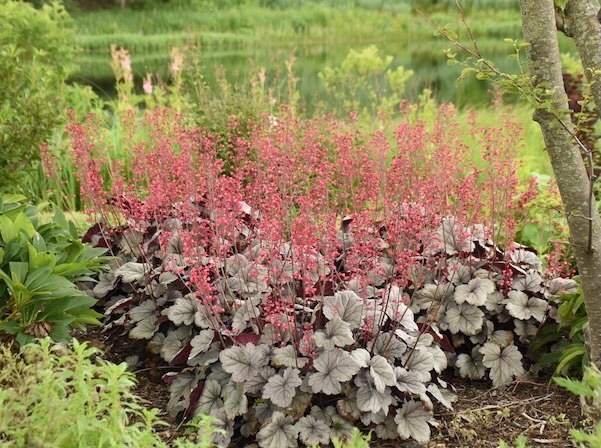
That compact size, mostly 8-14 inches tall, makes Dolce® easy to use along a path, a shady bed, or in a container arrangement with annuals. Glazed and Infused, Silver Gumdrop, Spearmint, and Appletini also send up showy pink flower spikes that hummingbirds visit.
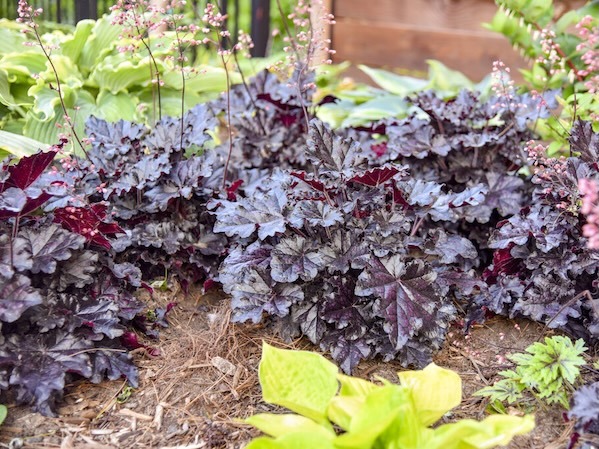
Dolce® Wildberry was named Proven Winners® 2023 Perennial of the Year for its glossy berry-purple leaves that hold their color in every season.
Every Dolce® is named for something sweet. We’ve grouped them by leaf color, with foliage height listed beside each name.
Many coral bells change color through the year. Cool spring and fall weather brightens leaves, and summer heat can mellow them or add a silvery sheen. These shifts are normal and nothing to worry about.
Reddish bronze new leaves turn apple green.
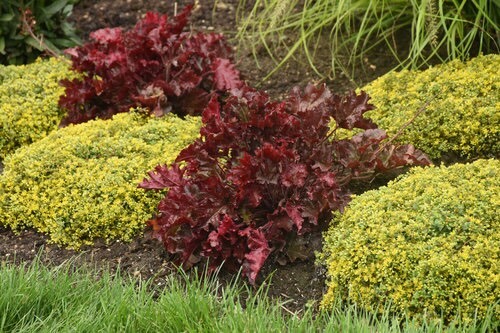
Bright red deepens to rich mahogany.
Amber new growth matures to ginger.
Silver leaves pick up a rosy blush.
Blushed young leaves settle into silver.
The steady one: berry-purple all season.
Most coral bells do best with 4-6 hours of morning sun and shelter from hot afternoon sun. Within that range, darker leaf colors can usually handle more sun.
Toffee Tart, Appletini, Apple Twist. These require the most shade and only accept morning sun to prevent scorch.
Glazed and Infused, Silver Gumdrop, Frosted Berry, Spearmint. These classic part-shade plants can also grow in full shade.
Sultry Night, Wildberry, Cherry Truffles. The most sun-tolerant. In cool northern gardens, they can take full sun if the soil stays moist.

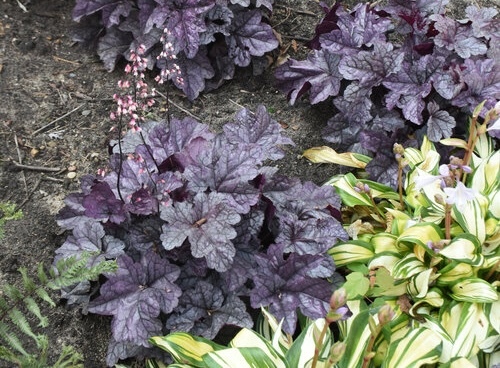
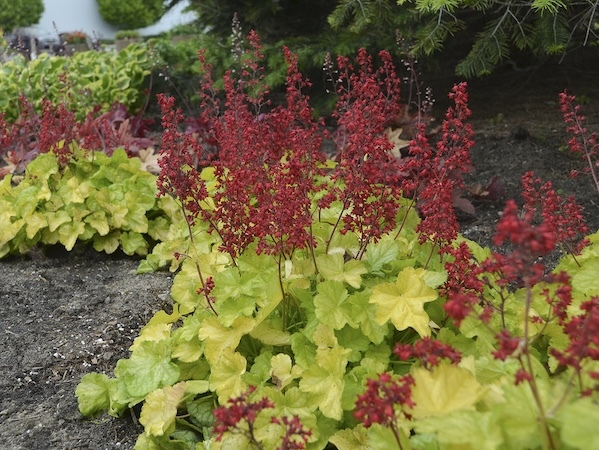
Coral bells love the sharp drainage of a container, and Dolce’s small size leaves room for partners. Use these combinations as a starting point.
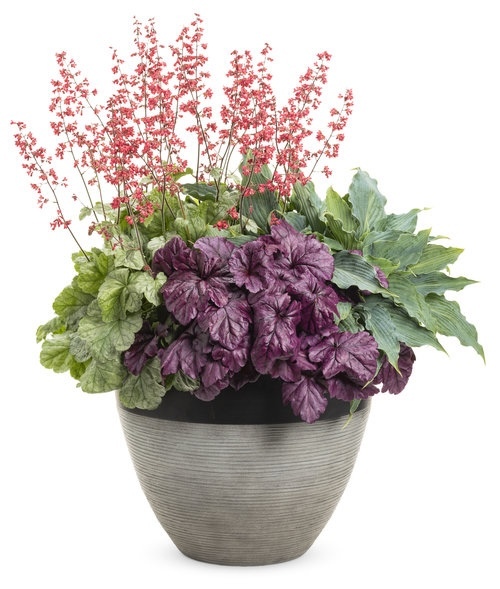

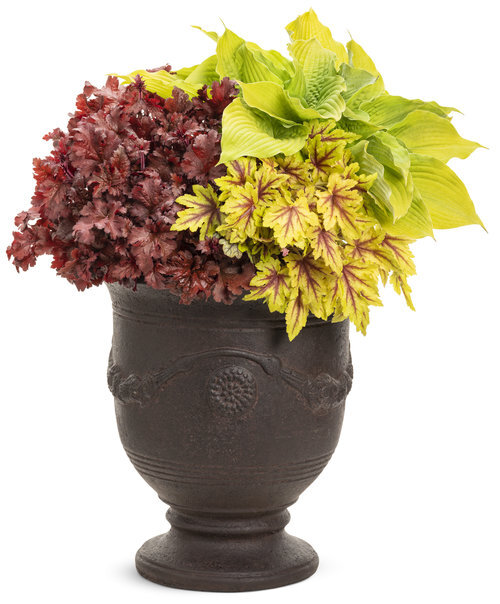
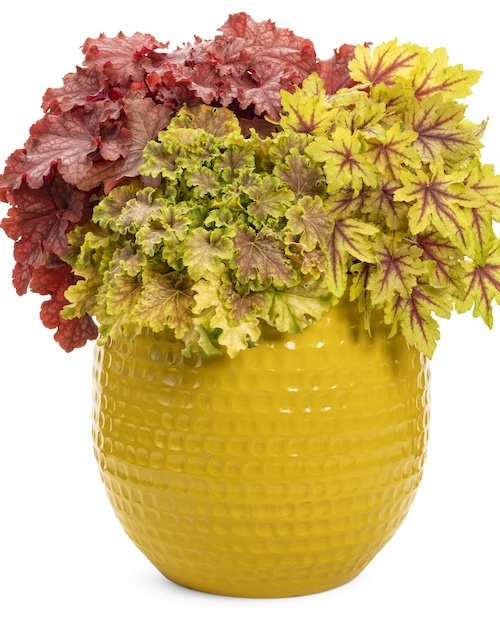
Coral bells are tough, cold-hardy plants. When they fail, it’s almost always for one of these reasons.
Soggy soil kills more coral bells than cold does, especially in winter.
Fix: Plant in well-drained soil or a raised bed and break up clay with compost.
Crispy brown leaf edges mean a plant is getting too much sun.
Fix: Move it to a spot with morning sun only, or choose a darker-leaved Dolce® for brighter sites.
Freezing and thawing can push the crown up out of the soil, drying out the roots.
Fix: Mulch around the base before winter, and gently press heaved plants back down in spring.
Older heuchera crowns gradually rise above the soil, leaving a bare, woody stem. In spring, dig the plant and replant it deeper so only the leafy top sits above ground, or divide it.
Every three to five years, or when the center looks woody or thin. Divide in spring or early fall, keeping a healthy piece of crown and roots with each section.
Yes. The ASPCA lists coral bells as non-toxic to dogs, cats, and horses.
Yes, they’re good choices for dappled shade. Tree roots compete for water, so water more often during dry spells and add compost at planting time.
In Zone 6b and warmer, they can usually overwinter in containers. In colder areas, plant them in the ground by early fall so their roots can settle in before winter.
They’re hybrids bred from coral bells species native to North America. Silver Gumdrop, for example, has Heuchera villosa in its background, a species known for handling heat and humidity.
Notched edges are often the work of adult black vine weevils, which feed at night. Their grubs can damage roots, so check the soil if a plant wilts and loosens in the ground.
Only slowly. They form clumps that widen a little each year but don’t send out runners, so they stay where you plant them.
Ten Dolce® colors, from near-black to silver to toffee, for shady beds, borders, and containers.
Shop All Dolce® Coral Bells