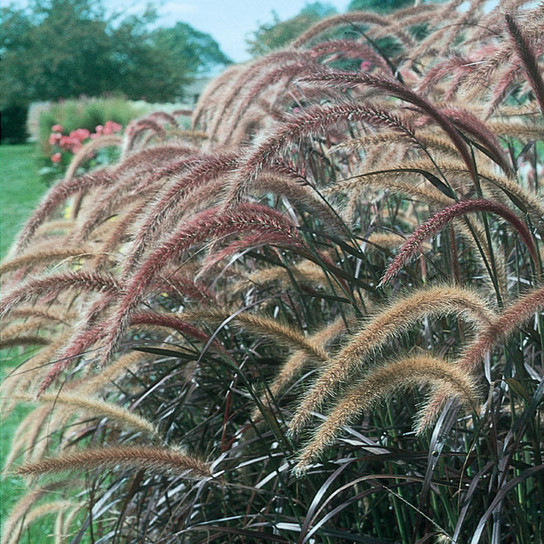
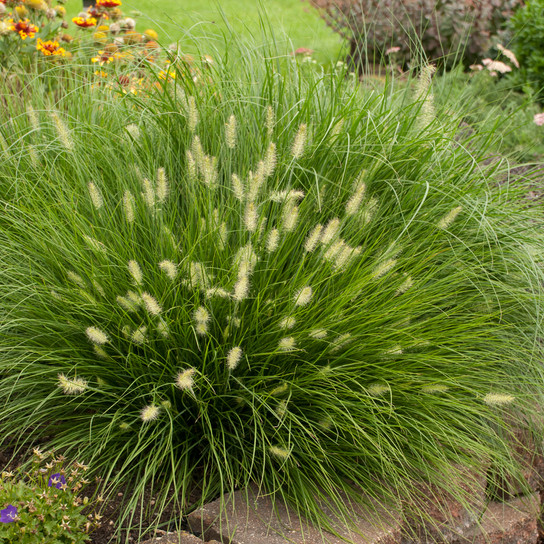
Fountain grass adds instant movement and soft texture with its arching foliage and fluffy “bottlebrush” plumes—easy, low-care color that looks amazing in beds or containers.
Chinese Fountaingrass, Chinese Fountain Grass, Chinese Pennisetum, Fountain Grass
Native To:
East Asia, Western Australia
Plant Type:
Ornamental Grasses
Foliage Type:
Deciduous
USDA Plant Hardiness Zone:
5 - 9
Flower Color:
Cream/Tan, Gray/Silver, Green, Pink, Purple/Lavender, White
Flower Bloom Time:
Fall, Summer, Winter
Growth Habit:
Clumping, Erect, Mounding, Open
Attracts:
Moths, Pollinators, Songbirds
Tolerates
Poor Soil, Salt
Resists:
Deer
How To Use Fountain Grass In The Garden
Fountain grass, belonging to the Pennisetum genus, exhibits an arching, vase-like shape adorned with feathery flower plumes. Available in both annual and perennial varieties, its foliage color ranges from purple and green to bronze and variegated forms. Depending on the cultivar, fountain grasses can reach heights of 1 to 5 feet and widths of 1 to 4 feet. As warm-season grasses, they thrive during the warmer summer months, making them well-suited to hot, sunny, and humid areas.
In landscape designs, this grass excels when planted in bold drifts for a soft, rolling effect that catches the breeze. A single clump in a decorative container can also serve as a graceful accent on patios and balconies. To heighten seasonal contrast, pair fountain grass with late-summer perennials such as coneflowers or black-eyed Susan. Along slopes or in mixed borders, its cascading form breaks up rigid outlines and fosters a more dynamic, layered composition.
Fountain Grass Care
Fountain grass requires full sun for 6-8 hours daily and thrives in well-drained soil, though it adapts to various types. Plant with the crown slightly above the soil to prevent rot, and water deeply after planting. During the first two seasons, maintain consistent watering; once established, it becomes drought-tolerant. Fertilizer is optional but can be applied in spring if soil nutrients are low.
Prune in late winter or early spring, cutting stems to about 4 inches above the ground. Avoid fall pruning to protect the crown from freezing. Mulch can provide added winter protection in colder areas. For container growth, use a frost-proof pot and well-draining soil. In cold climates, overwinter pots indoors to preserve the plant.
Give fountain grass partners that relish unfiltered sun, moderately moist soil, and midsummer heat. Supertunia petunias sprawl 3‑4 feet to blanket the soil with season‑long bloom. Verbena threads star-shaped clusters among the blades, creating a tapestry that grows just as fast as the grass itself. Salvia adds bee‑magnet cobalt spires for height contrast, while blueberry bushes supply spring white clusters and later deep red foliage that echo the grass’s autumn hues without competing for space.







 Growing Zones: 5 to 9


 Growing Zones: 5 to 9


 Growing Zones: 8 to 11
 Growing Zones: 9 to 11