Strawberry Plants 1 to 15 of 15 total




Strawberry Plants 1 to 15 of 15 total
Chat/Email Support
Mon-Thur, 7 AM - 6 PM CST
Fri, 7 AM - 5 PM CST
Sat-Sun, 9 AM - 3 PM CST
Chat Us Email Usinfo@plantaddicts.com
Phone Support
Mon-Fri, 8 AM to 5 PM CST

Zones 3-9

Partial Full Sun

Delicious Berries

Attracts Pollinators

Strawberries
Europe
Edible Plants
Evergreen
5 - 9
Gold/Yellow, Pink, Red/Burgundy, White
Spring
Clumping
Pollinators, Specialized Bees
Mild Heat, Humidity
Cold Temperatures
Strawberry plants yield sweet, bright-red berries, which greatly surpass anything found in the grocery store. They adapt to a variety of regions, returning each spring with little trouble and providing the season’s earliest fruit. With shallow roots and a compact nature, they fit neatly among other garden crops. Their succulent flavor and juiciness invite you to grow them for fresh eating, jam-making, and baking.
In a home landscape, strawberries can be used as ground cover due to their low-growing habit and spreading runners, which help suppress weeds. Many gardeners plant them in single rows to allow easy maintenance, though they also thrive clustered in a patch where they can develop their characteristic runners. Sited in full sun, they’re beautiful and functional around the borders of vegetable gardens. In addition, pairing them with companion plants like garlic helps deter pests and supports healthy growth.
Select a sunny location receiving at least six hours of direct light, with well-draining, slightly acidic soil rich in organic matter. Tuck each strawberry plant so that its crown meets ground level—burying it too deep can lead to rot and leaving roots exposed may dry them out. Water regularly to maintain consistent moisture, aiming for about one inch of water a week, and top with mulch to control weeds and keep berries off the soil. Fertilize with a balanced, slow-release fertilizer in early spring and after the first harvest to support growth and fruiting.
Trim away aging leaves and runners after fruiting, enabling the plant to shift energy toward forming new leaves and roots. Harvest ripe strawberries when they release easily from the stem, then keep them unwashed in the refrigerator for up to several days. In colder climates, blanket plants with straw or other mulch over winter, removing it in early spring as warmth returns. Finally, clear away any winter-damaged foliage to set up the next season’s crop for success.
Learn More About Strawberry Plants

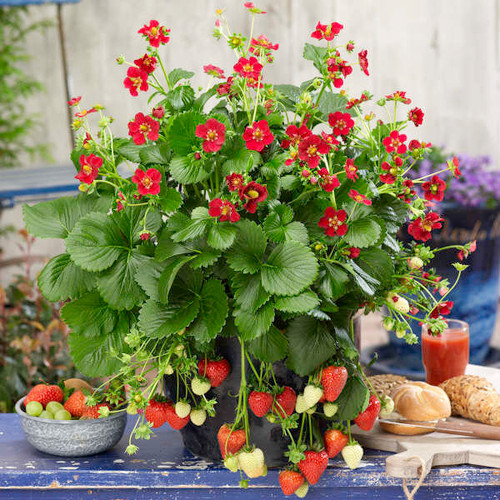
For container growing, start with a roomy pot that has good drainage, filling it with nutrient-rich potting mix and compost. Place the container in a position that receives ample sunlight, and water frequently to keep the soil moist but never waterlogged. Pinch off early blooms so plants can establish strong roots before bearing fruit. Be mindful of fertilization, as potted strawberries deplete soil nutrients quickly and benefit from routine feeding to maintain healthy, consistent yields all summer.

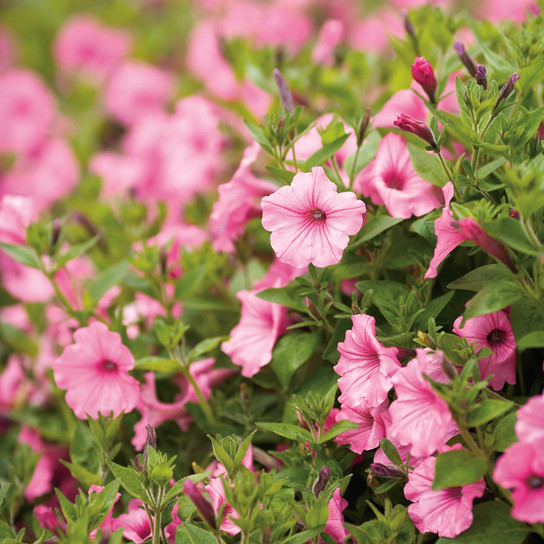
Give strawberries neighbors that share their love of all-day sun, moisture-retentive yet fast-draining soil, and a slightly acidic pH. Blueberries thrive in the same ground while forming a taller tier that shelters berry flowers from wind. Basil’s mid-summer blossoms extend the nectar window and its scent confuses sap-sucking pests. Creeping thyme weaves between crowns as an aromatic mulch that curbs weeds and locks in soil moisture. Plant petunias nearby to supply long-season blooms that attract hoverflies to patrol the berries for aphids.