Last Updated May 7th, 2026
No, hostas are not deer resistant.
In fact, hostas are one of the plants deer most commonly browse in shade gardens. Their soft, leafy foliage is easy for deer to eat, especially in spring and early summer when new growth is tender.
Rutgers New Jersey Agricultural Experiment Station rates Hosta sp. as “Frequently Severely Damaged” by deer, which is the highest-risk category on its deer-resistance scale. That means hostas are best grown with extra protection if deer are common in your yard.
At Plant Addicts, we help gardeners choose plants for real-world landscapes every season, including shade gardens where deer pressure can be a serious problem. Hostas are beautiful, dependable perennials, but they are not a good choice for unprotected areas with heavy deer activity.
Reviewed by Plant Addicts Gardening Experts
This guide is based on hands-on gardening experience, customer questions, and published deer-resistance ratings from university extension resources. We also explain what deer damage looks like, how hostas recover, and which protection methods work best in real landscapes.
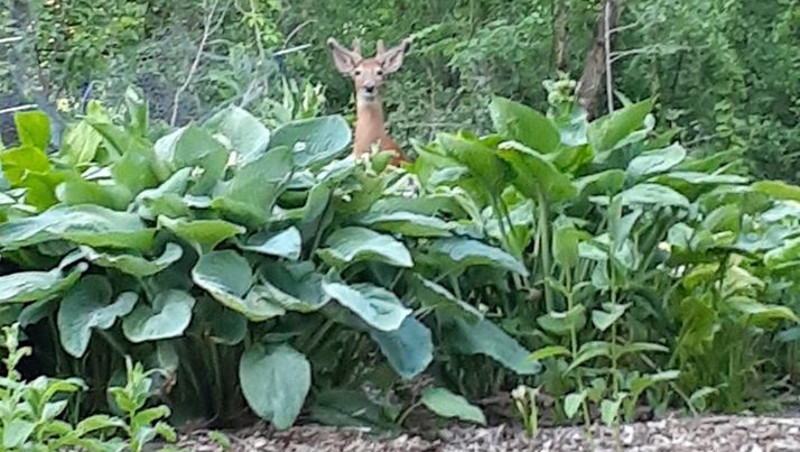
Photo Credit: Terri Meyer, Edgerton, WI
Jump to Hosta Deer Resistance Topics
Are Hostas Deer Resistant?
Hostas are not deer resistant. Deer frequently eat hostas, and in many gardens they will return to the same plants again and again. Hosta leaves are soft, broad, and easy to browse, which makes them especially appealing to deer.
If you have heavy deer pressure, hostas should be considered a high-risk plant. That does not mean you cannot grow them, but it does mean you should protect them with fencing, repellents, placement strategies, or companion planting.
Hosta Deer Resistance Rating
Rutgers University uses a four-level deer-resistance scale. On that scale, hostas are rated D — Frequently Severely Damaged. That is the category for plants deer often prefer and may damage badly without protection.
| Rating | Meaning | Hosta Status |
|---|---|---|
| A | Rarely Damaged | No |
| B | Seldom Severely Damaged | No |
| C | Occasionally Severely Damaged | No |
| D | Frequently Severely Damaged | Yes — Hosta sp. |
Plant Addicts Expert Tip: If you have deer in the neighborhood, assume your hostas are at risk. Deer may ignore them for a while, then eat them heavily once they discover the planting or when other food is limited.
What Does Deer Damage Look Like on Hostas?
Deer damage on hostas is usually easy to identify. Deer often eat the leafy part of the plant and leave behind bare stems or ragged leaf stalks. Damage may appear overnight, and entire clumps can be stripped quickly.
Slugs also damage hostas, but slug damage looks different. Slugs usually chew holes through the leaves or create ragged patches, while deer often remove large sections of foliage or leave only stems behind.
| Damage Type | What It Looks Like | Likely Cause |
|---|---|---|
| Leaves eaten, stems left standing | Large portions of foliage disappear quickly, often overnight. | Deer |
| Hoof prints or droppings nearby | Tracks, pellets, or trampled plants around the bed. | Deer |
| Small holes in leaves | Holes, shredded patches, or slimy trails on leaves. | Slugs or snails |
| Clean cuts near the base | Leaves or shoots cut close to the ground. | Rabbits or other animals |
If the damage is from slugs instead of deer, read our guide to slugs on hostas.
How To Keep Deer From Eating Hostas
The best way to protect hostas is to use more than one deer-control method. Deer are adaptable, and a spray or scent that works for a while may become less effective as deer get used to it.
For high-value hosta beds, fencing is the most reliable option. For lighter deer pressure, repellents, motion-activated sprinklers, dogs, and strategic planting can help reduce browsing.
| Method | How Well It Works | Best Use |
|---|---|---|
| Deer fencing | Most reliable | Best for serious deer pressure or large hosta collections. |
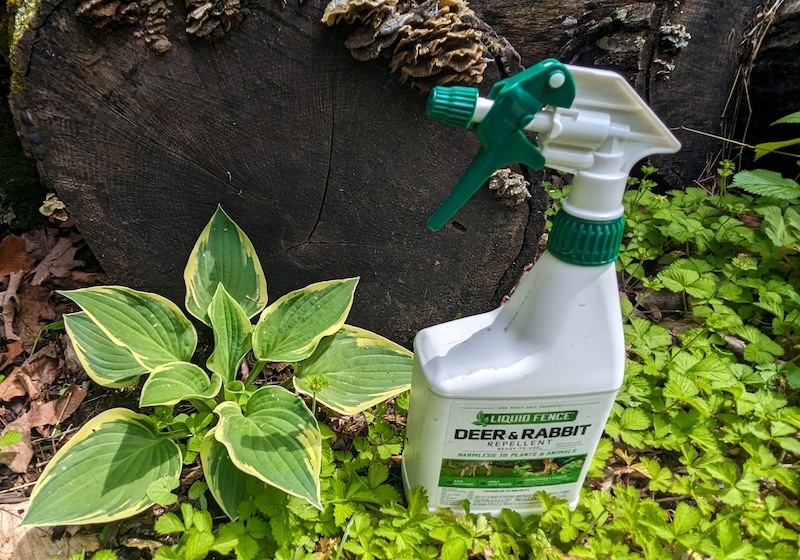
| Repellent sprays | Helpful but temporary | Reapply after rain and rotate formulas so deer do not adjust. |
| Motion sprinklers or lights | Helpful for surprise deterrence | Useful near entrances to garden beds or along deer paths. |
| Dogs | Can help | Most effective when dogs are outdoors often and deer are skittish. |
| Strong-smelling home remedies | Inconsistent | May help briefly, but usually should not be your only method. |
| Companion planting | Supportive, not foolproof | Use less-palatable plants around hostas to reduce browsing pressure. |
Best tips to deter deer from eating hostas:
- Use fencing for the most reliable protection.
- Apply deer repellent before damage starts, not after deer develop a habit.
- Reapply repellents after rain, irrigation, or heavy new growth.
- Rotate repellent sprays so deer do not get used to one scent.
- Protect hostas early in spring when new leaves are most tender.
- Use motion-activated sprinklers, lights, or noise near deer pathways.
- Plant more deer-resistant shade plants around or in front of hostas.
Do Deer Repellents Work on Hostas?
Deer repellents can help protect hostas, but they are not permanent. Most repellents work by smell, taste, or both. They are most effective when used consistently before deer start feeding on the plants.
Systemic deer repellents are another option for ornamental plants like hostas. These products are taken up by the plant and make the foliage taste less appealing to deer. They can be useful because they don't wash off after rain or irrigation, but they still need time to move into the plant and must be applied according to the label.
The biggest mistake gardeners make is applying a repellent once and assuming the hostas are protected for the season. Rain, irrigation, new foliage, heavy deer pressure, and time can all reduce protection. Reapply sprays and systemic products as directed.
Plant Addicts Expert Tip: Start spraying hostas as soon as new growth emerges in spring. Young hosta leaves are tender and especially attractive to deer.
Will Hostas Come Back After Deer Eat Them?
Yes, established hostas usually come back after deer eat them. Hostas store energy in their crown and roots, so one round of deer browsing rarely kills a healthy plant.
If deer eat the foliage early in the season, the hosta may push out new leaves the same year. If the damage happens later in summer, the plant may look bare until the following spring.
| When Damage Happens | What To Expect | What To Do |
|---|---|---|
| Spring | Plant may regrow new leaves that season. | Protect immediately with repellent or fencing. |
| Mid-summer | Some regrowth is possible, but the plant may look rough. | Water during dry periods and prevent repeat browsing. |
| Late summer or fall | Plant may not regrow until spring. | Mulch lightly after dormancy and protect the bed next spring. |
If only ragged stems remain, you can trim the damaged foliage back. Do not over-fertilize to force regrowth. Instead, water the plant during dry weather and protect it from repeat damage.
Recovery Tip: One deer feeding is usually survivable. Repeated feeding is the bigger problem because the plant loses the leaf surface it needs to rebuild energy.
Deer-Resistant Alternatives to Hostas
If deer repeatedly eat your hostas, consider replacing some of them with shade plants deer are less likely to damage. No plant is completely deer proof, but plants with tougher, aromatic, fuzzy, or less palatable foliage are often better choices.
| Alternative Plant | Why It Can Work | Best Use |
|---|---|---|
| Ferns | Often less appealing to deer than hostas. | Shady beds, woodland gardens, and texture contrast. |
| Hellebores | Leathery foliage is less palatable. | Early-season flowers and shade interest. |
| Astilbe | Often browsed less than hostas, especially when grown with moisture. | Part shade with consistent moisture. |
| Brunnera | Textured foliage may be less attractive to deer. | Shade foliage color and spring flowers. |
| Barrenwort | Tough, low-growing foliage is usually less preferred. | Dry shade and groundcover use. |
You can also browse our full selection of shade perennials to find plants that fit your light, soil, and deer-pressure conditions.
Should You Still Grow Hostas If You Have Deer?
You can still grow hostas if you have deer, but you should be realistic. If deer visit your yard often and your hostas are unprotected, they will likely be eaten at some point.
Hostas are worth growing in protected shade gardens, enclosed courtyards, fenced beds, and areas closer to the house where deer are less comfortable browsing. In open beds near woods, fields, or deer travel paths, choose more deer-resistant plants or commit to consistent protection.
Shop Hostas From Plant Addicts
Hostas are still one of the best perennials for shade, even though deer love them. If you have low deer pressure or can protect your plants, hostas provide beautiful foliage, long-lasting texture, and dependable performance in shady gardens.
Browse our full selection of hosta plants for sale, and use this guide to decide where they can be grown safely in your landscape.
Hosta Deer Resistance FAQs
Do deer eat all types of hostas?
Deer may eat any hosta. Some thicker-leaved varieties may be less appealing, but no hosta should be considered deer proof.
Will hostas grow back after deer eat them?
Usually, yes. Established hostas often recover after deer damage, especially if the damage happens early in the season. Repeated browsing can weaken the plant.
What is the best way to keep deer away from hostas?
Fencing is the most reliable method. Repellent sprays, motion-activated sprinklers, dogs, and deer-resistant companion plants can also help, especially when used together.
Do coffee grounds keep deer away from hostas?
Coffee grounds are not a reliable deer deterrent. Strong smells may help briefly, but fencing and labeled deer repellents are usually more effective.
What eats hostas besides deer?
Slugs, snails, rabbits, and other animals can damage hostas. Slugs usually chew holes in the leaves, while deer often remove large sections of foliage and leave stems behind.
Final Thoughts From Plant Addicts
Hostas are beautiful shade perennials, but they are not deer resistant. If deer are common in your yard, grow hostas only where you can protect them, or combine them with more deer-resistant shade plants.
The best approach is to plan ahead. Protect hostas early in spring, rotate repellents, use fencing where deer pressure is high, and watch for signs of deer activity before severe damage happens.
Sources
- Rutgers New Jersey Agricultural Experiment Station: Landscape Plants Rated by Deer Resistance.
- Plant Addicts gardening experience and customer support questions about hostas, deer damage, and shade garden protection.
About the Author
 |
Chris Link is a co-founder of Plant Addicts and has years of experience helping gardeners choose plants for real-world landscapes, including shade gardens, deer-prone yards, and challenging growing conditions. Originally published October 27th, 2020. Last updated by Plant Addicts on May 7th, 2026. |