
Boulevard® Clematis 1 to 23 of 23 total


Boulevard® Clematis 1 to 23 of 23 total
Chat/Email Support
Mon-Thur, 7 AM - 6 PM CST
Fri, 7 AM - 5 PM CST
Sat-Sun, 9 AM - 3 PM CST
Chat Us Email Usinfo@plantaddicts.com
Phone Support
Mon-Fri, 8 AM to 5 PM CST
Boulevard® Clematis repeat bloom, adding long-lasting color to containers, small gardens, and shorter trellises. These compact Raymond Evison selections typically stay around 3 to 5 feet tall, making their large flowers easier to enjoy from late spring through summer and into early fall.
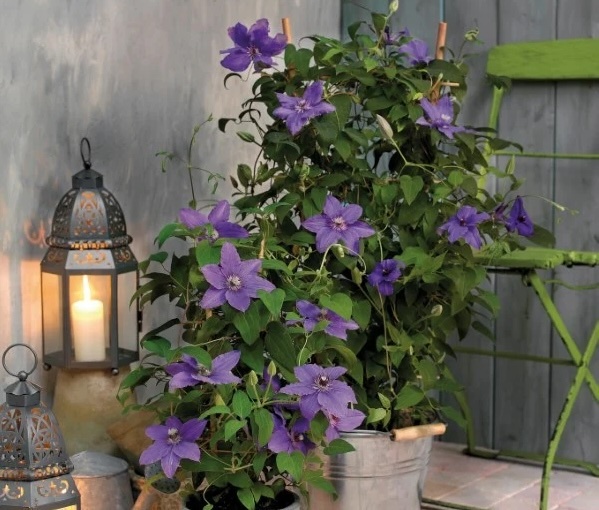 Boulevard® Parisienne™
Standard clematis can overtake a porch railing or patio trellis. Boulevard® selections stay much shorter and flower freely on compact vines. Their scale makes them a natural choice for entryways, balconies, patios, courtyard gardens, and smaller beds.
Most Boulevard® selections mature around 3 to 5 feet tall, fitting smaller trellises, obelisks, and containers.
Each selection produces flowers from lower nodes as well as near stem tips, filling out the display from top to bottom.
This series flowers freely from late spring or early summer and reblooms later in the season.
Color is only part of the decision. These compact vines also differ in height, flower placement, light preference, and the way they can be used in containers.
Look for compact, repeat-flowering vines that stay proportionate to a container and short support.
Parisienne™, Tranquilité, and Sarah Elizabeth are natural patio choices.
Darker flowers create a defined focal point against pale walls, stone, gray foliage, or light-colored containers.
Nubia offers deep red flowers, and Picardy flowers in reddish purple to burgundy.
Several Boulevard® selections retain their flower color well in partial shade and can brighten patios or walls with less direct sun.
Consider Tranquilité, Sarah Elizabeth, Corinne™, Vicki™, or Bernadine™.
Boulevard® vines are short enough that the pot, support, flowers, and surrounding plants can be viewed together.
Compact vines show off blue-violet flowers on a porch. No tall wall trellis required.

Burgundy flowers work naturally with warm terracotta and wood, and the short stems can also be allowed to trail.
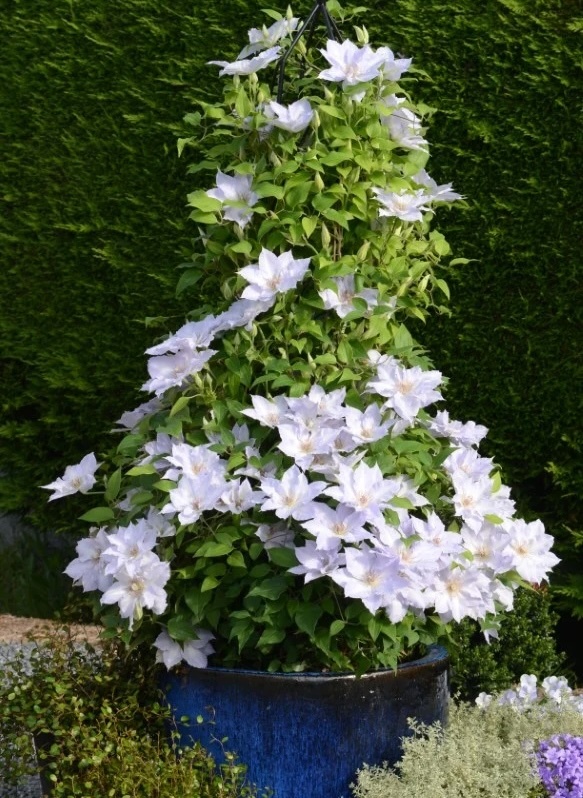
Pale blue-lavender flowers complement the cooler color palette of a blue ceramic pot.
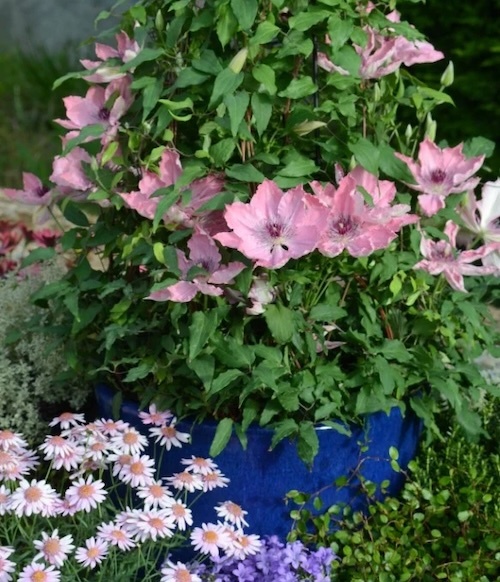
Pink clematis adds height above lower pots of marguerite daisy, bellflower, and other seasonal flowers.
Picardy produces its first burgundy flowers on short stems, then develops additional trailing stems. That growth pattern allows it to spill from a container or hanging basket, unlike most selections that grow straight upward.
Shop Picardy Clematis →Corinne™ develops pale, ruffled flowers on substantial stems. Cut flowers can last up to about 10 days in a vase, giving this compact clematis a second use beyond the patio.
Shop Corinne™ Clematis →Sarah Elizabeth produces flowers near the base as well as on new stems, creating a fuller top-to-bottom flower display on its 4- to 5-foot vine.
Shop Sarah Elizabeth Clematis →
Purple-blue flowers have a deeper central bar, ruffled edges, and contrasting reddish anthers. Successive flower buds provide an extended display, with another flush later in the season.
Shop Baroness Fookes™ Clematis →Boulevard® clematis can remain in a large patio container for years, so container size, drainage, planting depth, and support are worth getting right from the beginning.
Raymond Evison recommends a container about 18 inches wide and deep for a single clematis. Terracotta, ceramic, and wood help limit excessive root-zone heat.
Use a well-drained growing medium and keep drainage holes open. The soil should stay evenly moist but not saturated.
Soak the root ball before planting and set the crown roughly 2 to 2½ inches below the finished soil surface. This depth protects the root crown against fatal diseases and winter damage while forcing subterranean buds to sprout a thicker, bushier base.
Tie stems to a small obelisk or trellis. Vines can only wrap around objects that are ¼ to ½ inch in diameter or smaller. Low-growing plants at the surface can help shade the root zone.
Boulevard® clematis is deciduous. A plant shipped during active growth can arrive green and leafed out, whereas a winter-shipped plant may have little or no foliage.
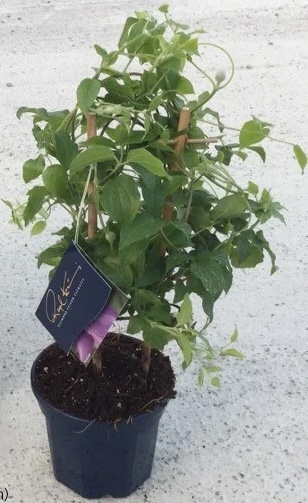
A leafed-out specimen may already be trained to a short support. The supplier reference image shows an approximately 18-month plant in a 6-inch, 1.5-liter pot on an 18-inch trellis.
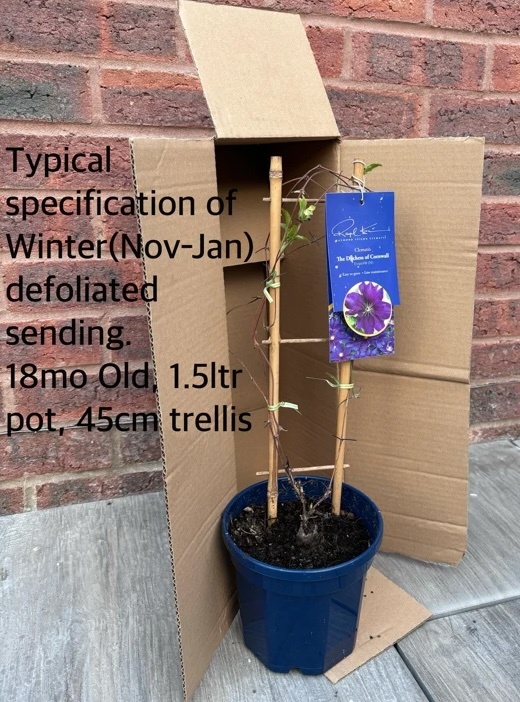
From late fall through winter, deciduous clematis can arrive leafless or nearly leafless. Dormant stems are normal and new shoots will emerge as temperatures warm.
Clematis tepals can express slightly different amounts of red, blue, green, and purple pigment as growing conditions change. Deep red selections such as Nubia may appear somewhat more burgundy or purple in cooler conditions or lower light, and pale blue or near-white cultivars can show subtle changes in tone.
Product photography is a good guide to mature summer color, but some variation between seasons and gardens is normal.
Tranquilité reaches about 4 to 5 feet high. Its pale blue-lavender flowers and compact growth show why the collection works well on smaller supports and in patio containers.
Modern Raymond Evison clematis were selected with straightforward maintenance in mind. Always check the individual cultivar directions if you are growing a double or semi-double form.
Raymond Evison's simple method is to reduce single-flowered selections to about 6 inches above soil level in late winter or early spring.
Boulevard® clematis regrows vigorously from the lower portion of the plant, rebuilding its compact framework each season.
Free-flowering cultivars such as Picardy and Parisienne can be trimmed after their first flowering to promote fresh growth and additional flowers when plants remain watered and fed.
Boulevard® clematis was bred for compact growth and heavy flowering on shorter vines. Most selections stay around 3 to 5 feet rather than growing into a large vine that requires a tall arbor or pergola.
Yes. Container growing is one of the primary uses for the Boulevard® collection. Use a large, well-drained container and provide an obelisk, trellis, or other climbing support.
Raymond Evison's patio-growing guidance recommends a container approximately 18 inches wide for a single clematis. A deep container with good drainage gives the root system room to develop for long-term growth.
No. Its compact height allows it to grow on a short obelisk, container trellis, tied canes, or another modest support. The exact height varies by cultivar.
Raymond Evison's simple pruning method for single-flowered modern cultivars is to reduce the stems to about 6 inches above soil level in late winter or early spring. Double and semi-double cultivars have different pruning guidance, so follow the directions for the individual variety.
Boulevard® clematis is deciduous. Plants shipped during winter dormancy may have few or no leaves, and their appearance can be very different from a plant shipped during active spring or summer growth.
Flower color can shift somewhat with temperature, season, and light levels. Red cultivars may develop more burgundy or purple tones under some conditions, and pale cultivars can show subtle blue, pink, or green tones.
Yes. Several cultivars perform well in partial shade, including Tranquilité, Sarah Elizabeth, Vicki, Corinne, and Bernadine. Light requirements vary by variety, so check the individual product page before choosing a site.
A flowering plant can be enjoyed temporarily indoors in a bright location, but Boulevard® clematis is a hardy outdoor perennial rather than a permanent houseplant. Move or plant it outdoors for long-term growth.
Choose from 23 compact clematis selections in shades of white, pink, red, blue, and purple for containers, smaller trellises, entry gardens, and other spaces where a conventional large vine would be too much.
Shop Boulevard® Clematis →