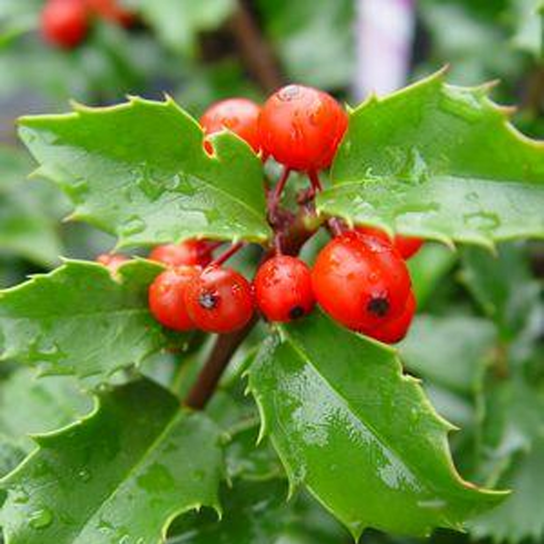
Holly shrubs add glossy, evergreen color plus bright berries for standout winter interest—and they’re great for hedges, borders, or containers. Many varieties are deer resistant and attract birds for a landscape that looks alive year-round.
Ilex, or Holly, is a genus of about 480 species of flowering plants. The species are evergreen or deciduous trees and shrubs. We offer many varieties of Holly plants because they are a great four-season bush for most landscaping plans. Many (though not all) species of holly have distinctive glossy green leaves that feature either spiny teeth or serrated edges. Almost all holly species are dioecious, meaning that you will need to plant both male and female for cross-pollination if you desire fruit. Holly plants are deer resistant and attract birds, and the winter berries add color to a snowy area.
Holly bushes are prized for their glossy, evergreen leaves and colorful red berries, which provide year-round structure and seasonal interest. These hardy shrubs are highly adaptable, thriving in a range of soil types and conditions, from sunlit areas to partial shade. Many varieties offer dense growth, making them ideal for creating privacy screens or hedges. Additionally, their tough foliage deters pests, adding to their low-maintenance appeal.
The holly family (Ilex spp.) includes a diversity of shrubs and trees. You’ll find plants that grow only 18 inches tall as well as trees growing 60 feet tall, so make sure you choose a plant that fits the needs of your garden plan. Holly trees have a slow to medium growth rate and are amenable to pruning for hedges and topiary. Note that holly berries can be toxic if ingested.
Hollies have numerous uses in landscaping, from forming classic boundary hedges to acting as striking standalone specimens. Dwarf varieties are perfect for foundation plantings or container gardening, while larger types excel as windbreaks or natural barriers. Holly bushes also provide essential shelter and food for wildlife, making them a valuable addition to eco-friendly designs. Whether pruned into formal shapes or left to grow freely, they bring structure and a timeless quality to any outdoor space.
Types of Holly Bushes
Type
Scientific Name
Native
Berries
Foliage
Zones
Uses
Winterberry Holly
Ilex verticillata
Eastern US & SE Canada
Bright red (fall/winter)
Deciduous, glossy green, elliptical
3–9
- Cut branches for winter decor
- Hedging, screening
- Naturalizing in wetlands or woodland edges
Inkberry Holly
Ilex glabra
Eastern North America (coastal & inland)
Black (sometimes red/white)
Evergreen, glossy, narrow leaves
5–9
- Boxwood substitute
- Hedging & screening
- Great near ponds, rain gardens
- Can be used in coastal plantings
Yaupon Holly
Ilex vomitoria
Southeastern US & Mexico
Red or yellow
Evergreen, oval leaves with slight teeth
7–10
- Dwarf types used as boxwood-like hedges
- Can be limbed up into small trees
Japanese Holly
Ilex crenata
Asia (Japan, China, Korea)
Black or red (pea-sized)
Evergreen, small box-like leaves
5–8
- Boxwood alternative
- Hedging, topiary, edging
- Bonsai subject
- Foundation plantings
Meserve (Blue) Holly
Ilex x meserveae
Hybrid (English × tsuru holly)
Red (showy, large)
Evergreen, glossy, spiny, blue-green
5–9
- Accent or formal hedging
- Pair male & female for berries
- Cold-hardy alternative to English holly
Chinese Holly
Ilex cornuta
China & Korea
Red
Evergreen, oval leaves often with spines
7–9
- Versatile landscape shrub
- Prickly leaves deter browsing
- Ornamental berries for fall & winter
- Pair male & female for berries
Holly Bushes Care
Holly plants grow best in well-drained, slightly acidic soil with rich organic content. They prefer partial to full sun, though specific varieties may tolerate less light. Watering needs are moderate; keep the soil consistently moist but avoid saturation. Fertilize in early spring with a slow-release fertilizer for acidic shrubs to support healthy growth throughout the season.
Prune holly in late winter or early spring to shape the plant and remove damaged or overcrowded branches. For winter care, protect roots with a layer of mulch to insulate against harsh temperatures. Hollies also adapt well to container growing; choose a pot with adequate drainage and refresh the soil every few years. Container-grown hollies may require additional watering during dry periods and extra fertilization to maintain their health and structure.
Holly plants are famous for their winter berries, so pairing this shrub with plants that flower at other times of the year will offer a continuous display of colorful foliage and blossoms. Holly trees prefer slightly acidic soil, we suggest these acid-loving plants as well. Because Holly trees can grow very tall, many gardeners plant annuals like geraniums, torenia, & begonia under their Holly. Here are some of our favorites to plant with hollies.









 Growing Zones: 5 to 8